
The Nobel Prize is widely recognised as the most prestigious international award, honouring individuals whose work has fundamentally shaped science, culture, economics, and global society. First awarded in 1901, the Nobel Prize recognises achievements in Physics, Chemistry, Physiology or Medicine, Literature, and Peace. In 1969, the Sveriges Riksbank Prize in Economic Sciences in Memory of Alfred Nobel was established to honour groundbreaking contributions to economic science.
Each year, Nobel Prize announcements draw global attention, not only for the discoveries and ideas being recognised, but for the long-term influence Nobel laureates continue to have on public policy, academic research, innovation, and leadership.
At Aurum Speakers Bureau, we work closely with many of the world’s most respected thinkers, including Nobel Prize winners whose insights extend far beyond their original fields. This updated guide revisits the 2021 Nobel Prize winners, providing context on their achievements and highlighting the individuals behind the work.
Editor’s note: This article was originally published in October 2021 and has been updated to reflect expanded context, speaker availability, and additional insights into the 2021 Nobel Prize winners.
The Complete 2021 Nobel Prize Winners List
The 2021 Nobel Prize winners were announced during the first week of October, recognising individuals whose contributions have reshaped how we understand the world.
Below is a complete overview of the 2021 Nobel Prize winners by category, followed by detailed profiles of each laureate.
- Sveriges Riksbank Prize in Economic Sciences: David Card, Joshua Angrist, Guido W. Imbens
- Nobel Prize in Chemistry: Benjamin List, David MacMillan
- Nobel Prize in Physiology or Medicine: David Julius, Ardem Patapoutian
- Nobel Prize in Physics: Syukuro Manabe, Klaus Hasselmann, Giorgio Parisi
- Nobel Prize in Literature: Abdulrazak Gurnah
- Nobel Peace Prize: Maria Ressa, Dmitry Muratov
Sveriges Riksbank Prize in Economic Sciences 2021
Winners: David Card, Joshua Angrist, Guido W. Imbens
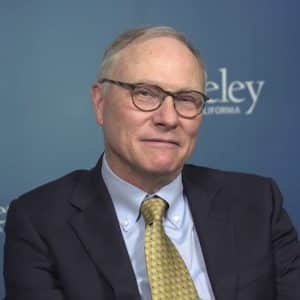
The 2021 Nobel Memorial Prize in Economic Sciences was awarded for methodological breakthroughs in analysing causal relationships in labour markets and social policy.
David Card is a Professor of Economics at the University of California, Berkeley, and one of the most influential labour economists of his generation. His research on immigration, minimum wages, education, and inequality challenged long-held assumptions and reshaped economic policy debates worldwide.
Joshua Angrist, Ford Professor of Economics at MIT, is internationally recognised for his work on causal inference and policy evaluation. His research has had lasting impact on labour economics, education policy, and empirical social science. He is also a co-founder of MIT’s School Effectiveness and Inequality Initiative.

Guido W. Imbens, Professor of Economics at Stanford Graduate School of Business, played a central role in formalising causal inference frameworks now widely used across economics, public health, and the social sciences.
His work has shaped how researchers evaluate real-world data, particularly in situations where controlled experiments are not possible. These methodologies are now foundational in evidence-based policymaking, influencing decisions in areas such as labour regulation, healthcare outcomes, and education reform.

The 2021 Nobel Prize in Economic Sciences also reflects a broader shift in modern economics toward understanding how innovation, competition, and institutions shape long-term growth. Among the economists who have significantly advanced this perspective is Philippe Aghion, a leading authority on innovation-led growth and creative destruction.
His work builds on and extends the empirical and methodological foundations recognised in recent Nobel Prizes, offering a cohesive framework for understanding how policy, competition, and technological change interact over time.
Learn more about Nobel laureate economist Philippe Aghion and his work on innovation, competition, and growth, and explore a recent perspective on how his ideas resonate with today’s leaders.
Nobel Prize in Chemistry 2021
Winners: Benjamin List, David MacMillan
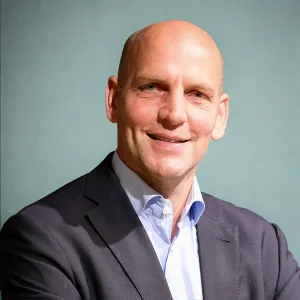 The Nobel Prize in Chemistry 2021 recognised the development of asymmetric organocatalysis, a discovery that transformed how chemists build complex molecules.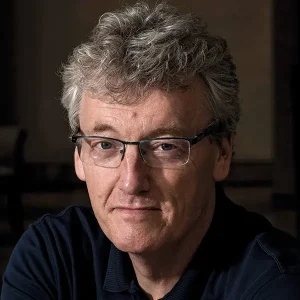
Benjamin List is a Professor of Organic Chemistry at the University of Cologne and a pioneer in asymmetric catalysis. His work has enabled more efficient and environmentally sustainable methods for producing chiral molecules, which are essential in pharmaceutical research and materials science.
David MacMillan, Professor of Chemistry at Princeton University, is a co-founder of modern organocatalysis. His research introduced new catalytic strategies that have accelerated advances across medicine, agriculture, and chemical manufacturing.
Nobel Prize in Physiology or Medicine 2021
Winners: David Julius, Ardem Patapoutian
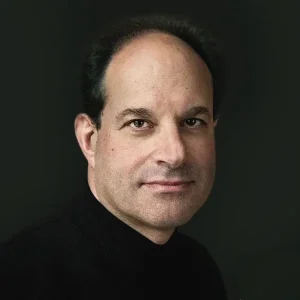 The 2021 Nobel Prize in Physiology or Medicine recognised discoveries that revealed how the human nervous system senses temperature and touch.
David Julius, Professor at the University of California, San Francisco, built a reputation for himself for identifying key receptors involved in pain and temperature sensation, including TRPV1. His work laid the foundation for new approaches to pain management and sensory biology.
These discoveries have had lasting influence on neuroscience research and the development of therapies targeting chronic and inflammatory pain.
Ardem Patapoutian, Professor at Scripps Research, discovered mechanosensitive ion channels such as PIEZO1 and PIEZO2, explaining how cells respond to pressure and mechanical forces. His research revealed fundamental mechanisms behind touch, proprioception, and internal bodily awareness. These breakthroughs have opened new avenues for understanding and treating conditions ranging from chronic pain to cardiovascular and neurological disorders.
Nobel Prize in Physics 2021
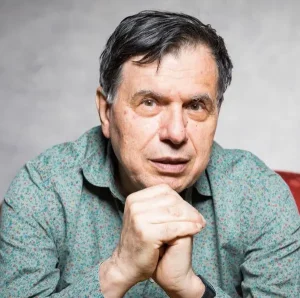
Winners: Syukuro Manabe, Klaus Hasselmann, Giorgio Parisi
The Nobel Prize in Physics 2021 honoured foundational contributions to the understanding of complex systems, particularly Earth’s climate.
Syukuro Manabe developed the first climate models demonstrating the relationship between atmospheric CO₂ levels and global warming. Klaus Hasselmann created methods that linked climate models with observational data, proving human influence on climate change. Giorgio Parisi made groundbreaking contributions to statistical physics and complex systems, with applications extending from particle physics to climate science.
Nobel Prize in Literature 2021
Winner: Abdulrazak Gurnah
Abdulrazak Gurnah received the Nobel Prize in Literature for his uncompromising exploration of colonialism, displacement, and the refugee experience. His novels examine identity, belonging, and the long-term consequences of empire across cultures and generations.
Through richly layered narratives, Gurnah gives voice to individuals navigating exile, memory, and cultural rupture, offering a perspective that has become increasingly relevant in contemporary global discourse.
Nobel Peace Prize 2021
Winners: Maria Ressa, Dmitry Muratov
 The Nobel Peace Prize 2021 recognised two journalists for their defence of freedom of expression.
Maria Ressa, co-founder of Rappler, exposed systemic disinformation and abuses of power in the Philippines. She often did so at significant personal and professional risk. Her work now serves as a global reference point for discussions on press freedom, digital accountability, and the role of journalism in safeguarding democratic institutions.
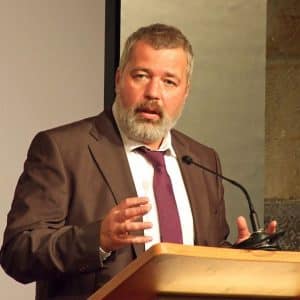
Dmitry Muratov, editor-in-chief of Novaya Gazeta, has defended independent journalism under increasingly dangerous conditions in Russia. His leadership has helped sustain investigative reporting on corruption, human rights, and political accountability in an environment marked by mounting pressure on the free press.
Aurum Speakers Bureau and Nobel Laureates
Nobel Prize winners represent the highest level of intellectual authority. Their work influences not only academia, but also leadership, public policy, ethics, and innovation across industries.
Aurum Speakers Bureau represents and collaborates with Nobel laureates across disciplines. The bureau connects organisations with speakers whose insights elevate events and shape meaningful conversations.
Explore Aurum’s Nobel Prize speakers portfolio or contact the Aurum Speakers Bureau team to discuss the right speaker for your audience.
For readers interested in how economic thinking continues to evolve beyond 2021, Aurum also explores how recent Nobel-recognised ideas are shaping the future of innovation, policy, and global growth. Read more in our analysis of how the 2025 Nobel Laureates in Economics could change the world.
Frequently Asked Questions About the 2021 Nobel Prize
Who won the Nobel Prize in 2021?
The 2021 Nobel Prize was awarded across six categories. The winners were Benjamin List and David MacMillan (Chemistry), David Julius and Ardem Patapoutian (Physiology or Medicine), Syukuro Manabe, Klaus Hasselmann, and Giorgio Parisi (Physics), David Card, Joshua Angrist, and Guido W. Imbens (Economic Sciences), Abdulrazak Gurnah (Literature), and Maria Ressa and Dmitry Muratov (Peace).
How many Nobel Prizes did the Nobel committees award in 2021?
In 2021, the Nobel committees awarded prizes across six categories: Physics, Chemistry, Physiology or Medicine, Literature, Peace, and the Sveriges Riksbank Prize in Economic Sciences in Memory of Alfred Nobel. In several categories, multiple laureates shared the prize to recognise collaborative or complementary contributions.
What is the Sveriges Riksbank Prize in Economic Sciences?
Why do some Nobel Prizes have more than one winner?
Nobel Prizes are often shared when multiple individuals have made distinct but closely related contributions to the same field or discovery. The Nobel committees frequently recognise collaborative advances or complementary research that together led to significant breakthroughs.
Can I book a Nobel Prize winner as keynote speaker?
Yes, many Nobel Prize winners participate in keynote speeches, lectures, and moderated conversations at conferences, universities, and corporate events. Aurum Speakers Bureau works with Nobel laureates across disciplines and can advise on availability, formats, and suitability for specific audiences.
Are Nobel Prize winners suitable for corporate or leadership events?
Where can I find the full list of 2021 Nobel Prize winners?
This page provides a complete overview of the 2021 Nobel Prize winners, with detailed context on each laureate and links to individual speaker profiles represented by Aurum Speakers Bureau.