
Marc Raibert founded Boston Dynamics in 1992 and built the robots, Atlas, Spot, BigDog, that defined modern robotics. Five decades on, he is still shaping where the field goes next.
For the first time, the robots are actually arriving. Humanoid machines are being deployed in warehouses and airports, investors are calling physical AI the next trillion-dollar frontier, and the technology that spent a decade as viral video is suddenly a business reality. None of it would look the way it does without Marc Raibert. The robots that taught the world what machines could do, Atlas doing backflips, Spot climbing stairs, BigDog carrying loads across mountains, were built under his vision.
As the founder of Boston Dynamics and now Executive Director of The AI Institute, he has spent five decades turning what looked like science fiction into deployable reality, and in the year robotics finally breaks through, few voices carry more authority about where it goes next.
The man who taught machines to move
Raibert’s credibility is foundational, not borrowed. He began his robotics career more than fifty years ago at MIT, where he founded the Leg Laboratory and pioneered the science of dynamic balance, teaching machines to run, jump, and recover the way animals do.
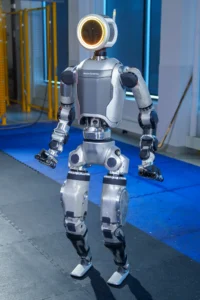
Atlas, the humanoid Raibert’s company made famous, is now an all-electric platform at the frontier of physical AI, the clearest sign of how far the field he founded has come.
In 1992, he spun that research into Boston Dynamics, and over the next three decades built the most influential robotics company in the world, leading it as CEO until 2019. Its creations became global icons: BigDog, the load-carrying quadruped; Atlas, the humanoid that performs parkour; Spot, the robot dog now working in construction, energy, and public safety.
These machines did not just advance the field; they redefined the public’s sense of what a robot is. Among the world’s robotics speakers, none has shaped the discipline more directly.
The year his field broke through
For years, Boston Dynamics’ robots were admired as spectacle. In 2026, that changed.
Humanoid robots are moving from demo to deployment, loading baggage at airports, working assembly lines, and drawing comparisons to the arrival of the personal computer. Analysts now project the humanoid market growing from a few billion dollars today toward hundreds of billions within a decade, and leaders from SoftBank to Nvidia are calling physical AI the next great technology wave.
The machine at the center of that story is often Atlas, the humanoid Raibert’s company created, since rebuilt as an all-electric platform integrating advanced AI.
Our analysis of what happens as humanoid robots go open source traces where the field is heading, and the throughline runs straight back to the foundations Raibert laid. He is, in a real sense, watching the industry he founded reach the moment he spent fifty years building toward.
Building the next generation
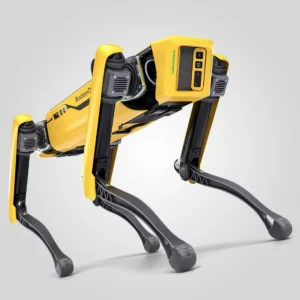
Spot already works in construction, energy, and inspection, exactly the dangerous and repetitive tasks Raibert argues robots should take on so people can focus on judgment and creativity.
Raibert is not resting on that legacy; he is still pushing the frontier.
In 2022, he founded The AI Institute, now the Robotics and AI Institute, a research organization backed by more than $400 million from Hyundai, with the explicit goal of solving the hardest remaining problems in robotics. Its work spans cognitive AI, athletic AI, and hardware design, aiming to give machines not just agility but understanding: robots that can watch a task, grasp what they are seeing, and know when to ask a question. It is the kind of long-horizon, fundamental research Raibert likens to building “the Bell Labs of robotics.”
For audiences, that means he speaks not as a historian of the field but as someone actively defining its next chapter, informed by both Boston Dynamics and the frontier work now underway at the Robotics and AI Institute.
Robotics and the future of work
What makes Raibert essential for corporate audiences is that his subject is no longer confined to engineering; it is about work itself.
As intelligent machines move into logistics, manufacturing, healthcare, and public safety, every leader faces the questions he has spent his career answering: what can robots actually do, what can’t they do yet, and what does that mean for the people who work alongside them?
Raibert’s answer is characteristically grounded.
Robots, he argues, are becoming partners rather than replacements, taking on the dangerous, dull, and repetitive so people can focus on judgment and creativity. That perspective makes him a standout among future of work speakers, and his stature among the world’s top technology speakers means audiences trust his read on where automation is genuinely headed rather than where the hype points.
A voice for the moment
Raibert’s presentations combine live demonstrations, behind-the-scenes stories from Boston Dynamics, and a clear-eyed forecast of where robotics is going, delivered with the plainspoken authority of someone who built the field rather than commentates on it.
He is a natural fit for technology and innovation summits, manufacturing and logistics conferences, investor events, and any leadership audience preparing for an automated future. As one of the most credible futurist speakers on where intelligent machines are heading, he belongs in any conversation about the technologies reshaping business.
He also sits among the most sought-after AI speakers on the roster at exactly the moment physical AI has captured the business world’s attention. If you would like to learn more about bookings and availability, do not hesitate to contact us to learn more.
Frequently Asked Questions
Why should organizations book Marc Raibert?
Because he is the founder of the field the entire business world is now watching.
Few speakers match his combination of foundational authority; he created the robots that defined modern robotics and current relevance and he also leads a major physical-AI research institute.
He is ideal for technology, innovation, manufacturing, logistics, and future-of-work events.
To check his availability and fit, contact Aurum Speakers Bureau and a dedicated advisor will respond within 24 hours with a tailored proposal.
What does Marc Raibert speak about?
His keynotes cover the future of robotics and physical AI, what intelligent machines can and cannot do, the road from research to real-world deployment, human-machine collaboration, and what decades of building breakthrough technology teach about long-term innovation and leadership.
He tailors each talk, often including live robot demonstrations, to the audience.
Who is Marc Raibert?
Marc Raibert is the founder of Boston Dynamics, which he started in 1992 and led as CEO until 2019, and the creator of robots including Atlas, Spot, and BigDog.
He is now Executive Director of The AI Institute (the Robotics and AI Institute), a Hyundai-backed research organization.
A former MIT and Carnegie Mellon professor and member of the National Academy of Engineering, he is widely regarded as one of the most influential roboticists in history.
What types of events suit a speaker like Marc Raibert?
He is a strong fit for technology and innovation conferences, manufacturing and logistics summits, investor and strategy events, and leadership programs focused on automation and the future of work, especially audiences trying to separate durable robotics trends from hype.
Robotics is having the breakthrough year Marc Raibert spent five decades working toward, which makes this a rare moment to hear the story from the person who started it.
To bring his insider perspective on robotics and the future of work to your stage, reach out to Aurum Speakers Bureau to discuss availability and dates.