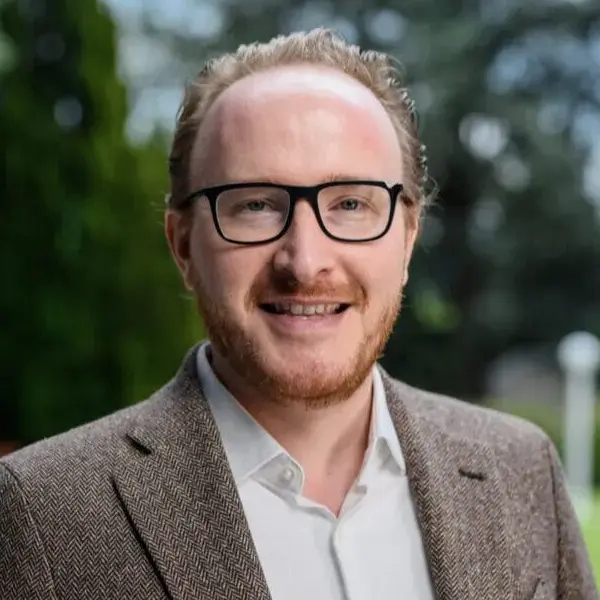
Mark Greeven
Professor of Management Innovation & Dean of Asia, IMD | Authority on Innovation & Ecosystems in China | Thinkers50-Ranked | On Future Readiness & Digital Transformation



2021 Nobel Peace Prize Laureate | Co-Founder & Former Editor-in-Chief, Novaya Gazeta | Press Freedom & Democracy Advocate
Dmitry Muratov is one of the most consequential journalists alive: co-founder of Novaya Gazeta, 2021 Nobel Peace Prize laureate, and a living symbol of what press freedom costs under authoritarian rule. His Nobel medal sold for a record $103.5 million to aid Ukrainian refugees. Audiences leave with a rare, first-hand account of truth, power, and the price of courage.
Want to book Dmitry Muratov as a speaker for your event? Please provide the info below and we’ll get in touch within 24h:
Dmitry Muratov is one of the most important journalists of his generation: a co-founder of Russia’s most fearless independent newspaper, a Nobel Peace Prize laureate, and a figure whose career stands as both a testimony to the power of a free press and a warning about what happens when it is extinguished. Born in 1961 in Kuybyshev (now Samara), Russia, he began his career in Soviet-era journalism before the collapse of the USSR opened a brief window for independent media. In 1993, alongside more than fifty colleagues from Komsomolskaya Pravda, he co-founded Novaya Gazeta, a publication built on a simple but dangerous proposition: that Russian citizens deserved honest, rigorous reporting on power, corruption, and human rights.
Nobel Peace Prize speaker Dmitry Muratov served as editor-in-chief of Novaya Gazeta from 1995 to 2017 and again from 2019 to 2023, guiding the paper through decades of escalating pressure from the Kremlin. Under his leadership, the newsroom investigated governmental corruption, electoral fraud, the wars in Chechnya, and systemic human rights abuses, publishing the work of reporters who put their lives at risk to do so. Six Novaya Gazeta journalists were murdered because of their work, including the internationally renowned Anna Politkovskaya, shot in her apartment building in 2006. Muratov received threats himself, and in 2022 was attacked on a train with red paint laced with acetone. He continued.
In October 2021, Muratov was awarded the Nobel Peace Prize jointly with Filipino journalist Maria Ressa, recognized for their efforts to safeguard freedom of expression as a precondition for democracy and lasting peace. In June 2022, he auctioned off his Nobel medal to raise money for children displaced by the war in Ukraine; it sold for a record $103.5 million. That same year, the Moscow Supreme Court revoked Novaya Gazeta’s operating license, effectively banning the paper from Russia. In September 2023, the Russian authorities designated Muratov a “foreign agent,” a legal label used to silence critics of the Kremlin. He stepped down as editor to shield the remaining staff from the obligations the designation imposed. A portion of Novaya Gazeta’s team continues to publish from Riga as Novaya Gazeta Europa. As of early 2026, Muratov was abroad, actively campaigning for Russian political prisoners and civilian detainees on both sides of the Russia-Ukraine conflict.
As a human rights speaker, Dmitry Muratov offers something no policy paper or think-tank report can replicate: three decades of lived experience at the front line of the battle between independent journalism and state power. His keynotes address the mechanics of disinformation and propaganda, the institutional conditions that allow a free press to survive or be destroyed, and what leaders in business, government, and civil society can do to defend the information ecosystems that democracy depends on. For senior audiences navigating an era of profound uncertainty about truth, institutions, and geopolitical risk, his perspective is not abstract. It is urgent.
Drawing on three decades leading one of the world's most embattled independent newsrooms, Muratov traces the step-by-step mechanics of how authoritarian governments dismantle press freedom: from legal harassment and financial pressure to violence and institutional closure. This is not a historical lecture. It is a practical analysis of how information ecosystems are destroyed, and what organizations, governments, and citizens can do to protect them before it is too late.
Muratov speaks with unmatched authority on how modern authoritarian states manufacture and deploy disinformation, drawing directly from his experience covering the Kremlin's media strategy across three decades of conflict. He examines how propaganda corrodes public trust, distorts democratic discourse, and enables military aggression by isolating populations from the truth, and what responsible institutions must do to hold the line.
A deeply personal keynote in which Muratov reflects on the colleagues he lost, the choices he faced, and the conviction that sustained Novaya Gazeta through relentless repression. He makes a broader argument about moral responsibility in professional life: what it means to persist when the cost is high, why institutions with the power to inform the public carry an ethical obligation to do so, and how courage in one person or organization can have consequences far beyond its immediate context.
Muratov examines the structural conditions that allow democracy to function or fail, with press freedom at the center of the argument. For an era in which democratic institutions across the world are under pressure, he offers a framework for understanding which conditions matter most, which threats are most corrosive, and what practical steps leaders can take to strengthen the foundations of open societies. Informed by his Nobel Prize acceptance speech and his ongoing advocacy work, this keynote is particularly suited to policy, legal, and governance audiences.
Professor of Management Innovation & Dean of Asia, IMD | Authority on Innovation & Ecosystems in China | Thinkers50-Ranked | On Future Readiness & Digital Transformation
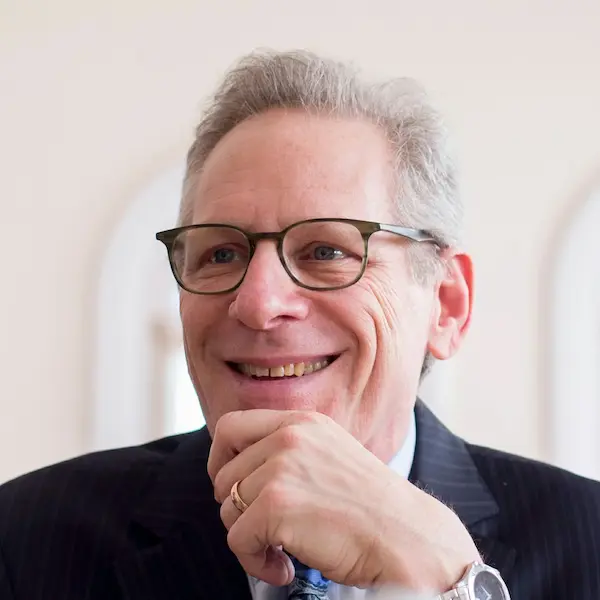
Practice Professor of Management Emeritus, The Wharton School | Creator of Total Leadership | Authority on Work/Life Integration | Thinkers50 Distinguished Achievement Award

Nobel Peace Prize Laureate, 2021 | Co-Founder & CEO, Rappler | Professor of Practice, Columbia SIPA | Time Person of the Year, 2018
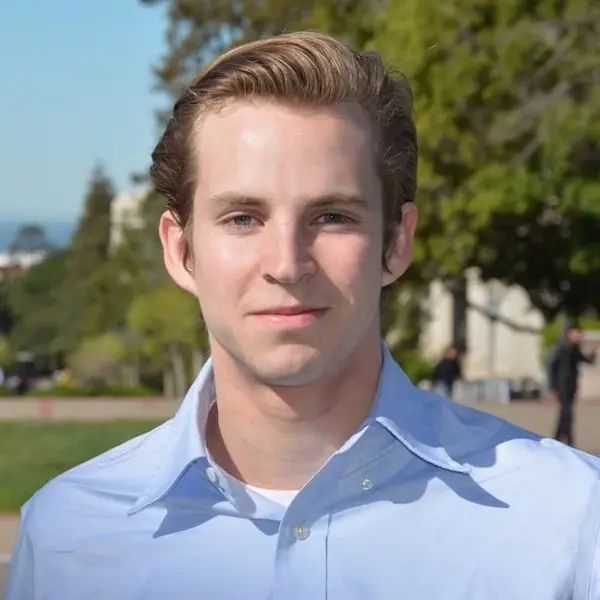
Cognitive Neuroscientist | Co-Founder, Becoming Superhuman | Lecturer, UC Berkeley Haas School of Business | Productivity & Performance Expert


© 2026 Aurum Speakers Bureau. All Rights Reserved

| Basic Data Protection Information | |
|---|---|
| Data controller | AURUM SPEAKERS BUREAU S.L. |
| Address | Parc Audiovisual de Catalunya 1, Oficina S11, 08225 Terrassa, Spain |
| Purposes | We will use your data to respond to your requests and deliver our services to you. |
| Marketing | We will only send you marketing correspondence if you have given your prior consent, which you can do by ticking the box for that purpose. |
| Lawful basis | We will only process your data if you have given your prior consent, which you can do by ticking the box for that purpose. |
| Recipients | Generally, only our members of staff who have been duly authorised may access the data that you have provided. |
| Your Rights | You have the right to know what information we hold about you, to rectify it and to erase it, as explained in the additional information available on our website. |
| Additional Information | For more information, please see our "PRIVACY POLICY". |