
James Peebles
2019 Nobel Laureate in Physics | Albert Einstein Professor Emeritus, Princeton University | Architect of Modern Physical Cosmology



2021 Nobel Laureate in Economic Sciences | Class of 1950 Professor, UC Berkeley | Labor Economics & Minimum Wage
David Card is one of the most influential economists of his generation. The 2021 Nobel Laureate in Economics and Class of 1950 Professor at UC Berkeley, his research on minimum wages, immigration, and education upended decades of economic consensus and gave policymakers a rigorous new foundation for labor market decisions.
Want to book David Card as a speaker for your event? Please provide the info below and we’ll get in touch within 24h:
David Card is a 2021 Nobel Laureate in Economic Sciences whose research has reshaped how economists, governments, and organizations understand labor markets. As Class of 1950 Professor of Economics at the University of California, Berkeley, he has spent four decades producing some of the most consequential empirical work in the field, consistently challenging received wisdom with evidence that changed minds — and policy.
Nobel economics speaker David Card is best known for his groundbreaking studies of minimum wages, immigration, and education. His landmark 1993 study with the late Alan Krueger compared employment in New Jersey fast-food restaurants before and after a minimum wage increase, using neighboring Pennsylvania as a control. The finding — that the increase did not reduce employment — directly contradicted the prevailing economic consensus and triggered a fundamental rethinking of labor market models that continues to this day. His research on immigration similarly challenged assumptions, showing that large inflows of workers do not necessarily depress wages for native-born workers. Across both areas, Card demonstrated that labor markets are more complex, and more humane in their functioning, than simple supply-and-demand models had suggested.
In 2021, Card received the Sveriges Riksbank Prize in Economic Sciences in Memory of Alfred Nobel, with half the prize awarded for his empirical contributions to labor economics. He shared the prize with Joshua Angrist and Guido Imbens. The Nobel Committee specifically credited his use of natural experiments — real-world policy changes that function like controlled trials — to answer questions that had long resisted rigorous analysis.
Card’s influence extends well beyond any single study. He has published over 100 journal articles and book chapters, co-authored the seminal book Myth and Measurement: The New Economics of the Minimum Wage, and co-edited eight additional volumes. In 1995, he received the John Bates Clark Medal from the American Economic Association, awarded to the economist under 40 whose work is judged to have made the most significant contribution to the field. He served as President of the AEA in 2021 and directed the Labor Studies Program at the National Bureau of Economic Research from 2012 to 2017. His research covers wage determination, inequality, immigration, education, and gender-related labor market issues.
As a speaker, David Card brings Nobel-level authority to questions that matter deeply to senior leaders in business, government, and policy. He translates decades of rigorous empirical research into clear, evidence-based frameworks for thinking about labor markets, workforce policy, and the economics of inequality. Audiences gain not only a command of the evidence but a sharper appreciation for how good research actually gets done — and why it changes what we think we know.
Card's Nobel-recognized work on minimum wages overturned one of economics' most entrenched assumptions. In this talk, he walks through the evidence, the methodology, and the implications: why simple models fail, what natural experiments reveal, and what the findings mean for organizations navigating wage policy, workforce strategy, and the politics of labor. A session that sharpens how leaders think about evidence and economic assumptions.
Few economic topics generate more heat and less light than immigration. Card's research across multiple decades and geographies shows that the labor market effects of immigration are far more nuanced than popular debate suggests. This talk unpacks the evidence, explains why standard models mislead, and gives audiences the analytical tools to assess immigration's real effects on wages, employment, and productivity.
Some of the most important findings in economics come not from controlled labs but from the messiness of real-world policy. Card explains how researchers identify and exploit natural experiments, turning policy changes and chance events into rigorous evidence about cause and effect. A practical session for leaders who want to think more clearly about what their own data can and cannot tell them.
Wage inequality has widened in most advanced economies over the past four decades. Card's research traces the causes with precision: declining unionization, shifting labor market structures, technology, and the role of firms themselves in setting wages. This talk moves beyond headlines to give senior audiences a research-grounded understanding of where inequality comes from and what policy levers actually work.
2019 Nobel Laureate in Physics | Albert Einstein Professor Emeritus, Princeton University | Architect of Modern Physical Cosmology

Award-Winning Author of Talent Cities & A.I. Poverty | Global Talent & Future of Work Expert | Former Head of Talent, City of Stockholm | Advisor to Governments
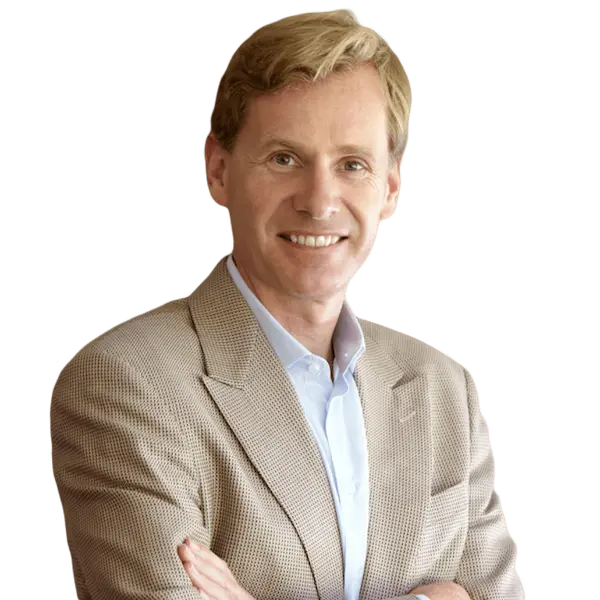
Professor Emeritus, UC Berkeley | Bestselling Author, Great at Work & Co-Author, Great by Choice | Thinkers50 Management Thinker | Leadership & Collaboration Expert
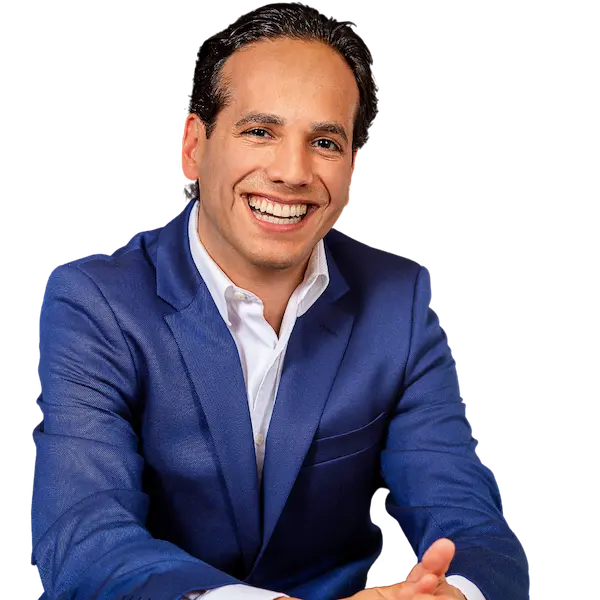
Physician & CEO of TIME TALKS | Creator of the Pain Is Energy™ Keynote | Brown University Alumnus | On Pain, Performance, Resilience & Human Potential


© 2026 Aurum Speakers Bureau. All Rights Reserved

| Basic Data Protection Information | |
|---|---|
| Data controller | AURUM SPEAKERS BUREAU S.L. |
| Address | Parc Audiovisual de Catalunya 1, Oficina S11, 08225 Terrassa, Spain |
| Purposes | We will use your data to respond to your requests and deliver our services to you. |
| Marketing | We will only send you marketing correspondence if you have given your prior consent, which you can do by ticking the box for that purpose. |
| Lawful basis | We will only process your data if you have given your prior consent, which you can do by ticking the box for that purpose. |
| Recipients | Generally, only our members of staff who have been duly authorised may access the data that you have provided. |
| Your Rights | You have the right to know what information we hold about you, to rectify it and to erase it, as explained in the additional information available on our website. |
| Additional Information | For more information, please see our "PRIVACY POLICY". |