
Abhijit Banerjee
2019 Nobel Laureate in Economic Sciences | MIT Professor & Co-founder of J-PAL | Bestselling Author, Poor Economics



2019 Nobel Laureate in Economic Sciences | University Professor, University of Chicago | Director, Development Innovation Lab | Pioneer of the Randomized Controlled Trial Revolution
Michael Kremer is a 2019 Nobel Laureate who didn't just study poverty — he built the institutions and mechanisms to fight it. From pioneering randomized controlled trials in Kenya to designing the Advance Market Commitment that helped deploy a vaccine saving 700,000 lives, his work spans the full distance from academic insight to global impact. At Chicago's Development Innovation Lab, he continues designing the infrastructure of evidence-based change.
Want to book Michael Kremer as a speaker for your event? Please provide the info below and we’ll get in touch within 24h:
Michael Kremer is one of the founding architects of modern development economics — a 2019 Nobel Laureate whose lifelong commitment to understanding and alleviating global poverty has produced some of the most consequential research in the history of the social sciences. University Professor in Economics at the University of Chicago and Director of the Development Innovation Lab at the Becker Friedman Institute for Research in Economics, Kremer has spent more than three decades translating rigorous academic inquiry into innovations that have reached hundreds of millions of people across the developing world.
Nobel Prize speaker Michael Kremer shared the 2019 Sveriges Riksbank Prize in Economic Sciences with Abhijit Banerjee and Esther Duflo for pioneering the use of randomized controlled trials in development economics. The Nobel Committee recognized how their experimental methods — borrowed from clinical medicine and applied to schools, health clinics, and farming communities across Africa and Asia — transformed the field’s ability to answer the most pressing question in global development: what actually works? Kremer’s early fieldwork in Kenya, which began during a teaching stint there in 1985, seeded a methodology that now entirely dominates development economics research worldwide.
The real-world impact of Kremer’s work is measurable in lives. He co-designed the Advance Market Commitment (AMC) framework for vaccines — a legally binding pledge by governments to purchase vaccines at a viable price if they meet efficacy standards — which catalyzed the development of a pneumococcal vaccine now deployed in 60 countries and credited with saving an estimated 700,000 lives. He co-founded the Deworm the World Initiative, which has delivered 1.8 billion deworming treatments to children globally. And he co-founded Precision Development (PxD), a nonprofit using digital technology and SMS-based agricultural advice to reach smallholder farmers at scale, now serving millions of users at a cost of under two dollars per person per year.
What distinguishes Kremer from many economists is his compulsion not merely to publish findings, but to build the organizations and institutions capable of acting on them. As Faculty Director of the Development Economics Center at the University of Chicago — and previously as Scientific Director of USAID’s Development Innovation Ventures, an evidence-based innovation fund he co-founded that has generated an estimated $17 in social benefit for every dollar invested — Kremer has created durable infrastructure for translating research into policy at scale. He and his Nobel co-recipients donated their prize money to the Weiss Fund for Research in Development Economics, ensuring the work outlasts any individual career.
As a speaker, Michael Kremer brings to the stage the rare credibility of a scientist who has operated at every level — from sitting with farmers in rural Kenya to advising the G20 on pandemic preparedness. His talks challenge audiences to think seriously about evidence, innovation, and the institutional designs that make transformative change possible. Senior leaders in government, finance, healthcare, and global business leave with a fundamentally sharper understanding of how to evaluate what works — and why that discipline is the most powerful tool available for solving complex problems.
How do you know if a program actually works — not in theory, but in practice, for real people in real conditions? Kremer traces the intellectual and institutional journey of the randomized controlled trial revolution in development economics: from early field experiments in Kenyan schools in the 1990s to a global research methodology that now guides billions of dollars in humanitarian and development investment. Drawing on his Nobel lecture and decades of fieldwork, he shows how this commitment to rigorous evidence transformed not only academic economics but the practice of international development, and what the same discipline can do for organizations in any sector seeking to move from intent to impact.
Some of the most important problems in global health, climate, and development go unsolved not because solutions don't exist, but because the incentive structures facing researchers, investors, and governments don't reward solving them. Kremer introduces the logic of Advance Market Commitments — the mechanism he helped design that unlocked private investment in a life-saving vaccine by guaranteeing a market before the product existed — and explores its broader application to carbon removal, renewable energy, agricultural innovation, and beyond. A rigorous, forward-looking session for leaders in finance, policy, pharma, and any industry where market design could unlock transformative innovation.
Research that stays in journals changes nothing. Kremer draws on his experience building organizations — from Deworm the World to Precision Development to USAID's Development Innovation Ventures — to show what it actually takes to move from a compelling finding to a program that reaches hundreds of millions of people. He examines the institutional, political, and financial conditions required to scale proven interventions, the lessons learned from decades of translating academic work into real-world programs, and what businesses and governments can learn from the development sector's hard-won experience of turning evidence into action at global scale.
2019 Nobel Laureate in Economic Sciences | MIT Professor & Co-founder of J-PAL | Bestselling Author, Poor Economics

Two-Time Olympic Gold Medalist | 1999 FIFA World Cup Champion | National Soccer Hall of Fame | Arthur Ashe Award for Courage | Author, My Greatest Save

#1 International Bestselling Author | Creator of The Third Door Framework | Forbes 30 Under 30
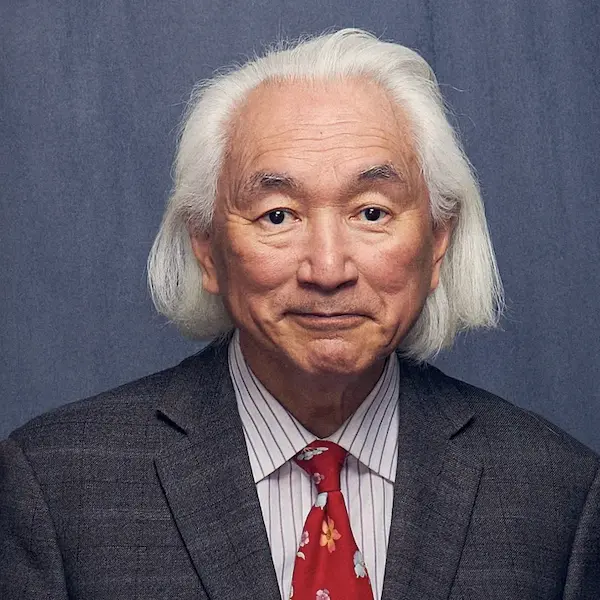
Co-Founder of String Field Theory | NYT Bestselling Author of Quantum Supremacy | Henry Semat Professor, CUNY | Futurist & Science Communicator


© 2026 Aurum Speakers Bureau. All Rights Reserved

| Basic Data Protection Information | |
|---|---|
| Data controller | AURUM SPEAKERS BUREAU S.L. |
| Address | Parc Audiovisual de Catalunya 1, Oficina S11, 08225 Terrassa, Spain |
| Purposes | We will use your data to respond to your requests and deliver our services to you. |
| Marketing | We will only send you marketing correspondence if you have given your prior consent, which you can do by ticking the box for that purpose. |
| Lawful basis | We will only process your data if you have given your prior consent, which you can do by ticking the box for that purpose. |
| Recipients | Generally, only our members of staff who have been duly authorised may access the data that you have provided. |
| Your Rights | You have the right to know what information we hold about you, to rectify it and to erase it, as explained in the additional information available on our website. |
| Additional Information | For more information, please see our "PRIVACY POLICY". |