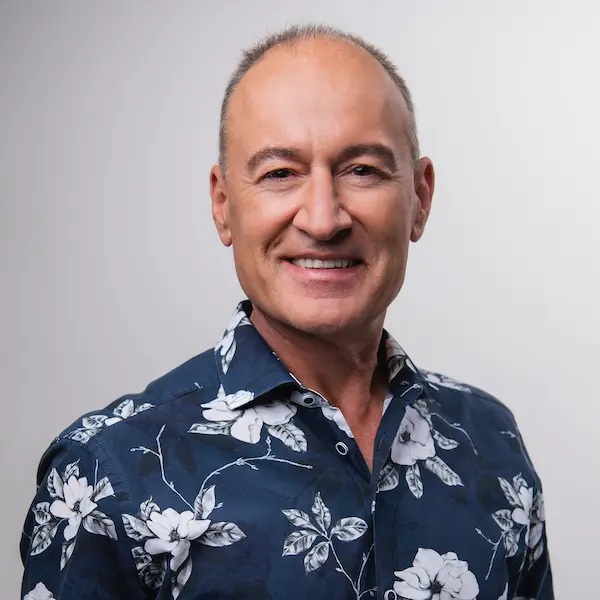
Markus Gross
Professor at ETH Zurich | Chief Scientist, Walt Disney Studios & Director of DisneyResearch|Studios | Two-Time Academy Award Winner (Technical Achievement)

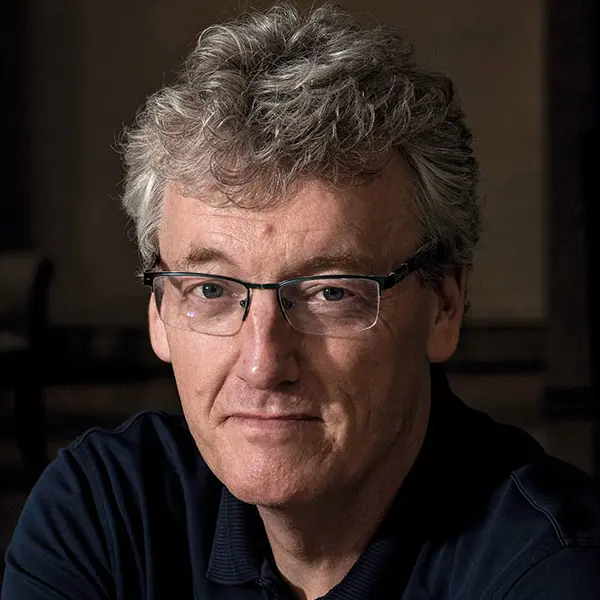
Nobel Laureate in Chemistry | Princeton Professor & Founder of Asymmetric Organocatalysis | Ludwig Cancer Research Distinguished Scholar | RSC Honorary Fellow
Sir David MacMillan is a Nobel Prize–winning chemist whose discoveries reshaped modern chemistry and made molecular design cleaner and more sustainable. A founder of asymmetric organocatalysis and pioneer of photoredox chemistry, he applies those breakthroughs to cancer and brain disease as Ludwig Princeton's first U.S. distinguished scholar. On stage, he turns frontier science into clear lessons on breakthrough innovation, resilience, and global impact.
Want to book David MacMillan as a speaker for your event? Please provide the info below and we’ll get in touch within 24h:
Sir David MacMillan is a Nobel Prize–winning chemist and one of the most influential scientific innovators of our era. Born in Bellshill, Scotland, to a working-class family, he rose from state-funded schools to the summit of global science. Speaker David MacMillan earned the 2021 Nobel Prize in Chemistry for the development of asymmetric organocatalysis, a breakthrough that fundamentally changed how chemists build molecules. He is the James S. McDonnell Distinguished University Professor of Chemistry at Princeton University, where he previously chaired the Department of Chemistry, and was knighted for services to chemistry and science.
His path ran from the University of Glasgow to doctoral study at the University of California, Irvine, postdoctoral research at Harvard University, and faculty appointments at UC Berkeley and Caltech before Princeton. There he founded and directs the Princeton Catalysis Initiative, which now backs some 500 research collaborations across a dozen departments with more than $100 million in committed funding, and he previously directed the Merck Center for Catalysis.
MacMillan is widely regarded as a founder of asymmetric organocatalysis, an approach that uses small organic molecules to control reactions with remarkable precision, with profound implications for pharmaceuticals, agrochemicals, and sustainable manufacturing. His work on photoredox and metallaphotoredox catalysis opened new pathways for discovery, and his light-based µMap labeling technology lets researchers map molecular interactions inside living cells. He serves as a distinguished scholar at the Ludwig Institute for Cancer Research at Princeton, the first such appointment in the United States, applying his catalysis breakthroughs to cancer and neurodegenerative disease.
A Fellow of the Royal Society and a member of the U.S. National Academy of Sciences, he has also been named an Honorary Fellow of the Royal Society of Chemistry, its highest distinction. He directed his Nobel winnings into the May and Billy MacMillan Foundation, created in his parents’ honor to widen university access for disadvantaged students in Scotland. He ranks among Aurum’s most sought-after Nobel Prize speakers, bringing rare credibility to every stage.
As a speaker, David MacMillan translates the real process of discovery into powerful lessons on creativity, perseverance, and long-term impact, showing audiences how bold ideas move from skepticism to world-changing results. Explore his Nobel Prize profile to see the work that reshaped a field.
Keynote speaker David MacMillan takes audiences inside the genuine path of discovery, showing how asymmetric organocatalysis grew from a contrarian hunch into a Nobel Prize–winning field. He reframes innovation as a disciplined craft rather than a flash of genius.
Audiences learn how to spot promising ideas early, shield them from premature dismissal, and create the conditions where unconventional thinking can mature into category-defining breakthroughs.
Drawing on decades at the research frontier, David MacMillan explores how failed experiments, rejection, and intellectual risk are not obstacles to progress but its essential fuel. The message resonates with leaders and teams working through uncertainty and long development cycles.
He offers practical ways to reframe failure as structured learning and to build the resilience and intellectual courage that sustain momentum in high-stakes environments.
Keynote speaker David MacMillan explains how modern catalysis enables cleaner, more efficient processes that cut waste and environmental impact, connecting fundamental science to sustainability at industrial scale.
He shows how sustainability-driven innovation succeeds only when long-term scientific investment aligns with commercial realities, regulation, and real-world adoption.
David MacMillan founded and directs the Princeton Catalysis Initiative, a cross-disciplinary model that now backs hundreds of research collaborations with more than $100 million in committed funding. He explains how it was designed and why it works.
Leaders gain a practical blueprint for breaking down silos, structuring incentives that make collaboration routine rather than exceptional, and building partnerships between research teams and industry that produce results.
This keynote examines how to build cultures that reward curiosity, rigor, and collaboration. David MacMillan shares leadership lessons from directing world-class research groups under constant pressure to deliver.
Attendees gain actionable insight into talent development, mentorship, and the leadership systems that sustain excellence even amid intense performance and funding pressure.
Professor at ETH Zurich | Chief Scientist, Walt Disney Studios & Director of DisneyResearch|Studios | Two-Time Academy Award Winner (Technical Achievement)
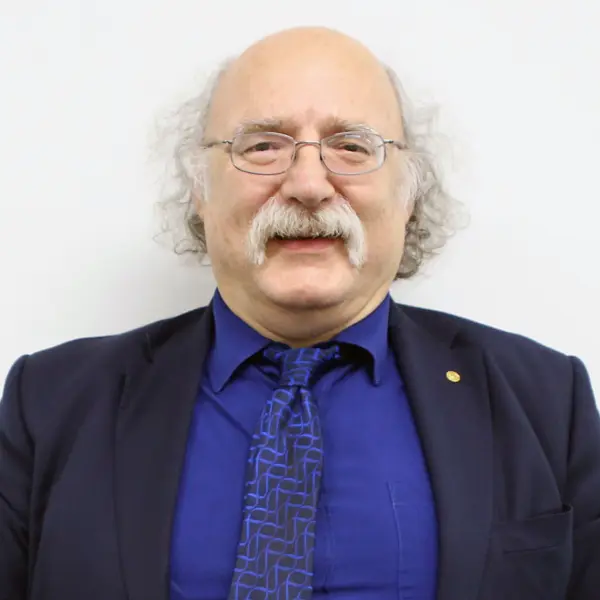
2016 Nobel Laureate in Physics | Sherman Fairchild University Professor of Physics, Princeton | Fellow of the Royal Society | Pioneer of Topological Quantum Matter
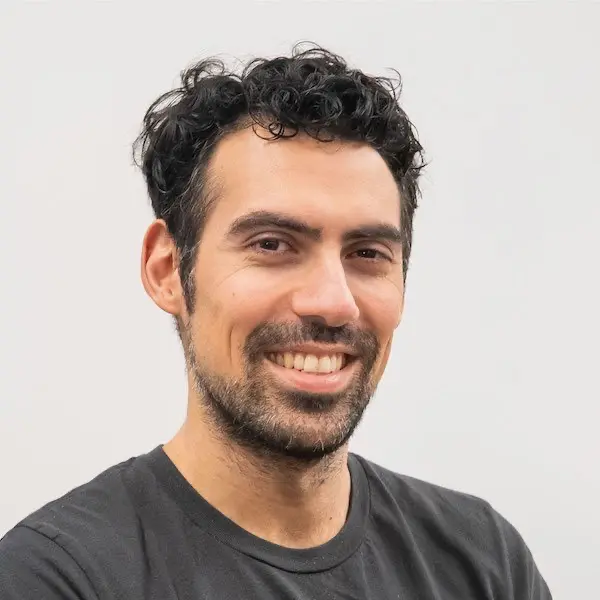
World-Renowned Security Researcher & Ethical Hacker | Inventor of Evercookie & the Samy XSS Worm | Co-Founder of Openpath | Cybersecurity, Privacy & Hardware Expert
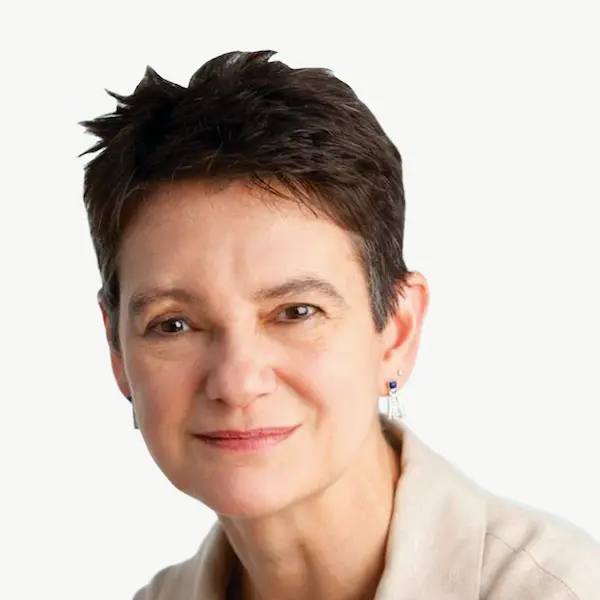
Bennett Professor of Public Policy, University of Cambridge | Leading Economist on AI, Productivity & the Digital Economy | Bestselling Author of The Measure of Progress


© 2026 Aurum Speakers Bureau. All Rights Reserved

| Basic Data Protection Information | |
|---|---|
| Data controller | AURUM SPEAKERS BUREAU S.L. |
| Address | Parc Audiovisual de Catalunya 1, Oficina S11, 08225 Terrassa, Spain |
| Purposes | We will use your data to respond to your requests and deliver our services to you. |
| Marketing | We will only send you marketing correspondence if you have given your prior consent, which you can do by ticking the box for that purpose. |
| Lawful basis | We will only process your data if you have given your prior consent, which you can do by ticking the box for that purpose. |
| Recipients | Generally, only our members of staff who have been duly authorised may access the data that you have provided. |
| Your Rights | You have the right to know what information we hold about you, to rectify it and to erase it, as explained in the additional information available on our website. |
| Additional Information | For more information, please see our "PRIVACY POLICY". |