
Lech Walesa
1983 Nobel Peace Prize Laureate | Founder & Leader of Solidarity | First Democratically Elected President of Poland | Icon of the Fall of Communism

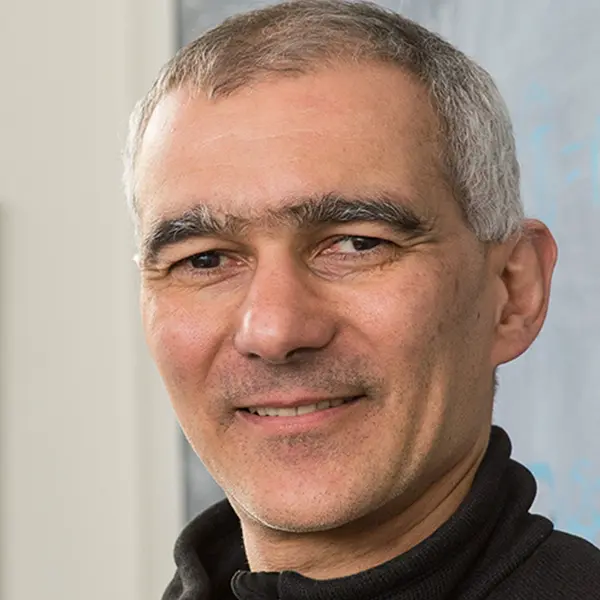
2023 Nobel Laureate in Chemistry | Lester Wolfe Professor, MIT | Pioneer of Quantum Dot Synthesis | Co-Founder, Lumicell
Moungi Bawendi won the 2023 Nobel Prize in Chemistry for inventing the synthesis method that turned quantum dots from a lab curiosity into a $4 billion global industry powering QLED screens, biomedical imaging, and next-generation solar cells. Lester Wolfe Professor at MIT and co-founder of cancer-imaging company Lumicell, he shows senior audiences how curiosity-driven science becomes the technology that reshapes the world.
Want to book Moungi Bawendi as a speaker for your event? Please provide the info below and we’ll get in touch within 24h:
Moungi Bawendi is the 2023 Nobel Laureate in Chemistry and the scientist who unlocked the practical power of quantum dots, nanoparticles so small that their properties are governed not by chemistry in the traditional sense, but by the laws of quantum mechanics. As Lester Wolfe Professor of Chemistry at the Massachusetts Institute of Technology, where he has been a faculty member since 1990, Bawendi transformed quantum dots from a laboratory curiosity into one of the most commercially consequential materials of the twenty-first century.
Nobel Prize speaker Moungi Bawendi is best known for the 1993 breakthrough that revolutionized quantum dot synthesis. Working with his doctoral students at MIT, he developed a “hot-injection” method: introducing chemical precursors into a high-temperature solvent to nucleate crystals, then carefully controlling temperature to grow them to a precise, uniform size. The result was something the field had never achieved before, nearly perfect quantum dots, tunable by size to emit any color of the spectrum with extraordinary purity. The Nobel Committee described this work as having “revolutionized the chemical production of quantum dots.” The impact has been enormous: quantum dots now power QLED television displays, LED lighting systems, biomedical imaging tools, and solar energy devices across a global market worth over $4 billion. His laboratory continues to push the technology forward, working with industry partners to unlock brighter, longer-lasting, and more energy-efficient quantum dot displays.
Beyond displays, Bawendi’s laboratory at MIT has pioneered quantum dots for in-vivo biomedical imaging, developing nanoparticles that can navigate the bloodstream to map tumors, blood vessels, and lymph nodes with extraordinary resolution. He co-founded Lumicell, a company whose fluorescence-guided surgical imaging system, developed in his MIT lab, helps surgeons detect residual cancer cells during breast tumor removal and reduce the need for repeat surgery. The system has been tested in over 700 breast cancer patients across five clinical trials. Bawendi is a member of the National Academy of Sciences and the American Academy of Arts and Sciences, and was elected to the National Academy of Engineering in 2026. His many honors include the Ernest Orlando Lawrence Award, the Sackler Prize, a Clarivate Citation Laureate designation, and a 2025 Carnegie Corporation Great Immigrant Award.
Bawendi’s personal story is as compelling as his science. Born in Paris to a Tunisian mathematician father and a French mother, he spent his childhood moving between France, Tunisia, and eventually the United States, where his father joined the faculty at Purdue University. That experience of being a cultural outsider, of navigating between worlds, gave him, in his own words, the freedom to follow his own path in science regardless of convention. He studied theory at Harvard, switched to experimental science at the University of Chicago, discovered quantum dots as a postdoctoral fellow at Bell Labs under his future co-laureate Louis Brus, and never looked back. “None of us who started this field could have predicted where we would be 30 years later,” he has said. “It’s just amazing to me.”
As a speaker, Moungi Bawendi brings to life the extraordinary journey from fundamental curiosity to world-changing technology, making the abstract world of quantum mechanics visceral and immediate for executive and general audiences alike. His talks span the science of quantum dots, the unpredictable arc of curiosity-driven research, nanotechnology’s expanding role in medicine and sustainable energy, and the power of interdisciplinary thinking. Audiences leave with a profound sense of how basic science, pursued with patience and imagination, becomes the technology that reshapes industries.
In 1993, Moungi Bawendi and his students cracked a problem that had stumped the field for a decade: how to produce quantum dots of uniform size and near-perfect optical quality. They had no idea the solution would one day power the world's televisions. This keynote traces that journey, from the basic physics of quantum confinement to the hot-injection synthesis breakthrough to today's multibillion-dollar industry, and offers audiences a vivid illustration of how the most consequential technologies often begin as pure scientific curiosity, with no predetermined destination.
Quantum dots that navigate the bloodstream to illuminate tumors. Surgical imaging systems that detect residual cancer cells invisible to the human eye. Nanoparticles that deliver drugs with precision to specific tissues. Moungi Bawendi's laboratory has been at the forefront of applying nanomaterials to medicine for more than three decades, and his co-founded company Lumicell is carrying these breakthroughs into the operating room. This talk explores where nanomedicine is headed, and why the convergence of chemistry, physics, and biology at the nanoscale may define the next era of healthcare.
What does it mean for matter to behave by quantum rules rather than classical ones? Bawendi is one of science's most gifted explainers of this counterintuitive realm, the world where a particle's size determines its color, where electrons behave like waves, and where the rules that govern everyday life no longer apply. This talk makes quantum mechanics genuinely accessible, using quantum dots as a concrete, visual gateway into one of physics' most profound and practically important domains. Ideal for technology, finance, and executive audiences seeking a grounded foundation in the science that will shape the coming decade.
Born in Paris, raised across France, Tunisia, and the American Midwest, Moungi Bawendi has spent his career crossing disciplinary and cultural borders, from theory to experiment, from physics to chemistry to medicine, from Bell Labs to MIT. This keynote draws on his personal journey and scientific career to make a compelling case for interdisciplinary thinking, the unexpected paths of innovation, and the value of following curiosity rather than convention. Deeply personal and genuinely inspiring, it speaks to leaders in any sector navigating complexity, transformation, and the imperative to think differently.
1983 Nobel Peace Prize Laureate | Founder & Leader of Solidarity | First Democratically Elected President of Poland | Icon of the Fall of Communism

Elite Tennis Coach | Former Coach of Rafael Nadal (22 Grand Slams, 74 Tournament Wins) | Director, Rafa Nadal Academy | Bestselling Author, Todo Se Puede Entrenar

Molecular Biologist & Viral Science Communicator | Filmmaker & Author | Four-Time TEDx Speaker | Creator of EctoLife | 35M+ Followers & 25B+ Video Views
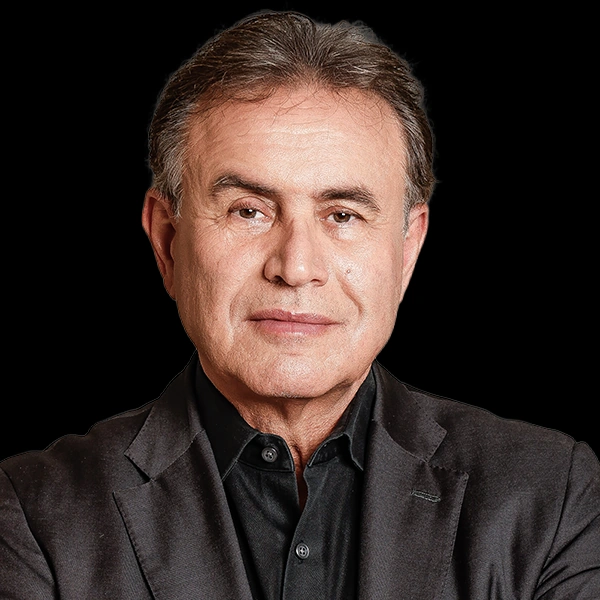
Professor Emeritus, NYU Stern School of Business | CEO, Roubini Macro Associates | Bestselling Author, MegaThreats | Former White House & U.S. Treasury Economist | "Dr. Doom"


© 2026 Aurum Speakers Bureau. All Rights Reserved

| Basic Data Protection Information | |
|---|---|
| Data controller | AURUM SPEAKERS BUREAU S.L. |
| Address | Parc Audiovisual de Catalunya 1, Oficina S11, 08225 Terrassa, Spain |
| Purposes | We will use your data to respond to your requests and deliver our services to you. |
| Marketing | We will only send you marketing correspondence if you have given your prior consent, which you can do by ticking the box for that purpose. |
| Lawful basis | We will only process your data if you have given your prior consent, which you can do by ticking the box for that purpose. |
| Recipients | Generally, only our members of staff who have been duly authorised may access the data that you have provided. |
| Your Rights | You have the right to know what information we hold about you, to rectify it and to erase it, as explained in the additional information available on our website. |
| Additional Information | For more information, please see our "PRIVACY POLICY". |