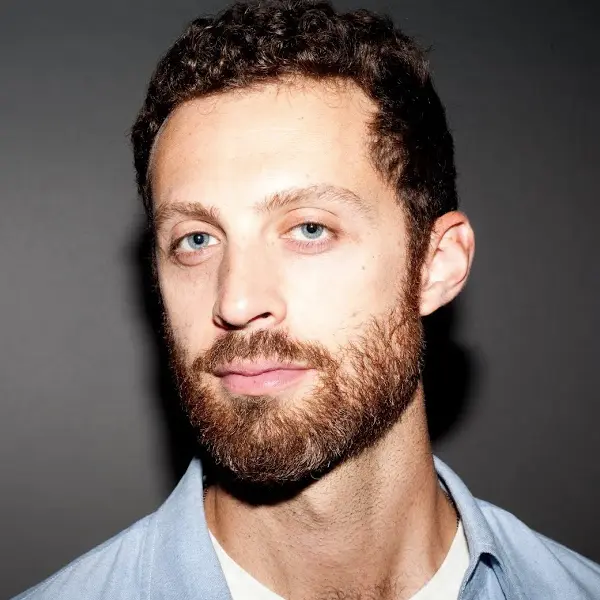
Jesse Israel
Founder of The Big Quiet | 5x Audible Bestseller | Human Performance & Mindful Leadership Expert

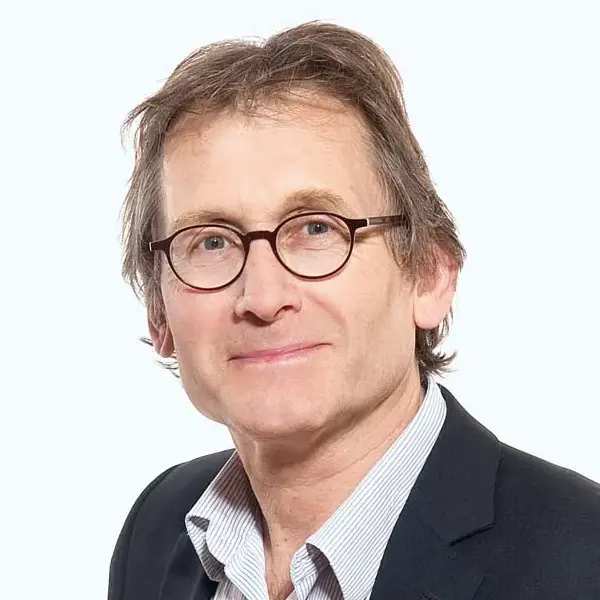
2016 Nobel Laureate in Chemistry | Jacobus van't Hoff Professor, University of Groningen | Inventor of the Molecular Motor | Pioneer of Photopharmacology
Ben Feringa won the 2016 Nobel Prize in Chemistry for inventing the molecular motor, a molecule that spins on command and launched the age of nanomachines. Jacobus van't Hoff Professor at the University of Groningen and one of chemistry's most celebrated communicators, he shows senior audiences how machines the size of molecules are set to reshape medicine, materials, and the future of technology.
Want to book Ben Feringa as a speaker for your event? Please provide the info below and we’ll get in touch within 24h:
Ben Feringa is the 2016 Nobel Laureate in Chemistry and one of the most imaginative chemists alive, the man who made a molecule spin, built the world’s first nanocar, and opened the door to a future where machines operate at the scale of individual atoms. As Jacobus van’t Hoff Distinguished Professor of Molecular Sciences at the University of Groningen‘s Stratingh Institute for Chemistry, he has spent four decades pushing chemistry into territory that once belonged to science fiction. A decade on from the Nobel Prize that honoured that work, speaker Ben Feringa remains at the frontier of the field he helped invent.
Nobel Prize speaker Ben Feringa is best known for designing and synthesizing molecular machines, nanoscale devices built from molecules that can move, rotate, and perform work in response to external stimuli such as light. In 1999 he achieved a landmark breakthrough: the first synthetic molecular motor capable of spinning continuously and unidirectionally, driven by light. The Nobel Committee later compared the moment to the earliest electric motors of the 1830s, primitive devices that eventually gave rise to washing machines, fans, and food processors. Feringa went on to use his molecular motors to rotate a glass cylinder 10,000 times the motor’s own size, to design a four-wheeled molecular nanocar that moves across surfaces, and to develop molecular switches that turn drug activity on and off using light, pioneering the field known as photopharmacology. His laboratory’s most recent work integrates light-driven molecular motor phospholipids into cell membranes and demonstrates light-activated drug delivery with real anti-tumour efficacy in cancer cells.
The scope of his research is matched by the depth of its recognition. Feringa has received over fifty international awards, including the Spinoza Prize, the Netherlands’ highest scientific honour, as well as the Körber European Science Prize, the Paracelsus Medal, the Solvay Prize for Chemistry for the Future, and the Centenary Prize of the Royal Society of Chemistry. He is a member of the Royal Netherlands Academy of Arts and Sciences, a Foreign Honorary Member of the American Academy of Arts and Sciences, and a Foreign Associate of the U.S. National Academy of Sciences. The Dutch monarchy appointed him a Knight of the Order of the Netherlands Lion, a distinction later elevated to Commander following the Nobel Prize.
Feringa’s work sits at the intersection of chemistry, nanotechnology, medicine, and materials science, a convergence that makes his science unusually relevant to audiences far beyond the laboratory. Molecular machines are already being explored as targeted cancer therapies that drill into tumour cells, light-activated antibiotics that can be switched on at the site of infection to counter resistance, smart drug delivery capsules activated by a flash of visible light, and responsive materials with programmable mechanical behaviour. The Nobel Committee framed it precisely: molecular machines today are where electric motors were in the 1830s, the technology is real, and the applications are just beginning.
As a speaker, Ben Feringa brings extraordinary warmth, curiosity, and narrative energy to the stage. A farmer’s son from rural Groningen who fell in love with chemistry and built one of the world’s most celebrated research groups, he talks about the joy of discovery in a way that captivates scientists and non-scientists alike. Audiences leave with a genuine sense of wonder at what chemistry can do, and a compelling vision of the nanoscale future being built, molecule by molecule, right now.
In 1999, Ben Feringa made a molecule spin in one direction. That first synthetic molecular motor opened an entirely new chapter in chemistry and nanotechnology. This keynote traces the arc from that breakthrough to today's molecular nanocars, light-activated drug delivery systems, and responsive materials with programmable mechanical behaviour. Framing molecular machines as the nanotechnology equivalent of the first electric motors, Feringa offers audiences both the wonder of the science and a clear-eyed view of where it is heading, and why the coming decade will be defined by chemistry at the nanoscale.
What if a cancer drug could stay dormant in the body until a flash of light switched it on precisely at the tumour? What if an antibiotic could be switched off once its work was done, preventing the rise of resistance? Ben Feringa's laboratory is building exactly these molecules. This talk explores the frontier of photopharmacology, light-controlled medicine, and what it means for oncology, infectious disease, and precision therapeutics. It is one of the most compelling visions in contemporary science, told by the researcher most responsible for making it real.
Ben Feringa grew up the son of a farmer in a small Dutch village, fell in love with chemistry, and went on to build one of the world's most celebrated research groups. This is a talk about what truly drives great science: not the pursuit of applications, but the pure joy of discovery, of following an idea into the unknown and being surprised by what you find. Drawing on decades of breakthroughs, dead ends, and unexpected revelations, Feringa makes a passionate, deeply personal case for the irreplaceable value of curiosity-driven research. Equally inspiring for scientific and business audiences.
The challenges facing humanity, from climate change and drug resistance to the energy transition and water scarcity, all have a chemistry dimension. Feringa explores how molecular design, nanotechnology, and synthetic chemistry are generating solutions across these domains: responsive materials that adapt to their environment, molecular systems that catalyse reactions cleanly and efficiently, and light-driven therapeutics that could transform how we treat disease. This wide-angle talk positions chemistry not as a technical discipline but as the foundational science of the twenty-first century, and argues that the molecular scale is where the most important battles will be won.
Founder of The Big Quiet | 5x Audible Bestseller | Human Performance & Mindful Leadership Expert
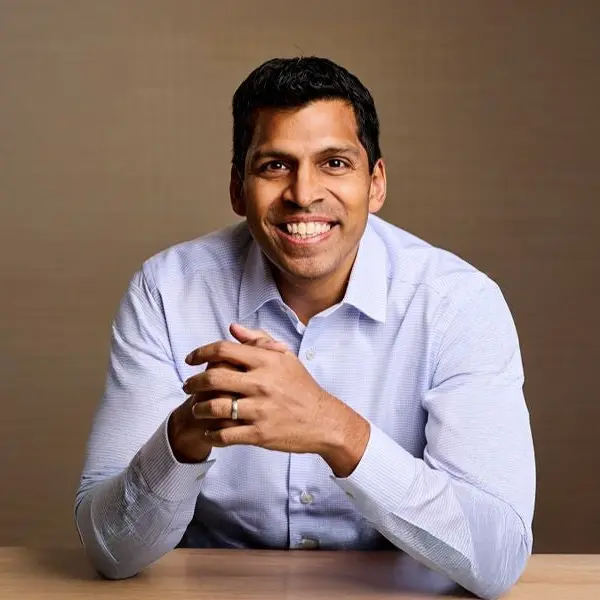
Chief Economist at OpenAI | Distinguished Professor at Duke University | Former White House CHIPS Coordinator | Expert on AI, Innovation & Industrial Policy
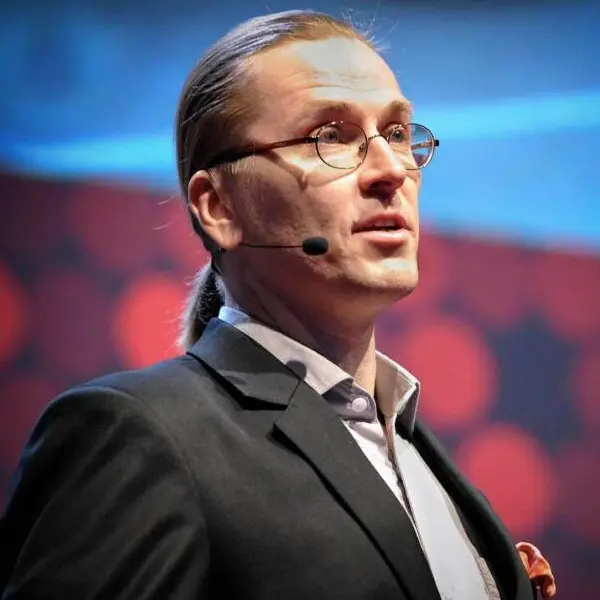
Chief Research Officer, Sensofusion | Cybersecurity Expert with Over 30 Years of Experience | Bestselling Author, If It's Smart, It's Vulnerable
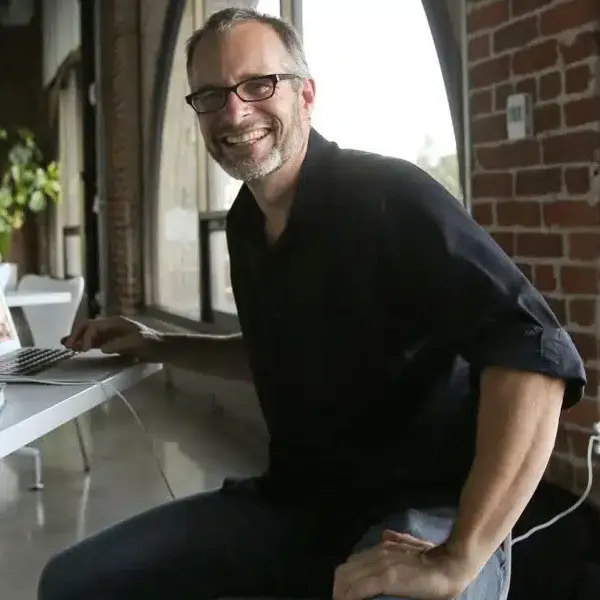
Synthetic Biologist & Futurist | Co-founder, Genome Project-write | President, Humane Genomics | Co-author, The Genesis Machine


© 2026 Aurum Speakers Bureau. All Rights Reserved

| Basic Data Protection Information | |
|---|---|
| Data controller | AURUM SPEAKERS BUREAU S.L. |
| Address | Parc Audiovisual de Catalunya 1, Oficina S11, 08225 Terrassa, Spain |
| Purposes | We will use your data to respond to your requests and deliver our services to you. |
| Marketing | We will only send you marketing correspondence if you have given your prior consent, which you can do by ticking the box for that purpose. |
| Lawful basis | We will only process your data if you have given your prior consent, which you can do by ticking the box for that purpose. |
| Recipients | Generally, only our members of staff who have been duly authorised may access the data that you have provided. |
| Your Rights | You have the right to know what information we hold about you, to rectify it and to erase it, as explained in the additional information available on our website. |
| Additional Information | For more information, please see our "PRIVACY POLICY". |