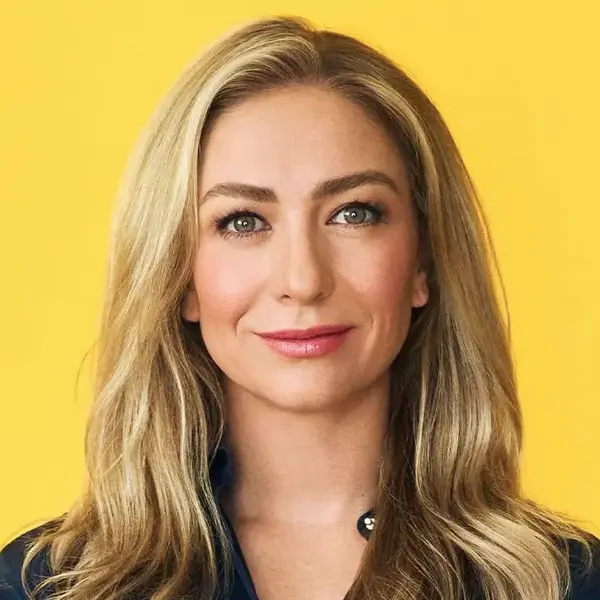
Whitney Wolfe Herd
Founder of Bumble | Entrepreneur & Women's Empowerment Advocate | Nasdaq IPO Pioneer | Digital Safety Legislator


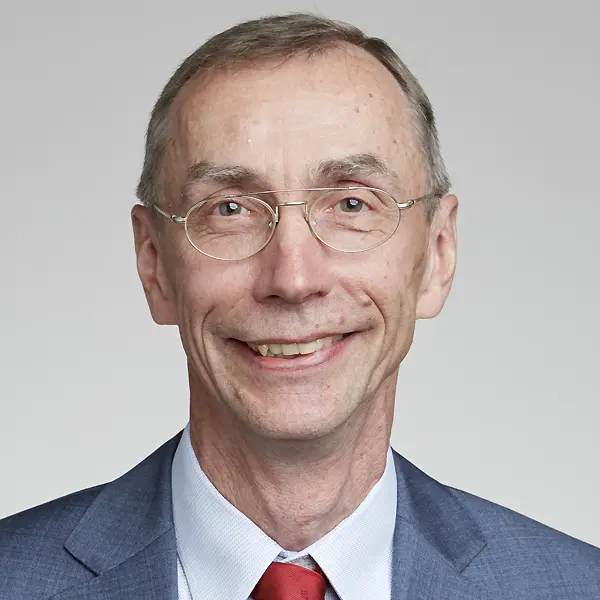
2022 Nobel Laureate in Physiology or Medicine | Founder of Paleogenetics | Director, Max Planck Institute for Evolutionary Anthropology
Svante Pääbo is the Nobel Prize-winning scientist who founded an entire field, paleogenetics, and answered humanity's oldest question: where do we come from? By sequencing the Neanderthal genome and discovering the Denisovans, he proved our ancestors interbred with extinct relatives, forever changing biology, medicine, and our understanding of what makes us human.
Want to book Svante Pääbo as a speaker for your event? Please provide the info below and we’ll get in touch within 24h:
Science speaker Svante Pääbo is the Nobel Prize-winning scientist who single-handedly created the field of paleogenetics, the study of ancient DNA to reconstruct human evolutionary history. As founding director of the Department of Evolutionary Genetics at the Max Planck Institute for Evolutionary Anthropology in Leipzig, Germany, he has spent decades decoding the genomes of extinct human relatives, fundamentally changing how we understand what it means to be human.
Svante Pääbo is best known for achieving what many once considered impossible: sequencing the complete Neanderthal genome. His team’s landmark discovery revealed that modern humans of European and Asian descent carry roughly 1–4% Neanderthal DNA, proving that our ancestors interbred with their closest relatives after migrating out of Africa some 70,000 years ago. In 2010, his group also identified the Denisovans, an entirely unknown branch of ancient humanity, discovered from a single finger bone fragment found in a Siberian cave, expanding our family tree in a single stroke.
These discoveries carry consequences far beyond evolutionary curiosity. Pääbo’s work has shown that Neanderthal gene variants in modern humans influence immune responses, COVID-19 severity, drug metabolism, and neurological development, linking our ancient past directly to present-day human health. Time magazine named him one of the 100 Most Influential People in the World, and his book Neanderthal Man: In Search of Lost Genomes became a landmark work for both scientific and general audiences.
In 2022, Pääbo was awarded the Nobel Prize in Physiology or Medicine for his discoveries concerning the genomes of extinct hominins and human evolution, a solo prize reflecting the singular nature of his contributions. His honors span decades of international recognition: the Gottfried Wilhelm Leibniz Prize, the Breakthrough Prize in Life Sciences, the Japan Prize, the Körber European Science Prize, the Louis-Jeantet Prize for Medicine, and election to both the Royal Swedish Academy of Sciences and the US National Academy of Sciences.
As a speaker, Svante Pääbo brings one of science’s most cinematic intellectual journeys to the stage. His talks explore the grand questions of human origins (where we come from, what makes us uniquely human, and how our ancient past shapes our biology today) through the lens of a scientist who lived the discoveries firsthand. Senior audiences across medicine, life sciences, technology, and leadership come away with a deeper understanding of human uniqueness, the power of curiosity-driven research, and the unexpected ways deep history illuminates modern life.
Pääbo recounts the decades-long scientific quest to sequence the Neanderthal genome — from extracting DNA from ancient bone fragments to the discovery that 1–4% of modern human DNA traces back to our extinct relatives. This talk takes audiences through one of science's greatest detective stories, revealing how our ancient past shapes immunity, disease susceptibility, and human cognition today. Equal parts scientific breakthrough and personal memoir, it leaves audiences questioning what it truly means to be human.
In 2010, a fragment of bone no larger than a fingertip upended everything scientists thought they knew about ancient humanity. Pääbo recounts how his team identified an entirely unknown human species — the Denisovans — using only DNA, no skull, no skeleton. This keynote explores the power of genomic science to make discoveries previously impossible, and what the existence of multiple human species tells us about migration, diversity, and coexistence — lessons with profound resonance for the world today.
What is it that sets Homo sapiens apart from every other species that has ever existed? Pääbo explores the genetic differences between modern humans and our closest relatives — differences that may underlie our capacity for language, cumulative culture, and complex societies. Drawing on decades of comparative genomics, this talk raises profound questions about human nature, the myth of racial purity, and why understanding our evolutionary origins matters urgently in a world shaped by migration and diversity.
Behind every landmark discovery is a story of doubt, dead ends, and stubbornness. Pääbo reflects on the institutional, technical, and personal obstacles his team overcame across 30 years of research — and what that journey reveals about how truly transformative science happens. A deeply human talk for leaders, innovators, and anyone who wants to understand how curiosity, risk tolerance, and long-term thinking produce breakthroughs that redefine entire fields.
Founder of Bumble | Entrepreneur & Women's Empowerment Advocate | Nasdaq IPO Pioneer | Digital Safety Legislator
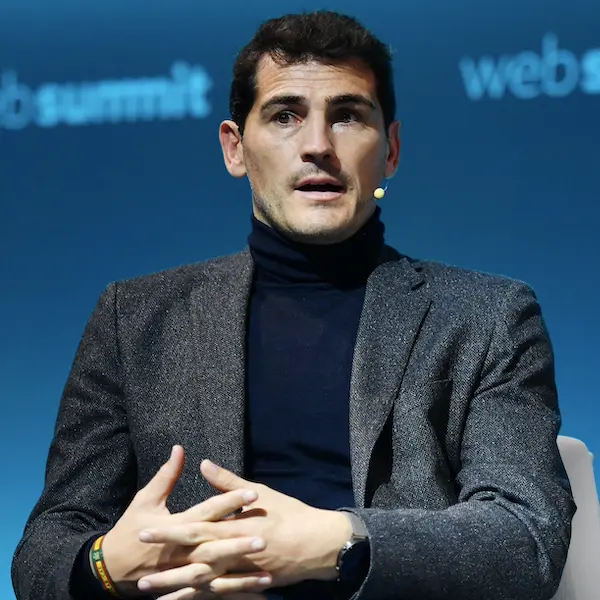
World Cup-Winning Goalkeeper | Legendary Real Madrid & Spain Captain | Deputy Director General, Real Madrid Foundation | Sportstech Entrepreneur
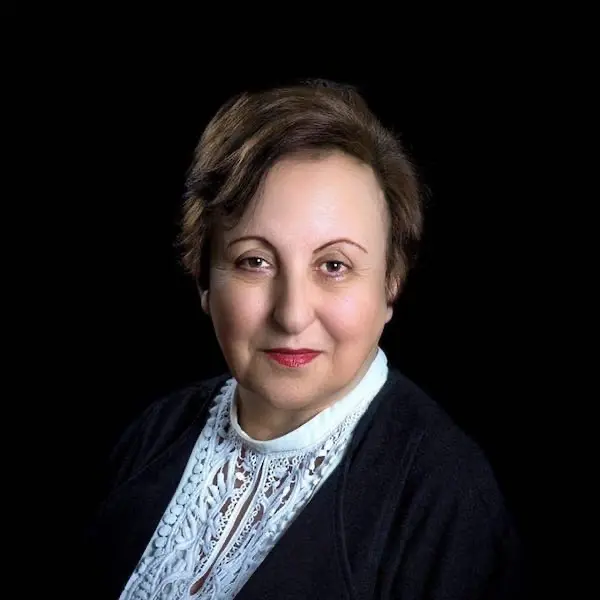
Nobel Peace Prize Laureate (2003) | First Muslim Woman & First Iranian Nobel Laureate | Founder, Defenders of Human Rights Center | Lawyer, Author & Activist
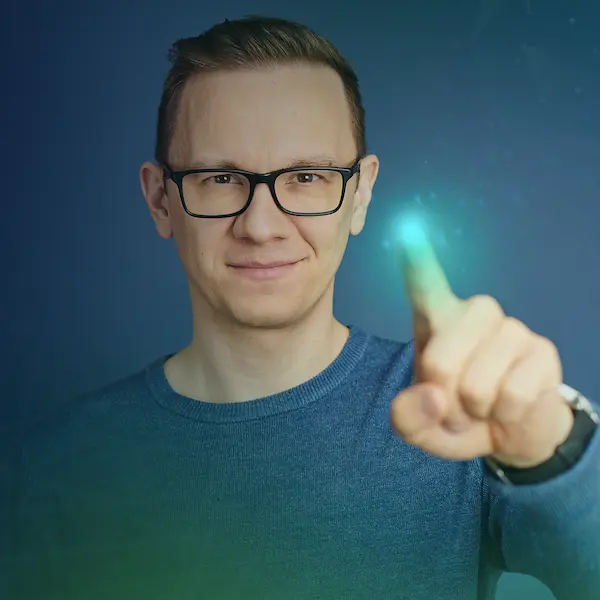
'The Medical Futurist' & Director of The Medical Futurist Institute | Physician & PhD in Genomics | Author & LinkedIn Top Voice in Healthcare | 900+ Keynotes Worldwide


© 2026 Aurum Speakers Bureau. All Rights Reserved

| Basic Data Protection Information | |
|---|---|
| Data controller | AURUM SPEAKERS BUREAU S.L. |
| Address | Parc Audiovisual de Catalunya 1, Oficina S11, 08225 Terrassa, Spain |
| Purposes | We will use your data to respond to your requests and deliver our services to you. |
| Marketing | We will only send you marketing correspondence if you have given your prior consent, which you can do by ticking the box for that purpose. |
| Lawful basis | We will only process your data if you have given your prior consent, which you can do by ticking the box for that purpose. |
| Recipients | Generally, only our members of staff who have been duly authorised may access the data that you have provided. |
| Your Rights | You have the right to know what information we hold about you, to rectify it and to erase it, as explained in the additional information available on our website. |
| Additional Information | For more information, please see our "PRIVACY POLICY". |