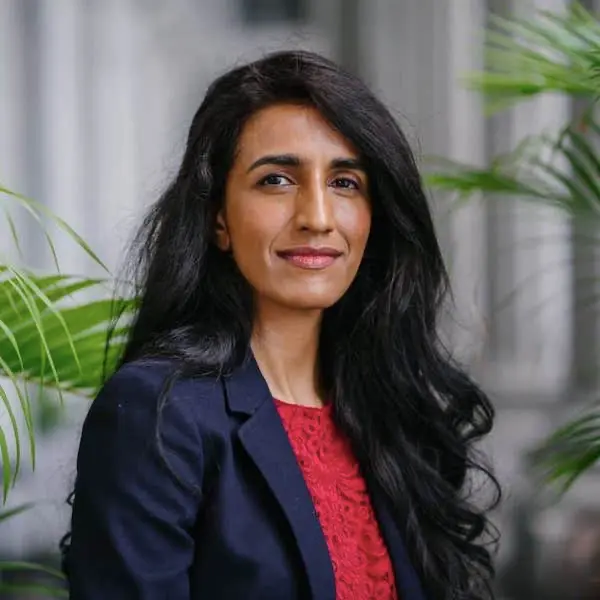
Ayesha Khanna
Co-Founder & CEO, Addo | Board: Johnson Controls, NEOM Tonomus & L'Oréal | Forbes Top AI Entrepreneur | Edelman Top 50 AI Creator | Harvard & LSE


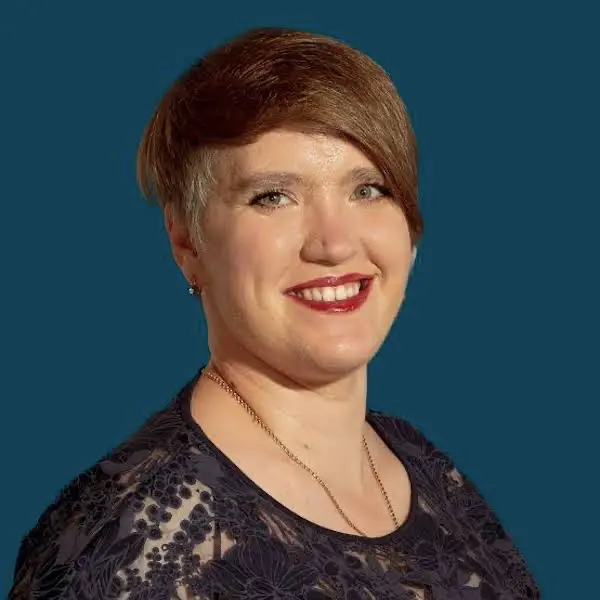
Research Scientist, MIT Media Lab | Visiting Faculty at Google | Brain-Computer Interface Pioneer | Lead Author of Your Brain on ChatGPT | UNESCO Neurotech Ethics Expert
Dr. Nataliya Kosmyna is a research scientist at MIT Media Lab and one of the world's leading voices on brain-computer interfaces. She has spent over 16 years building systems that read brain activity to help paralyzed patients communicate and to sharpen focus and learning. She also led the widely discussed MIT study on the cognitive cost of writing with AI. On stage, she shows how technology can amplify human intelligence rather than replace it.
Want to book Nataliya Kosmyna as a speaker for your event? Please provide the info below and we’ll get in touch within 24h:
Dr. Nataliya Kosmyna works at one of the most consequential frontiers in technology: the direct connection between the human brain and the machines around it. An MIT Media Lab research scientist with more than sixteen years in brain-computer interfaces, she builds systems that read brain activity in real time, and she asks a question most of the technology industry would rather skip: what does using these tools actually cost us?
AI speaker Nataliya Kosmyna is a research scientist in MIT Media Lab’s Fluid Interfaces group and a visiting research faculty member at Google. Her work spans decoding mental images from brain signals, measuring engagement and fatigue as they happen, and building interfaces that let people with ALS and other conditions communicate with their families or control their environment. She became one of the most cited voices in the global AI conversation as lead author of the MIT study “Your Brain on ChatGPT,” which used EEG to examine what happens in the brain when people write with an AI assistant, and introduced the idea of “cognitive debt” into mainstream debate.
Kosmyna earned her PhD in non-invasive brain-computer interfaces in France before joining MIT Media Lab in 2017, and her projects have been deployed in classrooms, hospitals, workplaces, aerospace settings, low Earth orbit, and on the Moon, tested by more than seventeen thousand people. She collaborates with teams at NASA, Boston Dynamics, and Microsoft Research. Recognizing that this technology raises questions no single lab can answer, she served as one of twenty-four international experts who drafted UNESCO’s Recommendation on the Ethics of Neurotechnology, adopted in November 2025, and advises UNICEF on neurotechnology and children. She is a L’Oréal-UNESCO Women in Science laureate and was named one of the top French talents by MIT Innovators Under 35.
As a speaker, Nataliya Kosmyna is that unusual combination: a builder of the technology and one of its most thoughtful critics. She speaks on brain-computer interfaces and the future of human-machine collaboration, the cognitive cost of AI tools and how to use them well, attention, focus, and augmenting human performance, and the ethics and governance of neurotechnology. Audiences leave with a clear-eyed view of where this technology is genuinely heading, and sharper questions to ask about the tools they already use every day.
Kosmyna led the MIT study that put the phrase "cognitive debt" into the global conversation, using EEG to observe what happens in the brain when people write with an AI assistant versus a search engine versus nothing at all. She walks audiences through what the research found, what it does and does not yet prove, and how organizations can adopt AI in ways that build capability rather than quietly erode it.
Drawing on sixteen years of building BCIs, Kosmyna separates genuine capability from science fiction. She shows how brain sensing already helps paralyzed patients communicate, keeps astronauts attentive, and supports learning in classrooms, and gives audiences a grounded picture of what will and will not be possible as these interfaces move toward everyday use.
Kosmyna's research uses real-time biofeedback to strengthen the mental states that matter most for performance. She explains what attention and focus actually look like inside the brain, why they are under such pressure in modern work, and what closed-loop technology and better habits can realistically do to protect and improve them.
As one of the experts who drafted UNESCO's global recommendation on neurotechnology ethics, Kosmyna addresses the questions arriving faster than the rules: who owns your brain data, what protections children need, and how societies should govern technology that can read and influence cognition. Essential for leaders, policymakers, and anyone building or buying these tools.
Co-Founder & CEO, Addo | Board: Johnson Controls, NEOM Tonomus & L'Oréal | Forbes Top AI Entrepreneur | Edelman Top 50 AI Creator | Harvard & LSE
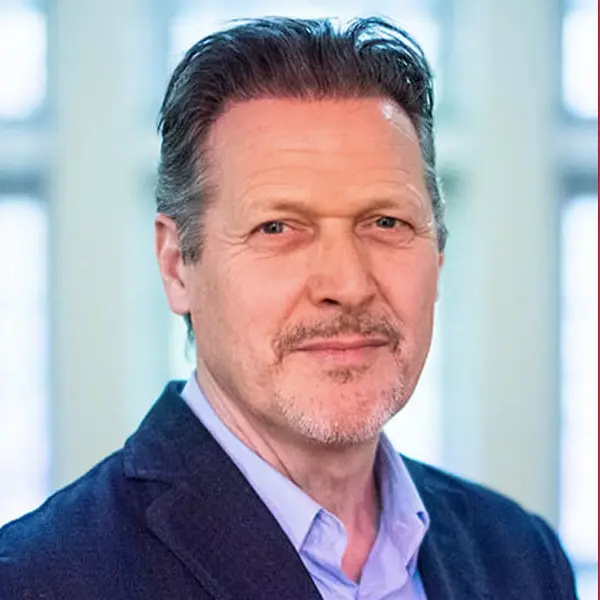
Regenerative Futurist & Innovation Strategist | Singularity University Graduate | Founder, RegenerateX & HumanWorks Design | Expert in AI, Exponential Tech & Leadership

Bestselling Author of Superintelligence | Founder & Principal Researcher, Macrostrategy Research Initiative | Founding Director, Oxford's Future of Humanity Institute
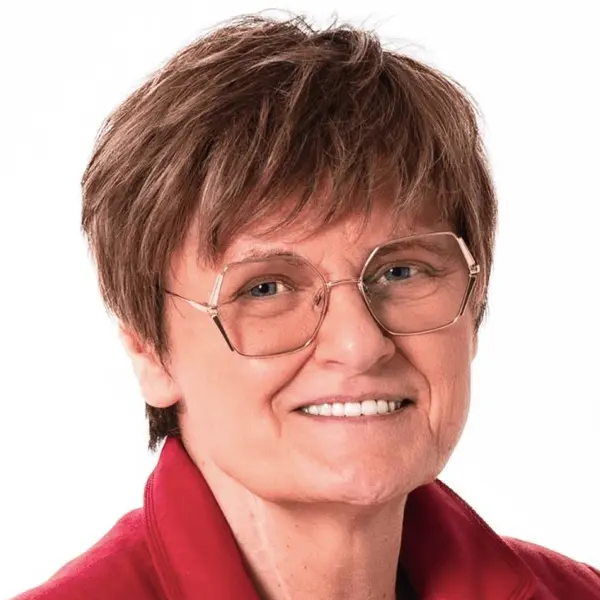
2023 Nobel Laureate in Physiology or Medicine | Biochemist & Pioneer of mRNA Technology | Professor, University of Szeged | Bestselling Author


© 2026 Aurum Speakers Bureau. All Rights Reserved

| Basic Data Protection Information | |
|---|---|
| Data controller | AURUM SPEAKERS BUREAU S.L. |
| Address | Parc Audiovisual de Catalunya 1, Oficina S11, 08225 Terrassa, Spain |
| Purposes | We will use your data to respond to your requests and deliver our services to you. |
| Marketing | We will only send you marketing correspondence if you have given your prior consent, which you can do by ticking the box for that purpose. |
| Lawful basis | We will only process your data if you have given your prior consent, which you can do by ticking the box for that purpose. |
| Recipients | Generally, only our members of staff who have been duly authorised may access the data that you have provided. |
| Your Rights | You have the right to know what information we hold about you, to rectify it and to erase it, as explained in the additional information available on our website. |
| Additional Information | For more information, please see our "PRIVACY POLICY". |