
Georg Nagel
2026 Nobel Laureate in Physiology or Medicine | Co-Discoverer of Channelrhodopsin | Biophysicist, University of Würzburg



2026 Nobel Laureate in Physiology or Medicine | Co-Discoverer of Channelrhodopsin | Biophysicist, Humboldt University of Berlin
Peter Hegemann is a 2026 Nobel Laureate in Physiology or Medicine, the biophysicist whose curiosity about how a single-celled alga swims toward light led to one of neuroscience's most important discoveries. With Georg Nagel, he discovered channelrhodopsin, the light-sensitive protein that became the foundation of optogenetics, a method now used worldwide to reveal how the living brain works.
Want to book Peter Hegemann as a speaker for your event? Please provide the info below and we’ll get in touch within 24h:
Science speaker Peter Hegemann is a 2026 Nobel Laureate in Physiology or Medicine, the biophysicist whose curiosity about a swimming alga helped launch a revolution in brain science. A professor at Humboldt University of Berlin, he spent years asking a deceptively simple question, how does a single-celled alga sense light and swim toward it so astonishingly fast, and the answer he uncovered, the protein channelrhodopsin, became the foundation of optogenetics, one of the most powerful tools neuroscience has ever known.
Hegemann’s journey began in the early 1990s, studying the green alga Chlamydomonas, famous for swimming toward light using a tiny eyespot. He measured electrical signals that appeared just half a millisecond after light struck the cell, twenty times faster than the human eye. He proposed a bold hypothesis: that a single protein could both capture light and act as an ion channel. The idea was met with skepticism, since no such protein was known. Working with his colleague Georg Nagel, he proved it true, identifying the light-gated channels they named channelrhodopsin-1 and channelrhodopsin-2.
That discovery opened the door to optogenetics. Their co-laureate Karl Deisseroth saw that channelrhodopsin could be placed into nerve cells to switch them on and off with light, giving scientists worldwide an unprecedented way to study how the brain creates memories, feelings, and behavior, and new approaches to diseases from depression to blindness. For this work, Hegemann received the 2026 Nobel Prize in Physiology or Medicine, together with Nagel and Deisseroth, and he has continued to advance the biophysics and engineering of these remarkable light-sensitive proteins.
As a speaker, Peter Hegemann embodies the power of pure, curiosity-driven science, the way a question about pond scum can, decades later, help illuminate the human mind. He speaks on the story of channelrhodopsin and optogenetics, the beauty of basic research, and how fundamental discoveries made for their own sake can transform medicine in ways no one could predict. His story is a compelling reminder of why curiosity matters, for scientists and non-scientists alike.
Peter Hegemann tells the remarkable story of how a simple question about a light-seeking pond alga led to a Nobel Prize and a revolution in neuroscience. With warmth and wonder, he traces the years of patient research, skepticism, and breakthrough that revealed channelrhodopsin, the light-sensitive protein at the heart of optogenetics. It is a captivating window into how great discoveries really happen, and the surprising places they begin.
Hegemann set out to understand an alga, not to cure disease, yet his work became the basis of a tool now transforming medicine. In this thought-provoking talk, he makes the case for curiosity-driven, fundamental science: why the most transformative advances often come from research with no obvious application, and why societies that value basic discovery reap extraordinary rewards. An important, timely message for business, science, and policy audiences alike.
What is channelrhodopsin, and how did a molecule from algae become a switch for the brain? Peter Hegemann offers an accessible, fascinating tour of the science he helped create, from the biophysics of light-sensitive proteins to the way optogenetics now lets researchers decode the circuits of memory, emotion, and behavior. A wonder-filled keynote for anyone curious about the frontiers of biology and the brain.
2026 Nobel Laureate in Physiology or Medicine | Co-Discoverer of Channelrhodopsin | Biophysicist, University of Würzburg

2010 Nobel Laureate in Economics | Institute Professor Emeritus, MIT | Architect of Social Security Reform | Taxation & Labor Market Expert
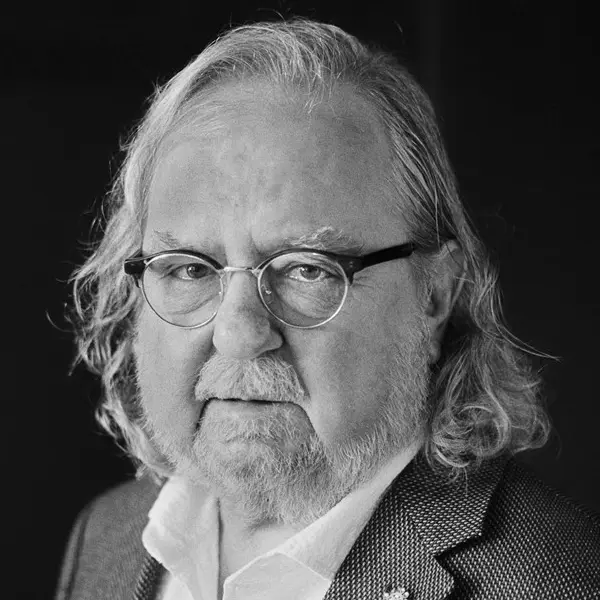
2018 Nobel Laureate in Physiology or Medicine | Founding Director, James P. Allison Institute at MD Anderson | Chair of Immunology | Pioneer of Cancer Immunotherapy

2026 Nobel Laureate in Physiology or Medicine | Pioneer of Optogenetics | Neuroscientist & Psychiatrist, Stanford University & the Howard Hughes Medical Institute


© 2026 Aurum Speakers Bureau. All Rights Reserved

| Basic Data Protection Information | |
|---|---|
| Data controller | AURUM SPEAKERS BUREAU S.L. |
| Address | Parc Audiovisual de Catalunya 1, Oficina S11, 08225 Terrassa, Spain |
| Purposes | We will use your data to respond to your requests and deliver our services to you. |
| Marketing | We will only send you marketing correspondence if you have given your prior consent, which you can do by ticking the box for that purpose. |
| Lawful basis | We will only process your data if you have given your prior consent, which you can do by ticking the box for that purpose. |
| Recipients | Generally, only our members of staff who have been duly authorised may access the data that you have provided. |
| Your Rights | You have the right to know what information we hold about you, to rectify it and to erase it, as explained in the additional information available on our website. |
| Additional Information | For more information, please see our "PRIVACY POLICY". |