
Bruce Daisley
Leading Voice on Workplace Culture & the Future of Work | Former VP of Twitter EMEA & Head of YouTube UK | #1 Sunday Times Bestselling Author | Host of Eat Sleep Work Repeat


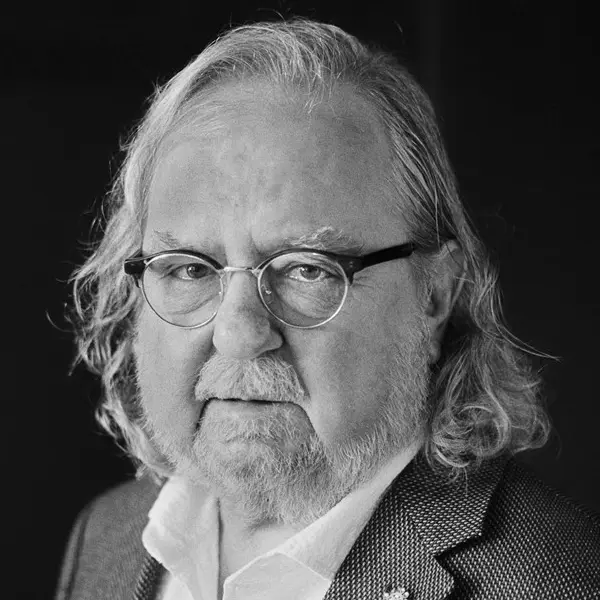
2018 Nobel Laureate in Physiology or Medicine | Founding Director, James P. Allison Institute at MD Anderson | Chair of Immunology | Pioneer of Cancer Immunotherapy
Few scientists can say their work created a new pillar of cancer care. James P. Allison, 2018 Nobel Laureate and Founding Director of the James P. Allison Institute at MD Anderson, showed that releasing the immune system's brakes lets the body destroy tumors. On stage he pairs rigorous science with a frank account of years defending an unpopular idea, a clear lesson for any leader in how breakthroughs happen.
Want to book James P. Allison as a speaker for your event? Please provide the info below and we’ll get in touch within 24h:
Nobel Prize-winning immunologist and Nobel Prize speaker James P. Allison changed the way medicine fights cancer. Rather than attacking tumors directly, he asked what holds the immune system back, and found that releasing one of its natural brakes allows the body’s own T cells to destroy cancer. That insight founded immune checkpoint therapy, a class of treatment now used across many tumor types and credited with durable remissions for patients who once had few options.
Allison’s pivotal work centered on CTLA-4, a protein on T cells that dampens immune responses. In experiments in the mid-1990s, he showed that blocking CTLA-4 with an antibody led to striking tumor rejection in mice. Persuading industry to develop the idea took years of persistence, but it produced ipilimumab (Yervoy), the first immune checkpoint inhibitor approved by the U.S. FDA, for advanced melanoma.
Allison earned his Ph.D. at The University of Texas at Austin, trained at Scripps Clinic and Research Foundation, and began his independent career at MD Anderson’s Smithville research center. He later led research programs at UC Berkeley and Memorial Sloan Kettering Cancer Center before returning to The University of Texas MD Anderson Cancer Center, where he is Regental Professor and Chair of Immunology, Vice President of Immunobiology, and Founding Director of the James P. Allison Institute.
In 2018 he shared the Nobel Prize in Physiology or Medicine with Tasuku Honjo. His other honors include the Lasker-DeBakey Clinical Medical Research Award, the Breakthrough Prize in Life Sciences, the Balzan Prize, the King Faisal Prize in Medicine, and the AACR Award for Lifetime Achievement in Cancer Research, along with membership in the National Academy of Sciences and the National Academy of Medicine. His story is told in the PBS documentary Jim Allison: Breakthrough, and away from the lab he is an avid harmonica player.
As a speaker, James P. Allison combines the authority of a scientist who opened a new field with the candor of someone who spent years being told he was wrong. He speaks about the path from basic questions to clinical impact, the persistence it takes to champion an unpopular idea, and where cancer immunotherapy is headed next. Audiences in oncology, life sciences, pharma, research philanthropy, and corporate R&D leave with a clear view of how transformative science actually happens.
Allison walks audiences from a basic question about how T cells are switched off to the Nobel Prize-winning finding that blocking CTLA-4 lets the immune system reject tumors. He explains why the idea met resistance, how it became ipilimumab, and how checkpoint therapy grew into a standard pillar of oncology alongside surgery, radiation, and chemotherapy. The talk shows how a single, well-posed scientific question can reshape an entire field of medicine.
Why do some patients respond dramatically to immunotherapy while others see little benefit? Allison examines the science of response and resistance, the promise of combining checkpoint inhibitors with each other and with other treatments, and the open questions researchers must answer to extend these gains to more patients. Drawing on the work of the James P. Allison Institute at MD Anderson, he outlines how closer links between laboratory discovery and clinical trials are speeding progress.
For years, Allison presented checkpoint data to skeptical audiences and struggled to find a company willing to back it. In this candid keynote he describes what it took to keep going, how he read the evidence when others dismissed it, and the moment clinical results changed minds. The lessons carry well beyond science, speaking to any leadership team weighing a promising idea that challenges conventional wisdom.
Checkpoint immunotherapy did not come from a targeted drug program. It came from curiosity about how the immune system regulates itself. Allison makes a clear, evidence-based case for protecting long-term investment in basic science, and explains how institutions can structure research so that discovery and application strengthen each other. Especially relevant for research funders, academic medical centers, and corporate R&D leaders deciding how to balance applied and foundational work.
Leading Voice on Workplace Culture & the Future of Work | Former VP of Twitter EMEA & Head of YouTube UK | #1 Sunday Times Bestselling Author | Host of Eat Sleep Work Repeat

Former Lead Solo Pilot, U.S. Navy Blue Angels | Sloan Fellow, Stanford GSB | Bestselling Author of Fearless Success | High-Performance Expert & 'Gratitude Guru'

Former White House Director of Global Engagement & 12-Year U.S. Diplomat | President of the Global Situation Room | Crisis Management & Global Affairs Expert

Founder of The Big Quiet | 5x Audible Bestseller | Human Performance & Mindful Leadership Expert


© 2026 Aurum Speakers Bureau. All Rights Reserved

| Basic Data Protection Information | |
|---|---|
| Data controller | AURUM SPEAKERS BUREAU S.L. |
| Address | Parc Audiovisual de Catalunya 1, Oficina S11, 08225 Terrassa, Spain |
| Purposes | We will use your data to respond to your requests and deliver our services to you. |
| Marketing | We will only send you marketing correspondence if you have given your prior consent, which you can do by ticking the box for that purpose. |
| Lawful basis | We will only process your data if you have given your prior consent, which you can do by ticking the box for that purpose. |
| Recipients | Generally, only our members of staff who have been duly authorised may access the data that you have provided. |
| Your Rights | You have the right to know what information we hold about you, to rectify it and to erase it, as explained in the additional information available on our website. |
| Additional Information | For more information, please see our "PRIVACY POLICY". |