
Ellen MacArthur
Dame Commander of the British Empire | World Record Solo Circumnavigator | Founder, Ellen MacArthur Foundation | Circular Economy Pioneer


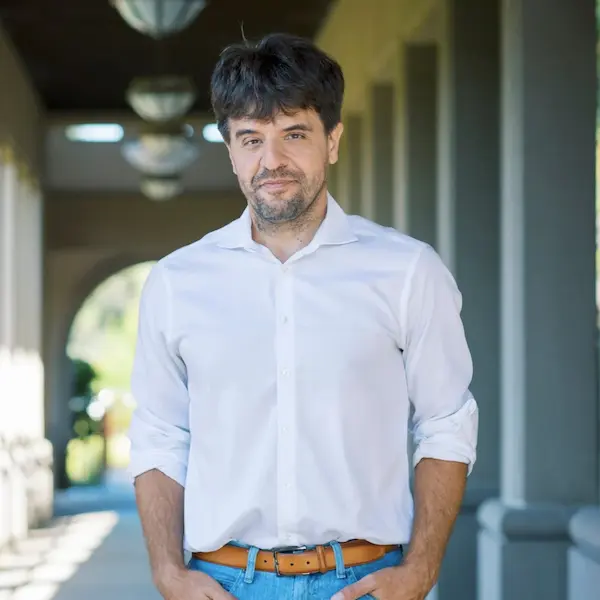
2026 Nobel Laureate in Physiology or Medicine | Pioneer of Optogenetics | Neuroscientist & Psychiatrist, Stanford University & the Howard Hughes Medical Institute
Karl Deisseroth is a 2026 Nobel Laureate in Physiology or Medicine, a Stanford neuroscientist and psychiatrist who pioneered optogenetics, a method that uses light to switch individual brain cells on and off. By turning a light-sensitive algal protein into a precise switch for neurons, he gave science an unprecedented tool to map how the brain creates memories, emotions, and behavior, and new hope for treating psychiatric and neurological disease.
Want to book Karl Deisseroth as a speaker for your event? Please provide the info below and we’ll get in touch within 24h:
Science speaker Karl Deisseroth is a 2026 Nobel Laureate in Physiology or Medicine and the pioneer of optogenetics, one of the most transformative tools in the history of brain science. A neuroscientist, bioengineer, and practicing psychiatrist at Stanford University and the Howard Hughes Medical Institute, he found a way to switch individual brain cells on and off using light, giving researchers an unprecedented ability to see how specific neurons create memories, emotions, and behavior in the living brain.
Deisseroth shared the prize with the biophysicists Peter Hegemann and Georg Nagel, who had discovered channelrhodopsin, a light-sensitive protein in a single-celled alga. Deisseroth saw what that algal protein could become. In 2005, he introduced the gene for channelrhodopsin into nerve cells and used blue light to trigger precise electrical signals; two years later, he made the light-controlled switch work in the brains of living mice. The method, soon named optogenetics, let scientists activate a single type of neuron with a flash of light, something Francis Crick had once imagined as an almost impossible dream.
The impact has been profound. Using optogenetics, researchers worldwide have mapped the neural circuits behind pain, reward, memory, fear, sleep, and social behavior, and gained new insight into depression, anxiety, Parkinson’s, and Alzheimer’s. The method is now being tested to restore sight in people blinded by retinitis pigmentosa. For this work, Deisseroth received the 2026 Nobel Prize in Physiology or Medicine, alongside honors including the Lasker Award, the Breakthrough Prize, and the Japan Prize. A medical doctor who began his career moved by the suffering of psychiatric patients, he has never lost sight of the goal behind the science: better ways to help the human mind.
As a speaker, Karl Deisseroth is a rare figure who bridges cutting-edge science, medicine, and the deepest questions about the mind. He speaks on the frontiers of neuroscience and mental health, how optogenetics is unlocking the brain’s mysteries, the future of psychiatry and treatment, and the courage it takes to pursue an idea others call impossible. Audiences leave with a profound new appreciation of the brain, and of what science can still achieve.
Karl Deisseroth tells the story of one of the most remarkable breakthroughs in modern science: the ability to control individual brain cells with light. He explains how a protein borrowed from pond algae became a precise switch for neurons, and how optogenetics now lets researchers reveal exactly which cells create a memory, a feeling, or a behavior. Accessible and awe-inspiring, it is a front-row seat to a revolution in how we understand the brain.
As both a Nobel-winning neuroscientist and a practicing psychiatrist, Karl Deisseroth offers a rare, deeply human perspective on the mind. He explores what optogenetics and modern neuroscience are teaching us about depression, anxiety, and other conditions, and how this knowledge could transform treatment and care. A thoughtful, moving talk connecting the frontiers of the laboratory to the real suffering, and hope, of patients.
Optogenetics was once dismissed as an unrealistic dream. In this inspiring keynote, Karl Deisseroth reflects on what it takes to pursue a radical idea against the odds: the vision to see what could be, the willingness to risk failure, and the collaboration that turns a concept into a discovery. Rich with lessons on innovation and perseverance, it resonates far beyond science, with any leader or team chasing something ambitious.
Dame Commander of the British Empire | World Record Solo Circumnavigator | Founder, Ellen MacArthur Foundation | Circular Economy Pioneer

2026 Nobel Laureate in Physiology or Medicine | Co-Discoverer of Channelrhodopsin | Biophysicist, University of Würzburg
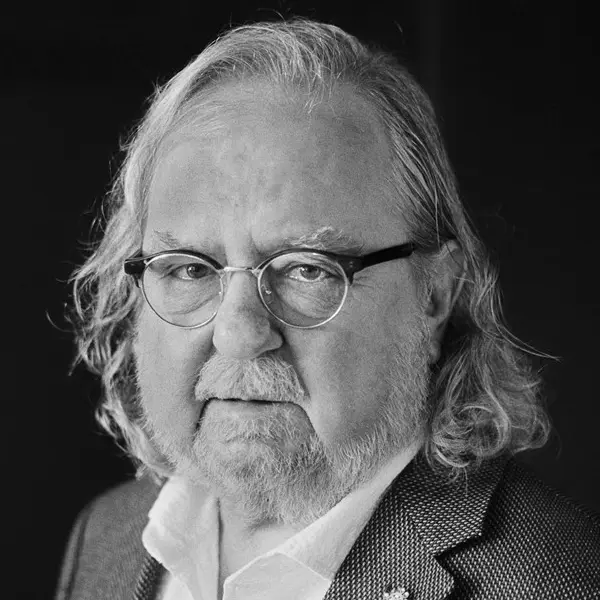
2018 Nobel Laureate in Physiology or Medicine | Founding Director, James P. Allison Institute at MD Anderson | Chair of Immunology | Pioneer of Cancer Immunotherapy

2026 Nobel Laureate in Physiology or Medicine | Co-Discoverer of Channelrhodopsin | Biophysicist, Humboldt University of Berlin


© 2026 Aurum Speakers Bureau. All Rights Reserved

| Basic Data Protection Information | |
|---|---|
| Data controller | AURUM SPEAKERS BUREAU S.L. |
| Address | Parc Audiovisual de Catalunya 1, Oficina S11, 08225 Terrassa, Spain |
| Purposes | We will use your data to respond to your requests and deliver our services to you. |
| Marketing | We will only send you marketing correspondence if you have given your prior consent, which you can do by ticking the box for that purpose. |
| Lawful basis | We will only process your data if you have given your prior consent, which you can do by ticking the box for that purpose. |
| Recipients | Generally, only our members of staff who have been duly authorised may access the data that you have provided. |
| Your Rights | You have the right to know what information we hold about you, to rectify it and to erase it, as explained in the additional information available on our website. |
| Additional Information | For more information, please see our "PRIVACY POLICY". |