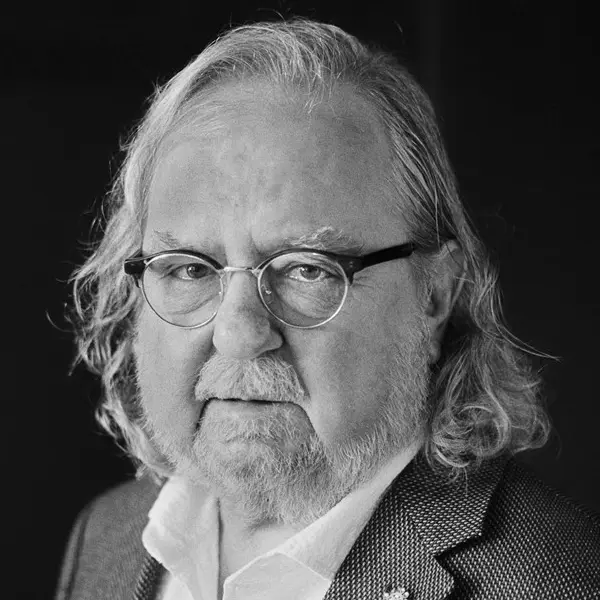
James P. Allison
2018 Nobel Laureate in Physiology or Medicine | Founding Director, James P. Allison Institute at MD Anderson | Chair of Immunology | Pioneer of Cancer Immunotherapy



2026 Nobel Laureate in Physiology or Medicine | Co-Discoverer of Channelrhodopsin | Biophysicist, University of Würzburg
Georg Nagel is a 2026 Nobel Laureate in Physiology or Medicine, the biophysicist who, with Peter Hegemann, discovered channelrhodopsin, a remarkable light-activated protein from algae. His work proving that this single protein could make any cell respond to light became the cornerstone of optogenetics, the revolutionary method that lets scientists switch brain cells on and off and decode how the living brain works.
Want to book Georg Nagel as a speaker for your event? Please provide the info below and we’ll get in touch within 24h:
Science speaker Georg Nagel is a 2026 Nobel Laureate in Physiology or Medicine, the biophysicist whose work turned a strange algal protein into one of the most powerful tools in modern science. A professor at the University of Würzburg, he proved that a single protein from a pond alga could make virtually any living cell respond to light, the discovery at the very heart of optogenetics, which now lets researchers switch individual brain cells on and off and decode how the living brain works.
Nagel’s expertise in studying proteins made him the ideal partner for Peter Hegemann, who suspected that a single algal protein could both sense light and act as an ion channel. Using frog egg cells to mass-produce the unknown proteins, Nagel showed that Hegemann’s bold idea was correct: the proteins, which they named channelrhodopsin-1 and channelrhodopsin-2, formed channels that opened within fractions of a millisecond when exposed to light. Crucially, Nagel then demonstrated that the same protein could make human and animal cells light-sensitive too, publishing the landmark results in 2003.
That property, that any cell carrying channelrhodopsin becomes controllable by light, is what made optogenetics possible. Their co-laureate Karl Deisseroth soon used the protein Nagel had characterized to switch neurons on and off, first in a dish and then in the brains of living animals. For these foundational discoveries, Nagel received the 2026 Nobel Prize in Physiology or Medicine, alongside Hegemann and Deisseroth, and he has continued to help define the molecular properties that make light-sensitive proteins so useful for controlling cells.
As a speaker, Georg Nagel offers a firsthand account of one of modern science’s most consequential discoveries, and of the collaboration and rigor behind it. He speaks on the science of channelrhodopsin and optogenetics, how a protein from algae transformed neuroscience and medicine, and the value of fundamental research and teamwork across disciplines. His story is a vivid reminder that the tools which reshape entire fields often come from the most unexpected corners of nature.
Georg Nagel shares the inside story of discovering channelrhodopsin, the light-activated protein that made optogenetics possible. He explains how he and Peter Hegemann proved that a single algal protein could open a channel in response to light, and, crucially, that it could make almost any cell light-sensitive, the property that would let scientists control the brain. A clear, fascinating account of a discovery that changed biology, told by one of the scientists who made it.
How does a protein from pond algae end up as a switch for neurons in the brain? Georg Nagel traces the scientific path from his frog-egg experiments to the global revolution of optogenetics, showing how careful, collaborative research turned an obscure molecule into one of the most powerful tools in medicine and neuroscience. A compelling journey through discovery, rigor, and unexpected impact.
Georg Nagel’s Nobel-winning work began as basic research into how proteins and cells function, with no guarantee of application. In this talk he makes a powerful case for fundamental science and cross-disciplinary collaboration: why the breakthroughs that transform medicine so often grow from curiosity and teamwork, and why investing in discovery for its own sake pays off in ways no one can foresee. An inspiring message for science, business, and policy audiences.
2018 Nobel Laureate in Physiology or Medicine | Founding Director, James P. Allison Institute at MD Anderson | Chair of Immunology | Pioneer of Cancer Immunotherapy

2026 Nobel Laureate in Physiology or Medicine | Co-Discoverer of Channelrhodopsin | Biophysicist, Humboldt University of Berlin
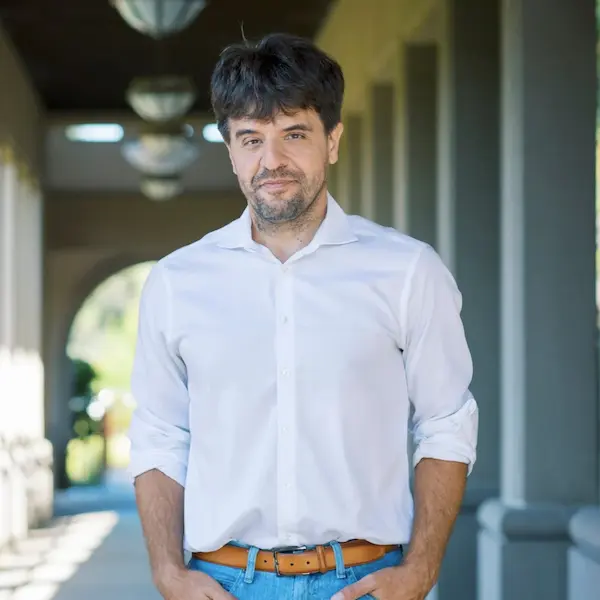
2026 Nobel Laureate in Physiology or Medicine | Pioneer of Optogenetics | Neuroscientist & Psychiatrist, Stanford University & the Howard Hughes Medical Institute

Former F1 Team Principal: Alpine, Aston Martin & Racing Point | Ex-VP Honda Racing | Transformational Leadership & High-Performance Culture Expert


© 2026 Aurum Speakers Bureau. All Rights Reserved

| Basic Data Protection Information | |
|---|---|
| Data controller | AURUM SPEAKERS BUREAU S.L. |
| Address | Parc Audiovisual de Catalunya 1, Oficina S11, 08225 Terrassa, Spain |
| Purposes | We will use your data to respond to your requests and deliver our services to you. |
| Marketing | We will only send you marketing correspondence if you have given your prior consent, which you can do by ticking the box for that purpose. |
| Lawful basis | We will only process your data if you have given your prior consent, which you can do by ticking the box for that purpose. |
| Recipients | Generally, only our members of staff who have been duly authorised may access the data that you have provided. |
| Your Rights | You have the right to know what information we hold about you, to rectify it and to erase it, as explained in the additional information available on our website. |
| Additional Information | For more information, please see our "PRIVACY POLICY". |