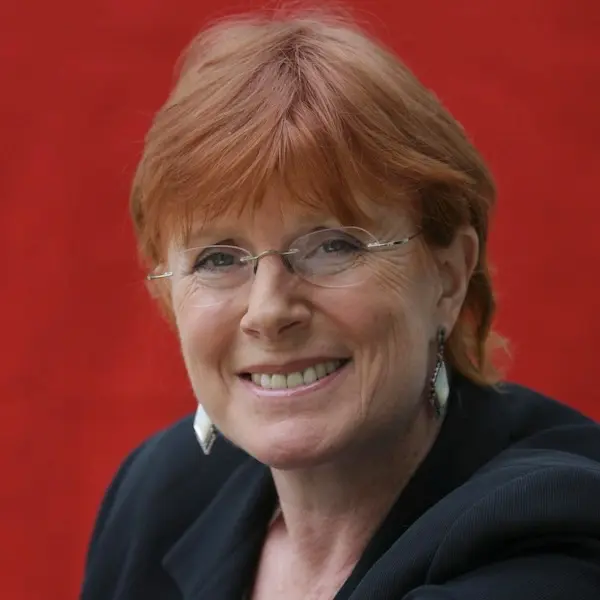
Celia Sandys
Granddaughter of Sir Winston Churchill | Author of Five Books on Churchill | Founder of Churchill Leadership | Historian & Broadcaster


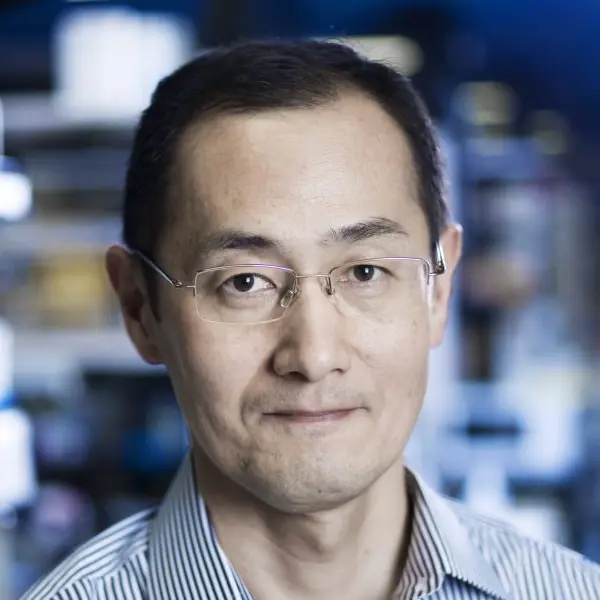
2012 Nobel Laureate in Physiology or Medicine | Inventor of iPS Cell Technology | Professor & Director Emeritus, CiRA Kyoto University | Investigator, Gladstone Institutes
Shinya Yamanaka rewrote the rules of biology when he discovered that adult cells could be reprogrammed into stem cells capable of becoming any tissue in the body. His invention of iPS cell technology earned the 2012 Nobel Prize in Physiology or Medicine and now powers clinical trials for more than ten diseases, from Parkinson's to heart failure. On stage, he turns that landmark science into a clear vision of where medicine is headed.
Want to book Shinya Yamanaka as a speaker for your event? Please provide the info below and we’ll get in touch within 24h:
Shinya Yamanaka is one of the most transformative biomedical scientists of the modern era, whose single discovery upended a century of biological dogma and opened an entirely new frontier in medicine. Born in Higashiosaka, Japan, he earned his M.D. from Kobe University and his Ph.D. from Osaka City University before training as an orthopedic surgeon, a clinical background that shaped his lifelong motivation to translate science into treatments for patients with once-incurable diseases. After postdoctoral work at the Gladstone Institutes in San Francisco, he built his research program across Japan and the United States, and today serves as Professor and Director Emeritus at the Center for iPS Cell Research and Application (CiRA) at Kyoto University, president of the CiRA Foundation, and a Senior Investigator at the Gladstone Institutes.
Nobel Prize speaker Shinya Yamanaka is best known for a discovery made in 2006 that the scientific community initially found difficult to believe: that fully specialized adult cells, such as skin cells, could be reprogrammed back into an embryonic-like state capable of becoming virtually any cell in the body. By introducing just four transcription factors, now known worldwide as the Yamanaka factors, he created what he called induced pluripotent stem cells, or iPS cells. The implications were immediate and sweeping. For the first time, researchers could generate patient-specific stem cells without using embryos, bypassing both the ethical controversies and the immunological barriers that had long constrained the field.
In 2012, Yamanaka was awarded the Nobel Prize in Physiology or Medicine, shared with Sir John Gurdon, for the discovery that mature cells can be reprogrammed to become pluripotent. The prize recognized work that had already reshaped developmental biology and catalyzed a new generation of research into disease modeling, drug discovery, and regenerative medicine. His honors also include the Albert Lasker Basic Medical Research Award, the Wolf Prize in Medicine, the Millennium Technology Prize, the Kyoto Prize, and the Gairdner International Award. A member of the National Academy of Sciences and the National Academy of Medicine, he continues his research at the Gladstone Institutes. Two decades after the discovery, iPS technology has moved from bench to bedside, powering clinical trials in Japan for more than ten conditions, including age-related macular degeneration, Parkinson’s disease, heart failure, spinal cord injury, and cancer.
As a speaker, Shinya Yamanaka delivers one of the most compelling stories in contemporary science: how curiosity, persistence, and a doctor’s desire to help patients led to a discovery now driving breakthroughs in Alzheimer’s disease, Parkinson’s, diabetes, and cancer. He speaks with clarity and humility about the scientific process, the long arc from fundamental research to clinical application, and the ethical dimensions of stem cell technology. For healthcare executives, life science investors, and research leaders, his keynotes offer both a landmark scientific narrative and a forward-looking perspective on where regenerative medicine is headed next.
In 2006, Yamanaka identified four transcription factors capable of reverting specialized adult cells into a stem-cell state, a finding that defied decades of biological consensus. This keynote traces the full arc of that discovery: from early observations at the bench to global clinical application, and from a young orthopedic surgeon's determination to help patients to a Nobel Prize. Audiences gain a rare firsthand account of how paradigm-shifting science actually happens, and what it reveals about the future of medicine.
iPS cell technology has moved from laboratory curiosity to clinical pipeline with remarkable speed. Yamanaka surveys the current frontier of regenerative medicine, from cell therapies for Parkinson's disease and macular degeneration to heart failure and beyond, and examines the scientific, regulatory, and commercial challenges that remain before these treatments reach patients at scale. An essential talk for healthcare executives, life science investors, and anyone building strategy in the biomedical space.
One of the most powerful applications of iPS cell technology is the ability to grow disease in a dish: generating patient-specific cells that carry the exact genetic mutations driving Alzheimer's, ALS, rare diseases, and more. Yamanaka explains how this platform is making drug discovery faster, more accurate, and more human, and why patient-derived cell models are increasingly replacing animal studies across the pharmaceutical industry. A forward-looking keynote for R&D leaders, biotech founders, and medical innovators.
Every powerful technology carries ethical weight, and stem cell science is no exception. Drawing on his own experience with public debate, regulatory scrutiny, and international collaboration, Yamanaka reflects on how scientists, institutions, and policymakers can work together responsibly to advance transformative research. A nuanced and deeply personal talk for leaders who must balance innovation with accountability in science, in business, and in society.
Granddaughter of Sir Winston Churchill | Author of Five Books on Churchill | Founder of Churchill Leadership | Historian & Broadcaster

Former Global Head of Digital Marketing, Nike, Revlon & Estée Lauder | Board Director, Edgewell & NovaBay | Co-Founder, Ani Energy | Investor
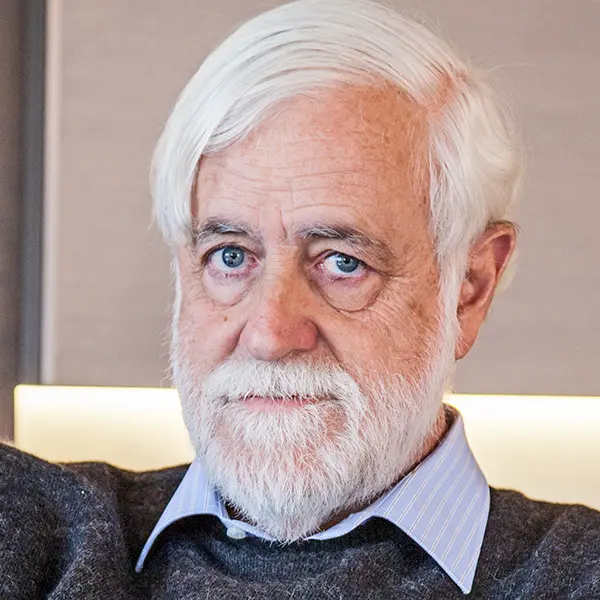
Former Deputy Managing Director, International Monetary Fund | Former Finance Minister of Chile | Harvard PhD in Economics | International Economic Advisor
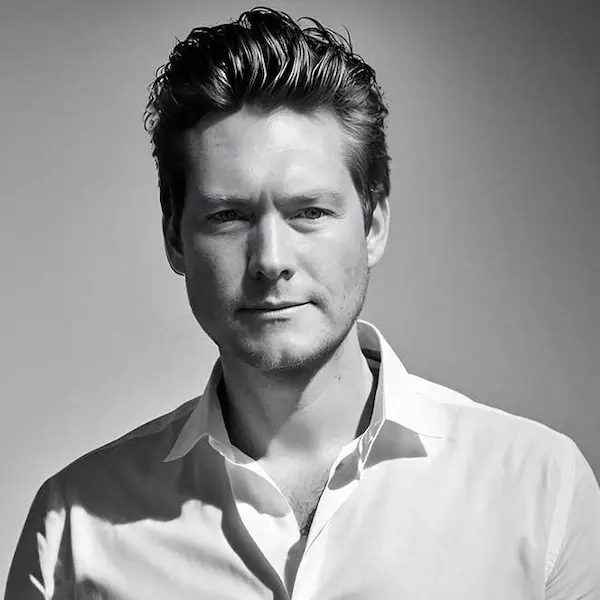
Futurist & Business Transformation Expert | Author of Digital Darwinism | Founder of All We Have Is Now | LinkedIn's #1 Voice in Marketing


© 2026 Aurum Speakers Bureau. All Rights Reserved

| Basic Data Protection Information | |
|---|---|
| Data controller | AURUM SPEAKERS BUREAU S.L. |
| Address | Parc Audiovisual de Catalunya 1, Oficina S11, 08225 Terrassa, Spain |
| Purposes | We will use your data to respond to your requests and deliver our services to you. |
| Marketing | We will only send you marketing correspondence if you have given your prior consent, which you can do by ticking the box for that purpose. |
| Lawful basis | We will only process your data if you have given your prior consent, which you can do by ticking the box for that purpose. |
| Recipients | Generally, only our members of staff who have been duly authorised may access the data that you have provided. |
| Your Rights | You have the right to know what information we hold about you, to rectify it and to erase it, as explained in the additional information available on our website. |
| Additional Information | For more information, please see our "PRIVACY POLICY". |