
Yancey Strickler
Co-founder & Former CEO of Kickstarter | Bestselling Author of This Could Be Our Future | Founder of Metalabel & Artist Corporations | Creative Economy Speaker



2022 Nobel Laureate in Economic Sciences | Co-Creator of the Diamond-Dybvig Model | Professor, WashU Olin Business School
The 2022 Nobel Prize in Economic Sciences recognized Philip Dybvig for work that explains why banks fail — and how to stop them. Co-creator of the Diamond-Dybvig model, one of the most cited frameworks in modern finance, he illuminates the hidden fragility of financial systems and the policies that keep economies stable. Audiences leave with a Nobel laureate's lens on risk, regulation, and crisis.
Want to book Philip Dybvig as a speaker for your event? Please provide the info below and we’ll get in touch within 24h:
A 2022 Nobel Laureate in Economic Sciences, speaker Philip Dybvig has permanently changed how the world understands banks, financial fragility, and the conditions that make economic crises either inevitable or preventable. He is the Boatmen’s Bancshares Professor of Banking and Finance at the Olin Business School at Washington University in St. Louis, where he has shaped generations of finance scholars.
As a Nobel Prize speaker, Dybvig is best known for co-authoring, with Douglas Diamond, the landmark 1983 paper “Bank Runs, Deposit Insurance, and Liquidity,” which introduced what became known as the Diamond-Dybvig model. The model revealed a fundamental paradox at the heart of modern banking: the very mechanism through which banks create liquidity, transforming short-term deposits into long-term productive investments, is the same mechanism that makes them vulnerable to runs. If depositors believe others will withdraw, rational self-interest leads everyone to withdraw simultaneously, triggering the very collapse they feared. This self-fulfilling panic dynamic explained not just historical bank runs but the systemic logic behind financial crises worldwide.
The model also offered a clear policy prescription: government-backed deposit insurance, by assuring depositors their funds are safe, can eliminate the conditions for panic before it begins. This insight proved foundational to banking regulation across multiple decades. The paper has been cited more than 11,000 times and remains a standard reference in central banking, financial regulation, and academic finance.
Dybvig shared the 2022 Sveriges Riksbank Prize in Economic Sciences with Douglas Diamond and former Federal Reserve Chair Ben Bernanke, awarded jointly for research on banks and financial crises. Diamond and Dybvig were recognized for their 1983 model; Bernanke for complementary empirical work showing how bank failures transformed the 1929 downturn into the Great Depression. Together, their contributions established the intellectual foundation for how policymakers respond to financial crises today.
Beyond his Nobel-winning work, Dybvig has published more than 35 articles in leading journals, spanning asset pricing, corporate governance, fixed-income securities, and portfolio management. He has also consulted for governments, organizations, and institutions, applying quantitative models to real-world investment and risk challenges.
As a speaker, Philip Dybvig brings the rare authority of a Nobel laureate who has spent decades making complex financial theory accessible to students, policymakers, and executives alike. His talks explore why banks fail, how deposit insurance and regulation can prevent cascading crises, and what the Diamond-Dybvig framework means for the financial architecture of the future. Senior audiences gain not just an understanding of historical crises but a rigorous lens for evaluating systemic risk, regulatory design, and the resilience of the institutions underpinning the global economy.
Banks are the backbone of modern economies — yet their structure makes them inherently vulnerable to collapse. In this keynote, Dybvig draws on the Diamond-Dybvig model to explain why bank runs are not anomalies but predictable outcomes of rational behavior. He explores how liquidity creation generates systemic fragility, what conditions trigger financial panics, and how the right institutional design — from deposit insurance to regulatory frameworks — can prevent crises before they start. Essential for leaders navigating risk in an interconnected financial world.
What separates financial systems that endure from those that collapse? In this policy-focused talk, Dybvig unpacks the economic logic behind deposit insurance, banking regulation, and the tools governments use to manage systemic risk. Drawing on decades of research and the real-world validation of his models during multiple financial crises, he offers a rigorous framework for evaluating the trade-offs between financial innovation, risk-taking, and institutional resilience. Ideal for executives, regulators, and policymakers responsible for managing financial exposure at scale.
From the Great Depression to the 2008 global financial crisis, the same underlying dynamics keep reappearing: liquidity mismatches, panic-driven runs, and regulatory failures. Dybvig draws on his Nobel-winning research and the broader historical record to extract durable lessons for financial leaders. This keynote examines how crises propagate, where early warning signals appear, and how institutions and policymakers can build systems resilient enough to absorb shocks without catastrophic spillover.
Beyond banking, Dybvig has spent his career applying rigorous economic theory to practical investment challenges — from asset allocation and fixed-income strategy to corporate governance and performance measurement. This keynote distills key insights from that work, offering senior audiences a framework for thinking about risk-adjusted returns, portfolio construction, and the limits of financial models in complex, volatile markets. Grounded in theory but built for practitioners.
Co-founder & Former CEO of Kickstarter | Bestselling Author of This Could Be Our Future | Founder of Metalabel & Artist Corporations | Creative Economy Speaker
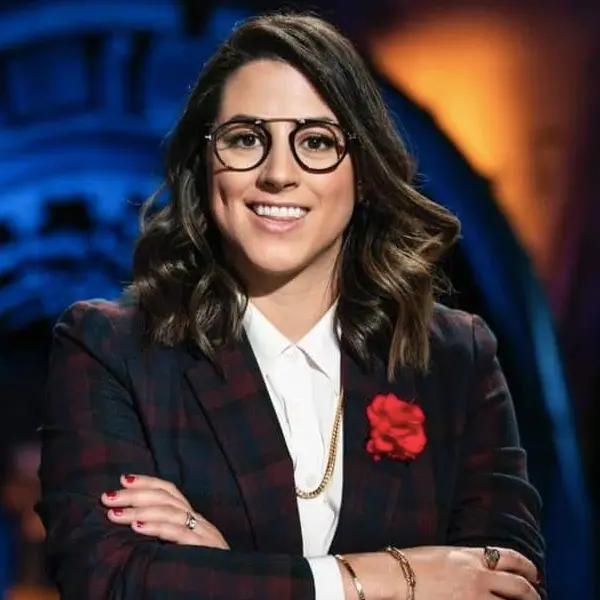
Executive President, Grupo Ambrosía | Investor, Shark Tank México | Founder, Meraki Ventures | One Young World Entrepreneur of the Year 2022 | Harvard MBA
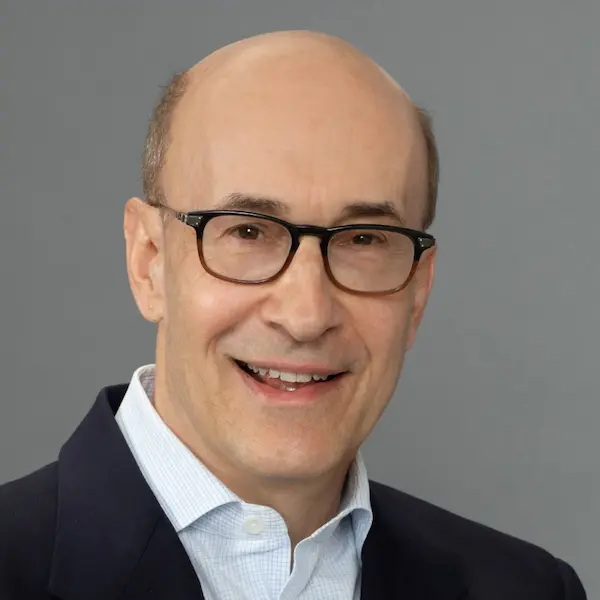
Professor of Economics at Harvard & Former Chief Economist of the IMF | Bestselling Co-Author of This Time Is Different | Leading Authority on the Global Economy
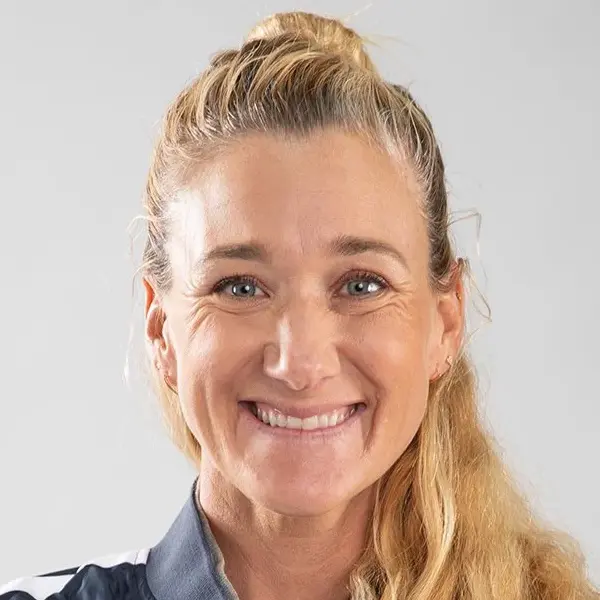
3x Olympic Gold Medalist & 5x Olympian | Beach Volleyball GOAT | Co-Founder, p1440 | MLV Franchise Owner | NCAA Champion, Stanford


© 2026 Aurum Speakers Bureau. All Rights Reserved

| Basic Data Protection Information | |
|---|---|
| Data controller | AURUM SPEAKERS BUREAU S.L. |
| Address | Parc Audiovisual de Catalunya 1, Oficina S11, 08225 Terrassa, Spain |
| Purposes | We will use your data to respond to your requests and deliver our services to you. |
| Marketing | We will only send you marketing correspondence if you have given your prior consent, which you can do by ticking the box for that purpose. |
| Lawful basis | We will only process your data if you have given your prior consent, which you can do by ticking the box for that purpose. |
| Recipients | Generally, only our members of staff who have been duly authorised may access the data that you have provided. |
| Your Rights | You have the right to know what information we hold about you, to rectify it and to erase it, as explained in the additional information available on our website. |
| Additional Information | For more information, please see our "PRIVACY POLICY". |