
Ariel Coro
The Most Trusted Technology Expert for U.S. Hispanics | On-Air Tech Expert for Despierta América & CNN en Español | Author of El Salto | Founder of Tecnifícate


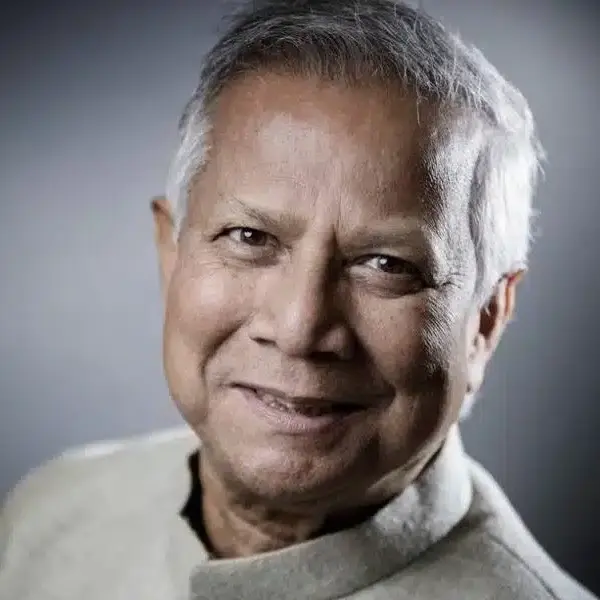
2006 Nobel Peace Prize Laureate | Founder of Grameen Bank | Father of Microcredit & Social Business | Former Chief Adviser of Bangladesh
Muhammad Yunus, the 2006 Nobel Peace Prize laureate, proved the world's poorest are creditworthy by founding Grameen Bank, whose collateral-free model has disbursed over $30 billion to millions of borrowers, most of them women, and been copied in more than 100 countries. A recipient of the US Presidential Medal of Freedom and Congressional Gold Medal who later led Bangladesh's interim government, he offers audiences a bold rethink of capitalism.
Want to book Muhammad Yunus as a speaker for your event? Please provide the info below and we’ll get in touch within 24h:
Muhammad Yunus is one of the most consequential economists of the modern era, the man who proved that the world’s poorest people are not a charity problem but a credit opportunity. Born in Chittagong, Bangladesh, he earned his PhD in Economics from Vanderbilt University on a Fulbright scholarship and returned home to teach, only to have his thinking upended by the devastating famine of 1974. Watching people starve in the shadow of elegant economic theory, Yunus concluded that the discipline had failed the people it claimed to serve, and set out to build something that would actually work.
Nobel Peace Prize speaker Muhammad Yunus began experimenting with small, collateral-free loans to rural women in the mid-1970s. What started as a personal project lending the equivalent of $27 to 42 families became, in 1983, the Grameen Bank, a formal institution built on the radical premise that the poor are creditworthy. Today Grameen Bank has disbursed over $30 billion in loans to millions of borrowers, more than 97% of them women, with repayment rates that consistently outperform conventional commercial banking. The model has been replicated across more than 100 countries, fundamentally changing how development economists, governments, and financial institutions think about poverty.
In 2006, Yunus and Grameen Bank were jointly awarded the Nobel Peace Prize for their efforts to create economic and social development from below. He is one of only seven people in history to have received the Nobel Peace Prize, the United States Presidential Medal of Freedom, and the Congressional Gold Medal, the triple distinction that places him among the most decorated public intellectuals of his generation. Fortune named him one of the twelve greatest entrepreneurs of our time.
Yunus did not stop at banking. He went on to found more than 50 social business companies in Bangladesh, enterprises designed not to maximize shareholder returns but to solve specific human problems, from nutrition to healthcare to clean energy, while remaining financially self-sustaining. His books, including Banker to the Poor, Building Social Business, and A World of Three Zeros, have become foundational texts in development economics and impact entrepreneurship, translated into dozens of languages and taught in leading business schools worldwide.
In August 2024, following a student-led uprising that toppled Prime Minister Sheikh Hasina’s government, Yunus answered the call of a nation in crisis and was sworn in as Chief Adviser of Bangladesh’s interim government. Over the months that followed he established major constitutional reform commissions, steered the country through a fragile democratic transition, and oversaw its first free general election in more than a decade before peacefully handing power to an elected government, a chapter that added statesman to his already remarkable biography.
As a speaker, Muhammad Yunus brings to every stage a message that is simultaneously philosophical and practical: that poverty is not a fate but a design flaw in our economic systems, and that entrepreneurship, not aid, is the most powerful tool humanity has for eliminating it. His vision of a world of three zeros (zero net carbon emissions, zero wealth concentration, and zero unemployment) gives senior audiences a compelling framework for rethinking corporate purpose, ESG strategy, and the role of business in addressing the defining challenges of this era. He speaks from a life of evidence, not theory, and audiences leave not just inspired but genuinely rethinking what business is for.
The world's deepest crises — inequality, unemployment, and climate breakdown — are not separate problems. They share a common root: an economic architecture designed to concentrate wealth rather than distribute opportunity. In this landmark keynote, Yunus presents his vision for a fundamentally redesigned capitalism built around three mutually reinforcing goals: zero net carbon emissions, zero wealth concentration, and zero unemployment. Drawing from decades of institution-building across sectors and continents, he offers a practical and inspiring framework for how governments, corporations, and entrepreneurs can participate in building this new economic order — and why doing so is not idealism, but enlightened self-interest.
What if solving poverty, disease, or environmental degradation could be the core business model rather than a side project? Yunus makes the case for social business — a new category of enterprise that is financially self-sustaining but oriented entirely around human impact rather than shareholder return. Drawing from partnerships with global corporations and the creation of more than 50 social businesses in Bangladesh, he explains how any organization can build or support a social business, what the metrics of success look like, and why this model represents the most credible path to aligning economic incentives with social good.
Grameen Bank was built on one radical assumption: that poor people can be trusted. From that premise, Yunus and his colleagues constructed a financial institution that has disbursed over $30 billion in loans with repayment rates that outperform conventional banks — and replicated the model across 100+ countries. In this session, Yunus unpacks the institutional design principles behind Grameen's success: solidarity-based accountability, proximity to the communities served, mission clarity, and the deliberate exclusion of collateral. The lessons apply far beyond banking — to any leader trying to build an institution that earns trust, sustains itself, and creates durable impact.
In August 2024, at 84 years old, Muhammad Yunus was called from self-imposed exile to lead Bangladesh's interim government following one of the country's most turbulent political upheavals in decades. He served until February 2026, overseeing constitutional reform, truth commissions, and the country's first free election in a generation — while navigating tensions with the military, pressure from political factions, and intense international scrutiny. In this rare and personal keynote, Yunus reflects on what it means to lead without a mandate, build trust in a fractured society, and remain anchored to principles when institutions are under stress. A session unlike any other in the leadership speaking landscape.
The Most Trusted Technology Expert for U.S. Hispanics | On-Air Tech Expert for Despierta América & CNN en Español | Author of El Salto | Founder of Tecnifícate

Olympic Badminton Champion (Rio 2016) & First Non-Asian Woman to Win Gold | 3-Time World Champion & 7-Time European Champion | Motivational Speaker on Resilience
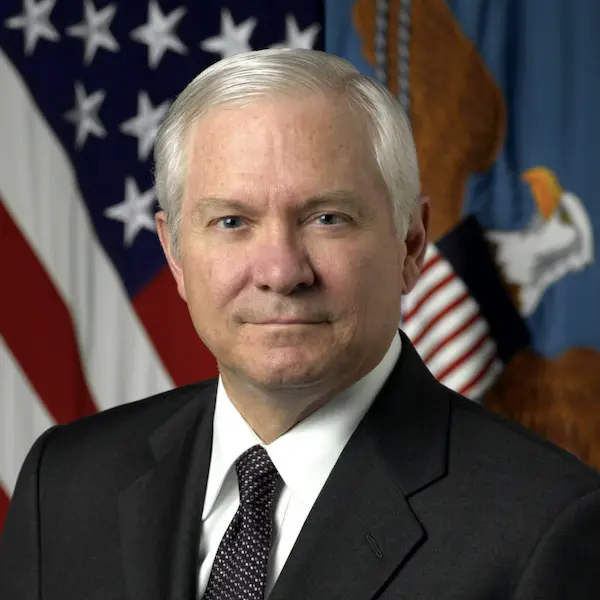
22nd U.S. Secretary of Defense | Former Director of the CIA | Advisor to Eight U.S. Presidents | Presidential Medal of Freedom | Authority on National Security & Leadership

2023 Pritzker Prize Laureate | Founder, David Chipperfield Architects | Architecture, Cities & Civic Design


© 2026 Aurum Speakers Bureau. All Rights Reserved

| Basic Data Protection Information | |
|---|---|
| Data controller | AURUM SPEAKERS BUREAU S.L. |
| Address | Parc Audiovisual de Catalunya 1, Oficina S11, 08225 Terrassa, Spain |
| Purposes | We will use your data to respond to your requests and deliver our services to you. |
| Marketing | We will only send you marketing correspondence if you have given your prior consent, which you can do by ticking the box for that purpose. |
| Lawful basis | We will only process your data if you have given your prior consent, which you can do by ticking the box for that purpose. |
| Recipients | Generally, only our members of staff who have been duly authorised may access the data that you have provided. |
| Your Rights | You have the right to know what information we hold about you, to rectify it and to erase it, as explained in the additional information available on our website. |
| Additional Information | For more information, please see our "PRIVACY POLICY". |