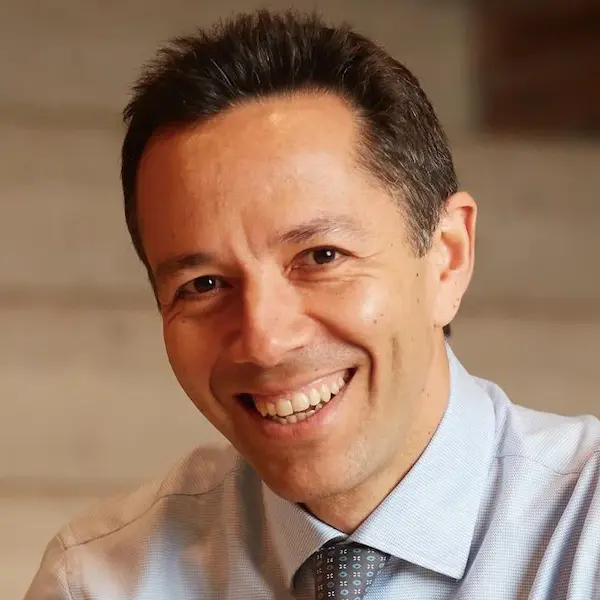
Gianpiero Petriglieri
Associate Professor of Organisational Behaviour, INSEAD | Physician & Psychiatrist | Authority on Humanising Leadership & Learning | Thinkers50-Ranked Thinker

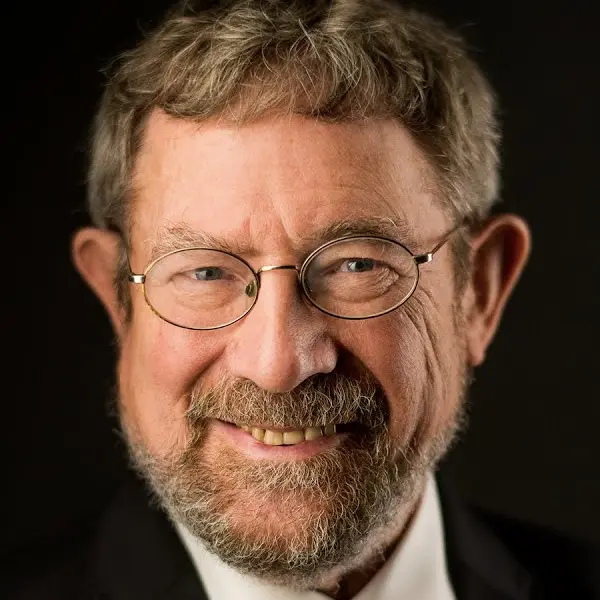
2016 Nobel Laureate in Physics | Royal Society Fellow | Harrison E. Farnsworth Professor, Brown University | Topological Phase Transitions
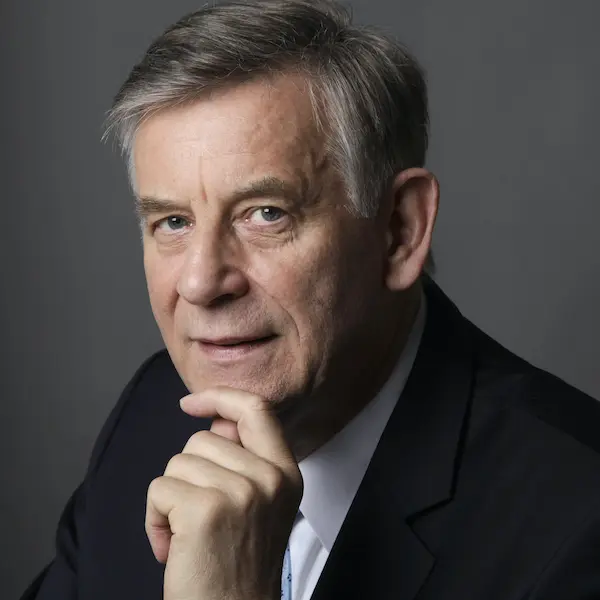
Few physicists have reshaped a field they entered almost by accident, yet that is how J. Michael Kosterlitz earned the Nobel Prize. His work with David Thouless on topological phase transitions overturned decades of theory and opened new frontiers in superconductivity and quantum matter. Now a Fellow of the Royal Society, he shows audiences how transformative science truly happens and why intellectual courage outlasts any single breakthrough.
Want to book Michael Kosterlitz as a speaker for your event? Please provide the info below and we’ll get in touch within 24h:
Nobel Prize speaker J. Michael Kosterlitz is a 2016 Nobel Laureate in Physics whose theoretical discoveries transformed how scientists understand matter at its smallest scales. The Harrison E. Farnsworth Professor of Physics at Brown University, he ranks among the most influential condensed matter theorists of his generation, a physicist whose willingness to abandon established research paths produced one of the most celebrated breakthroughs in modern physics. In 2026 he was elected a Fellow of the Royal Society, joining his father, the pharmacologist Hans Kosterlitz, in an honor that arrived late in life for both men.
Kosterlitz received the 2016 Nobel Prize in Physics jointly with David Thouless and Duncan Haldane for theoretical discoveries of topological phase transitions and topological phases of matter. The work, which he first developed with Thouless at the University of Birmingham in the early 1970s, introduced a radical framework for understanding how matter shifts from one state to another, not through conventional ordering but through topological defects such as vortices. Now known as the Kosterlitz-Thouless transition, the insight overturned prevailing assumptions and opened new avenues in materials science, superconductivity, and quantum physics.
He earned his BA and MA from Gonville and Caius College, Cambridge, then completed his doctorate in high-energy physics at Oxford in 1969. Postdoctoral work took him to Torino, Cornell, Princeton, Bell Laboratories, and Harvard before he joined Brown in 1982. A Fellow of the American Physical Society since 1992 and a member of the National Academy of Sciences since 2017, he also holds a distinguished professorship at the Korea Institute for Advanced Study.
His most cited contributions include the foundational 1972 and 1973 papers with Thouless that established the theory of defect-mediated phase transitions in two-dimensional systems, and the 1977 paper with David Nelson predicting the universal jump in superfluid density, later confirmed by experiment with rare quantitative precision. The work earned him the Maxwell Medal from the British Institute of Physics in 1981 and the Lars Onsager Prize from the American Physical Society in 2000.
As a speaker, J. Michael Kosterlitz brings a rare combination of intellectual depth and hard-won perspective to the stage. Drawing on a lifetime at the frontier of theoretical physics, his talks range across the nature of phase transitions, the role of topology in physics, and the broader lessons of scientific risk-taking, perseverance through adversity, and the culture of curiosity that drives discovery. Audiences of scientists, executives, and students leave with a deeper appreciation of how transformative ideas are born and why intellectual courage matters across a long career.
Kosterlitz traces the intellectual journey that led to his Nobel Prize, including the accidental pivot away from high-energy physics that made it possible. The keynote explores how transformative breakthroughs are often born from intellectual displacement, from the courage to enter unfamiliar territory, and from the discipline to pursue an idea that established experts have dismissed. A compelling case study for any organization navigating change or working to foster genuine innovation.
Drawing on decades at the frontier of theoretical physics, Kosterlitz examines what it truly means to work on unsolved problems with no guarantee of success. He shares the culture, habits of mind, and institutional conditions that make genuine discovery possible, and he draws out what the corporate and academic worlds can learn from how physicists approach the unknown. An ideal keynote for research-driven organizations and leadership audiences.
A deeply personal session in which Kosterlitz reflects on building a Nobel Prize-winning career while managing a diagnosis of multiple sclerosis from the age of 35. He speaks candidly about how illness, setbacks, and failed experiments shaped his relationship with work and persistence, and about why the most important breakthroughs, scientific and personal alike, often arrive after the hardest stretches. The talk resonates powerfully with audiences focused on resilience, mental strength, and sustained performance.
An accessible deep dive into why understanding complex, disordered systems, from thin-film superconductors to real-world organizations, demands entirely different tools than those built for simple and predictable ones. Kosterlitz introduces topology, phase transitions, and nonequilibrium dynamics in terms any intelligent audience can grasp, then draws out the practical implications for how leaders think about systems, disruption, and emergence.
Associate Professor of Organisational Behaviour, INSEAD | Physician & Psychiatrist | Authority on Humanising Leadership & Learning | Thinkers50-Ranked Thinker
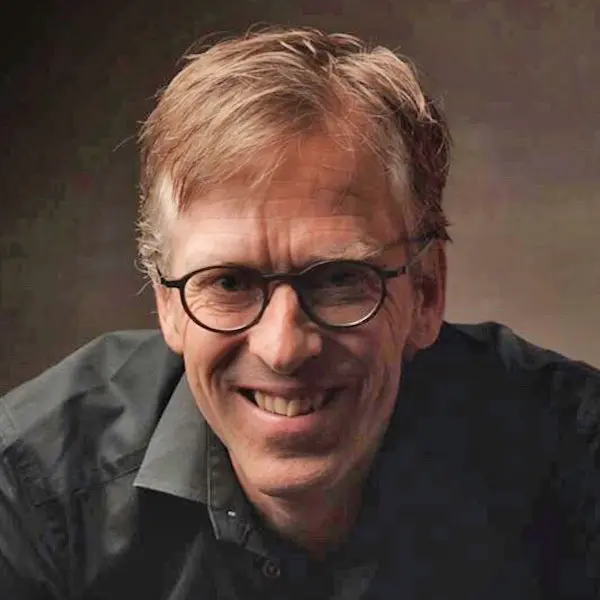
The Creativity Explorer | 2,000+ Speeches in 75 Countries | Author of The Idea Book, One of the 100 Best Business Books of All Time | TIA Recipient, Global Speakers Federation

Creator of the $35 Aakash Tablet | Founder of DataWind | Serial Entrepreneur & Pioneer of Frugal Innovation | Social Innovation Speaker
World Authority on Pricing | Founder & Honorary Chairman of Simon-Kucher & Partners | Creator of the "Hidden Champions" Concept | Thinkers50 Hall of Fame


© 2026 Aurum Speakers Bureau. All Rights Reserved

| Basic Data Protection Information | |
|---|---|
| Data controller | AURUM SPEAKERS BUREAU S.L. |
| Address | Parc Audiovisual de Catalunya 1, Oficina S11, 08225 Terrassa, Spain |
| Purposes | We will use your data to respond to your requests and deliver our services to you. |
| Marketing | We will only send you marketing correspondence if you have given your prior consent, which you can do by ticking the box for that purpose. |
| Lawful basis | We will only process your data if you have given your prior consent, which you can do by ticking the box for that purpose. |
| Recipients | Generally, only our members of staff who have been duly authorised may access the data that you have provided. |
| Your Rights | You have the right to know what information we hold about you, to rectify it and to erase it, as explained in the additional information available on our website. |
| Additional Information | For more information, please see our "PRIVACY POLICY". |