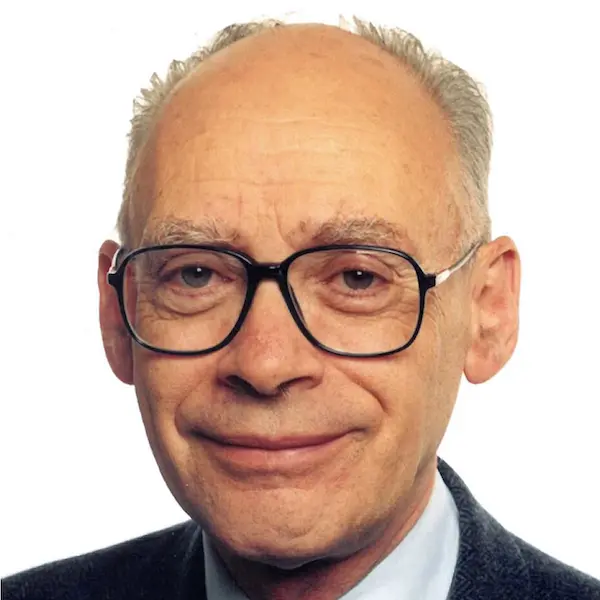
Henri B. Kagan
2026 Nobel Laureate in Chemistry | Pioneer of Asymmetric Synthesis & Discoverer of Non-Linear Effects in Catalysis | Professor Emeritus, Université Paris-Sud


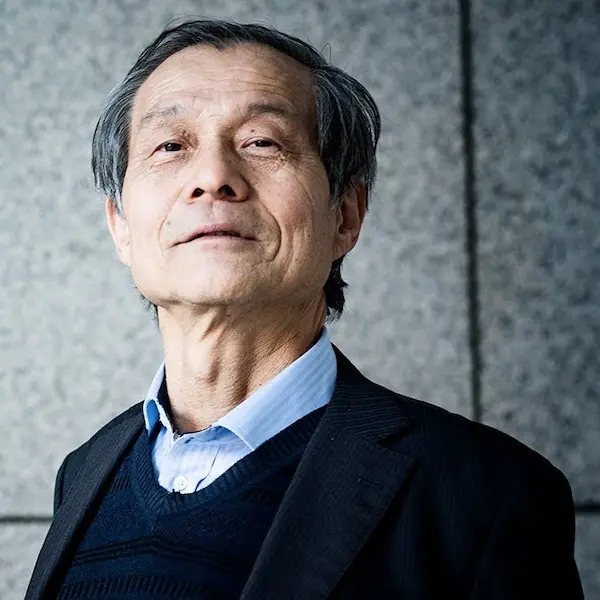
2026 Nobel Laureate in Chemistry | Discoverer of Asymmetric Autocatalysis & Creator of the 'Soai Reaction' | Professor Emeritus, Tokyo University of Science
Kenso Soai is the 2026 Nobel Laureate in Chemistry, honored with Henri Kagan for discoveries that solved a century-old mystery: how nature comes to favor just one of two mirror-image molecules. A professor emeritus at the Tokyo University of Science, he created the celebrated 'Soai reaction,' the first chemical reaction to produce a single mirror image by amplifying a tiny imbalance, a feat long thought impossible outside of life itself.
Want to book Kenso Soai as a speaker for your event? Please provide the info below and we’ll get in touch within 24h:
Science speaker Kenso Soai is the 2026 Nobel Laureate in Chemistry, celebrated for one of the most elegant and spectacular experiments in the history of chemistry. Awarded the prize jointly with Henri Kagan, he was honored for solving a mystery that had puzzled scientists for more than a century: how nature, and the laboratory, can come to favor just one of two mirror-image forms of a molecule, the property called homochirality that lies at the very foundation of life.
Many molecules, including the amino acids of living things, exist as two mirror-image versions, like a left and a right hand, yet life uses only one. For chemists, producing a single version rather than an even mixture was both a deep scientific puzzle and a practical necessity, since in medicines only one mirror image usually has the desired effect. Soai designed the first chemical reaction with the potential to achieve this, publishing the concept in 1995, and in 2003 he succeeded, creating a reaction in which only one mirror image forms. Other than life itself, no one had ever done it.
Now known simply as the Soai reaction, it works through asymmetric autocatalysis: the product of the reaction acts as the catalyst for its own creation, amplifying the tiniest initial imbalance until almost only one mirror image remains. The outcome can even be tipped by influences as subtle as circularly polarized light or a chiral crystal, which is why Soai’s discovery, together with the non-linear effects found by his co-laureate Henri Kagan, has reinvigorated the search for the origins of life’s handedness. A professor emeritus at the Tokyo University of Science, he received the 2026 Nobel Prize in Chemistry for work the committee called one of the most spectacular experiments ever conducted.
As a speaker, Kenso Soai offers audiences a direct connection to a landmark of modern science, and to one of chemistry’s most beautiful ideas. His story is a powerful reminder that patient curiosity, and the willingness to attempt what others believe impossible, can illuminate questions as profound as the origins of life itself and reshape how medicines are made. It resonates far beyond chemistry, with anyone who values science, discovery, and the pursuit of understanding.
The Nobel Committee called it one of the most spectacular chemical experiments ever conducted. In this fascinating talk, Nobel Laureate Kenso Soai tells the story of the reaction that bears his name, a reaction that does something no one thought possible: it produces just one of two mirror-image molecules, amplifying the tiniest imbalance into near-perfect "handedness." He makes a profound idea, asymmetric autocatalysis, vivid and wondrous, revealing the beauty and surprise at the heart of chemistry.
Why does life use molecules of only one "handedness," when chemistry can make both? This is one of science's deepest questions, and Kenso Soai's work brought us closer to an answer. In this talk he explores homochirality and how his reaction can be tipped toward one mirror image by influences as delicate as polarized light or a single crystal, offering tantalizing clues about how life's asymmetry may have first emerged. A captivating journey to the frontier between chemistry and the origins of life.
Behind many modern medicines lies the ability to build a molecule in just one of its two mirror-image forms, the one that actually works. Kenso Soai, whose Nobel-winning discoveries advanced this field, explains why "handedness" matters so profoundly for pharmaceuticals and how chemists learned to control it. A rare, accessible look at the science quietly shaping everyday life, from one of its most celebrated figures.
2026 Nobel Laureate in Chemistry | Pioneer of Asymmetric Synthesis & Discoverer of Non-Linear Effects in Catalysis | Professor Emeritus, Université Paris-Sud

2018 Nobel Laureate in Chemistry | Linus Pauling Professor, Caltech | Pioneer of Directed Evolution | Board Member, Alphabet & Illumina
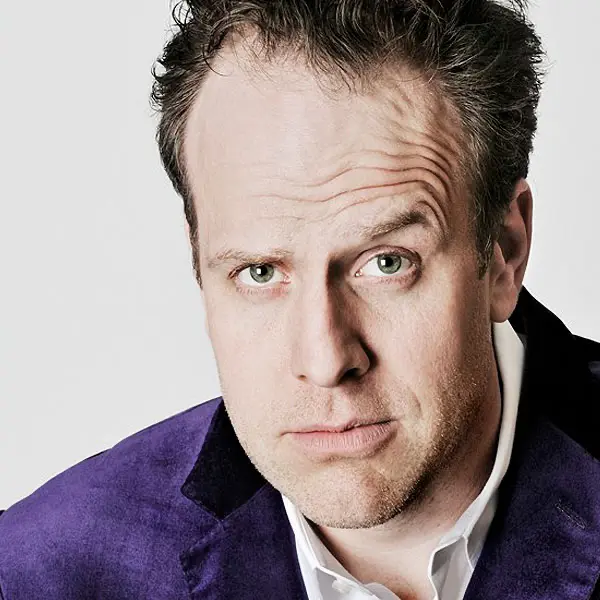
World-Renowned Futurologist & Trendspotter | Founder, Pattern Recognition | Author, How to Make AI Useful | Business Speaker of the Year

2020 Nobel Laureate in Chemistry | Co-Inventor of CRISPR-Cas9 | Director, Max Planck Unit for the Science of Pathogens | Co-Founder, CRISPR Therapeutics


© 2026 Aurum Speakers Bureau. All Rights Reserved

| Basic Data Protection Information | |
|---|---|
| Data controller | AURUM SPEAKERS BUREAU S.L. |
| Address | Parc Audiovisual de Catalunya 1, Oficina S11, 08225 Terrassa, Spain |
| Purposes | We will use your data to respond to your requests and deliver our services to you. |
| Marketing | We will only send you marketing correspondence if you have given your prior consent, which you can do by ticking the box for that purpose. |
| Lawful basis | We will only process your data if you have given your prior consent, which you can do by ticking the box for that purpose. |
| Recipients | Generally, only our members of staff who have been duly authorised may access the data that you have provided. |
| Your Rights | You have the right to know what information we hold about you, to rectify it and to erase it, as explained in the additional information available on our website. |
| Additional Information | For more information, please see our "PRIVACY POLICY". |