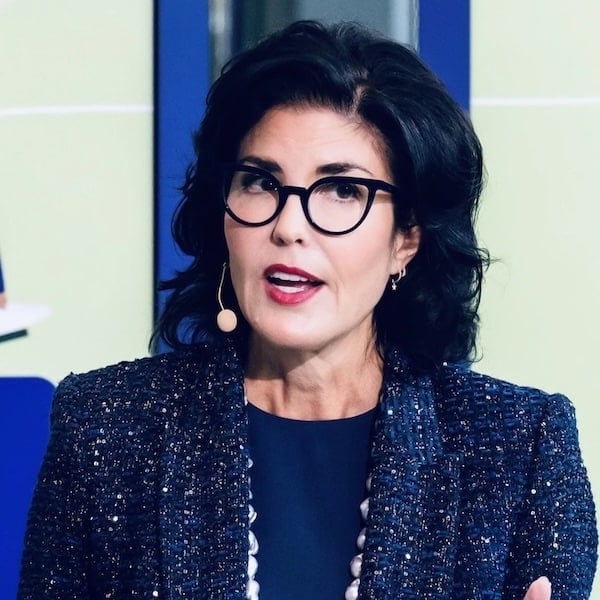
Tina Fordham
Author, Mad World | Founder, Fordham Global Foresight | Wall Street's First Chief Global Political Analyst | Geopolitics & PQ Expert



2020 Nobel Laureate in Chemistry | Co-Inventor of CRISPR-Cas9 Gene Editing | Founding Director, Max Planck Unit for the Science of Pathogens | Co-Founder, CRISPR Therapeutics
Emmanuelle Charpentier co-invented CRISPR-Cas9, the gene-editing tool that earned her the 2020 Nobel Prize in Chemistry and led to the first approved CRISPR medicine. As founding director of the Max Planck Unit for the Science of Pathogens and co-founder of CRISPR Therapeutics, she speaks to both discovery and commercialization. Leaders in healthcare, pharma, and technology gain a clear view of where gene editing is going and what it will ask of them.
Want to book Emmanuelle Charpentier as a speaker for your event? Please provide the info below and we’ll get in touch within 24h:
Speaker Emmanuelle Charpentier is a French microbiologist, geneticist, and biochemist whose research laid the foundation for CRISPR-Cas9, the gene-editing technology that has reshaped modern biology. She shared the 2020 Nobel Prize in Chemistry with Jennifer Doudna, the first Nobel Prize in a science category awarded solely to women. She is the Founding, Scientific and Managing Director of the Max Planck Unit for the Science of Pathogens in Berlin, an independent institute she established in 2018, and an Honorary Professor at Humboldt University.
Charpentier studied at the University Pierre and Marie Curie (now Sorbonne University) and earned her PhD in microbiology at the Pasteur Institute in Paris. Her research career took her to The Rockefeller University, NYU Medical Center, the Skirball Institute, and St. Jude Children’s Research Hospital in the United States, then to the University of Vienna, Umeå University in Sweden, and the Helmholtz Centre for Infection Research and Hannover Medical School in Germany. Her study of how bacteria defend themselves against viruses revealed a molecular system that can be reprogrammed to cut DNA at a chosen site, a tool now widely described as genetic scissors.
Charpentier carried that discovery well beyond the lab. With Rodger Novak and Shaun Foy, she co-founded CRISPR Therapeutics and ERS Genomics to develop the technology for patients and to license it across the research community. CRISPR Therapeutics went on to co-develop Casgevy, the first approved CRISPR-based medicine, for sickle cell disease and beta thalassemia. Her work has been honored with the Kavli Prize in Nanoscience, the Wolf Prize in Medicine, the Japan Prize, the Harvey Prize, and the Tang Prize, as well as induction into the U.S. National Inventors Hall of Fame and election as a Foreign Member of the Royal Society. She belongs to scientific academies in Europe, Asia, and North America.
As a speaker, Emmanuelle Charpentier gives audiences a firsthand account of how curiosity-driven research becomes technology that changes medicine. She explains with precision where gene editing is heading, what it asks of regulators and industry, and why patient investment in fundamental science pays off. Among Nobel Prize speakers, few can speak to both discovery and commercialization from direct experience, and she leaves executives, clinicians, and policymakers with a clearer view of the science and the responsibility that comes with it.
CRISPR-Cas9 began as a question about how bacteria fight off viruses and became one of the most powerful tools in modern biology. Charpentier explains in clear, accessible terms how the system works, why it changed research almost overnight, and where it is now being applied across medicine, agriculture, and biotechnology. Audiences come away with an expert's view of the technology's real potential and its current limits, and of the decisions it will require from business leaders, regulators, and society.
The path from a 2012 research paper to Casgevy, the first approved CRISPR-based medicine, ran through company building, patent strategy, clinical development, and years of persistence. Charpentier shares what she learned as a scientist who co-founded CRISPR Therapeutics and ERS Genomics, and what it takes to move an idea from the laboratory to patients. Leaders in research-driven industries gain a practical understanding of why fundamental science is the starting point for every major breakthrough and how to protect the conditions that make it possible.
Which genetic changes should be allowed, which should not, and who should decide? Charpentier leads a candid, balanced discussion of the ethical questions raised by CRISPR, from somatic therapies for inherited disease to germline editing and the wider social consequences of reshaping biology. She combines a scientist's understanding of what the technology can actually do with an awareness of the policy debate, giving healthcare, pharmaceutical, and public affairs audiences a framework for decisions they will increasingly face.
Charpentier built laboratories in several countries and worked for years without wide recognition before her research changed the field. She reflects on what that path taught her about resilience, intellectual independence, and pursuing fundamental questions instead of fashionable ones. This keynote resonates with organizations focused on women in science, diversity in STEM, scientific leadership, and the long-term thinking that produces transformative results.
Author, Mad World | Founder, Fordham Global Foresight | Wall Street's First Chief Global Political Analyst | Geopolitics & PQ Expert

Wallace Brett Donham Professor, Harvard Business School | Author, Genius at Scale & Collective Genius | Top Thinkers50 Management Thinker | Leadership & Innovation Expert
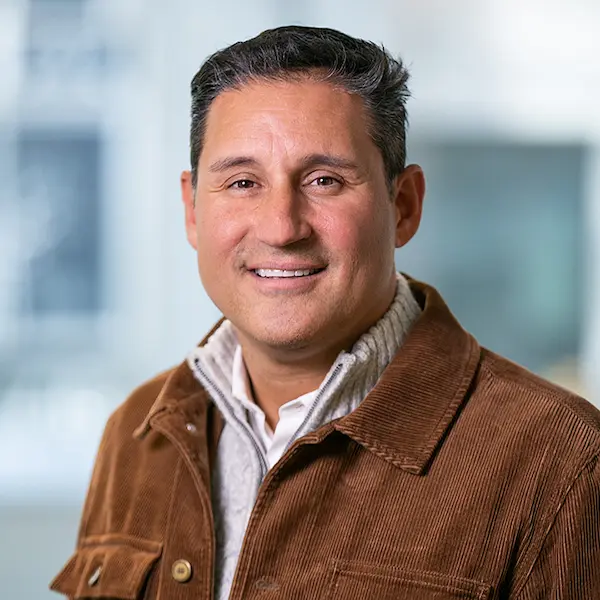
VP of Skills Vitality & Enablement, IBM Technology Group | Author of 22 Books on Data & AI Including AI Value Creators | Top 100 Global AI & Big Data Influencer

Four-Time Olympic Gold Medalist | World Record Holder in 200m and 400m | Founder, Michael Johnson Performance


© 2026 Aurum Speakers Bureau. All Rights Reserved

| Basic Data Protection Information | |
|---|---|
| Data controller | AURUM SPEAKERS BUREAU S.L. |
| Address | Parc Audiovisual de Catalunya 1, Oficina S11, 08225 Terrassa, Spain |
| Purposes | We will use your data to respond to your requests and deliver our services to you. |
| Marketing | We will only send you marketing correspondence if you have given your prior consent, which you can do by ticking the box for that purpose. |
| Lawful basis | We will only process your data if you have given your prior consent, which you can do by ticking the box for that purpose. |
| Recipients | Generally, only our members of staff who have been duly authorised may access the data that you have provided. |
| Your Rights | You have the right to know what information we hold about you, to rectify it and to erase it, as explained in the additional information available on our website. |
| Additional Information | For more information, please see our "PRIVACY POLICY". |