
Emmanuelle Charpentier
2020 Nobel Laureate in Chemistry | Co-Inventor of CRISPR-Cas9 | Director, Max Planck Unit for the Science of Pathogens | Co-Founder, CRISPR Therapeutics

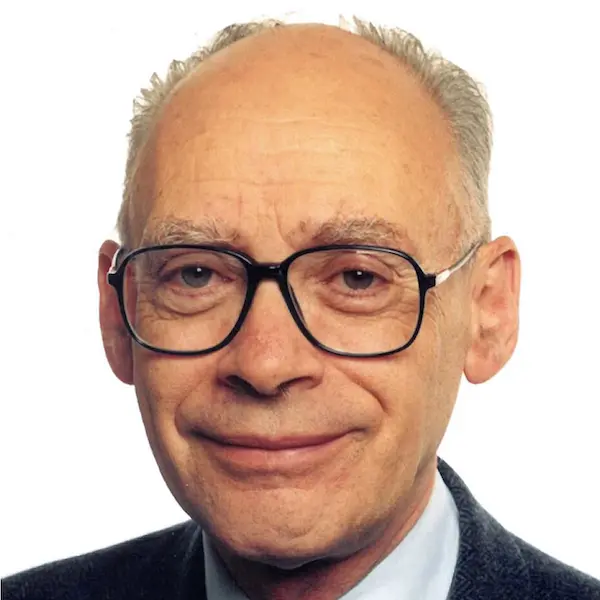
2026 Nobel Laureate in Chemistry | Pioneer of Asymmetric Synthesis & Discoverer of Non-Linear Effects in Catalysis | Professor Emeritus, Université Paris-Sud
Henri B. Kagan is the 2026 Nobel Laureate in Chemistry, honored with Kenso Soai for discoveries that solved a century-old mystery: how nature favors just one of two mirror-image molecules. A professor emeritus at Université Paris-Sud and a pioneer of asymmetric synthesis, his discovery of non-linear effects transformed how chemists build single-handed molecules, work that underpins modern medicines, flavors, and materials.
Want to book Henri B. Kagan as a speaker for your event? Please provide the info below and we’ll get in touch within 24h:
Science speaker Henri B. Kagan is the 2026 Nobel Laureate in Chemistry and one of the founding figures of modern asymmetric synthesis, the chemistry of building molecules with a specific “handedness.” Awarded the prize jointly with Kenso Soai, he was honored for solving a mystery that had puzzled chemists for more than a century: how nature, and now the laboratory, can come to favor just one of two mirror-image forms of a molecule, a property known as homochirality that is fundamental to life itself.
Many molecules, including the amino acids that make up living things, exist as two versions that are mirror images of each other, like a left and a right hand. Yet life uses only one. For chemists, reliably producing a single mirror image rather than an even mixture is both a profound puzzle and an enormously practical goal, because in medicines, only one version typically has the desired effect. Kagan’s breakthrough came in the 1980s, when he discovered and explained “non-linear effects” in asymmetric catalysis, showing that a less-than-perfect catalyst could still yield a large excess of one mirror image, far more than anyone had thought possible.
Kagan’s work, together with the asymmetric autocatalysis later discovered by his co-laureate Kenso Soai, has shaped how chemists think about the origins of homochirality and how they design reactions in practice. A professor emeritus at Université Paris-Sud in Orsay, he is recognized for a body of work spanning chiral catalysts and the use of lanthanides in synthesis, and his discoveries are now essential to the manufacture of pharmaceuticals, flavors, fragrances, and advanced materials. Before the 2026 Nobel Prize in Chemistry, his decades of contributions were honored with the Wolf Prize in Chemistry and membership in the French Academy of Sciences.
As a speaker, Henri B. Kagan offers audiences a direct connection to one of the great scientific achievements of our age. His career is a powerful reminder that patient, curiosity-driven research can reshape entire industries and even illuminate the origins of life, from a laboratory discovery about molecular “handedness” to the medicines, flavors, and materials it makes possible. His story resonates far beyond chemistry, with anyone who values science, discovery, and the pursuit of understanding.
Why does life, from the amino acids in your cells to the medicines in your cabinet, use molecules of only one "handedness," when chemistry can make both? In this fascinating talk, Nobel Laureate Henri B. Kagan explores homochirality, one of the deepest and most beautiful puzzles in science, and the work that helped solve it. He connects a century-old question about the origins of life to discoveries now used in laboratories worldwide, making profound chemistry accessible and wondrous for any curious audience.
Behind countless modern medicines lies a quiet revolution in chemistry: the ability to build a molecule in just one of its two mirror-image forms, the form that actually heals. Henri B. Kagan, whose discoveries made this possible, explains how asymmetric synthesis works and why it matters so profoundly for pharmaceuticals, flavors, fragrances, and materials. A rare window into the science that shapes everyday life, told by one of the field's founders.
Henri B. Kagan's Nobel Prize recognized ideas first developed decades ago, a testament to the long, patient arc of fundamental research. In this reflective talk, he shares the story of a life spent at the frontier of chemistry: the curiosity that drove him, the breakthroughs and setbacks along the way, and what his journey reveals about how real discovery happens. An inspiring perspective on science, perseverance, and the value of asking deep questions.
2020 Nobel Laureate in Chemistry | Co-Inventor of CRISPR-Cas9 | Director, Max Planck Unit for the Science of Pathogens | Co-Founder, CRISPR Therapeutics
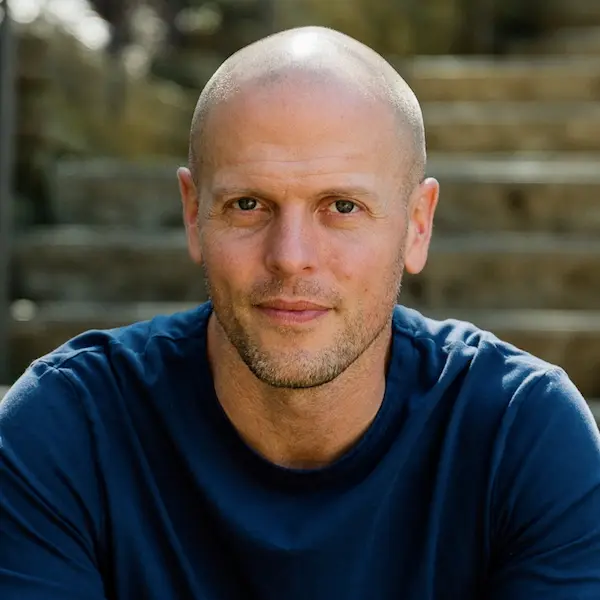
#1 Bestselling Author of The 4-Hour Workweek | Host of The Tim Ferriss Show | Angel Investor & Human-Performance Pioneer | Authority on Productivity & Peak Performance

2018 Nobel Laureate in Chemistry | Linus Pauling Professor, Caltech | Pioneer of Directed Evolution | Board Member, Alphabet & Illumina
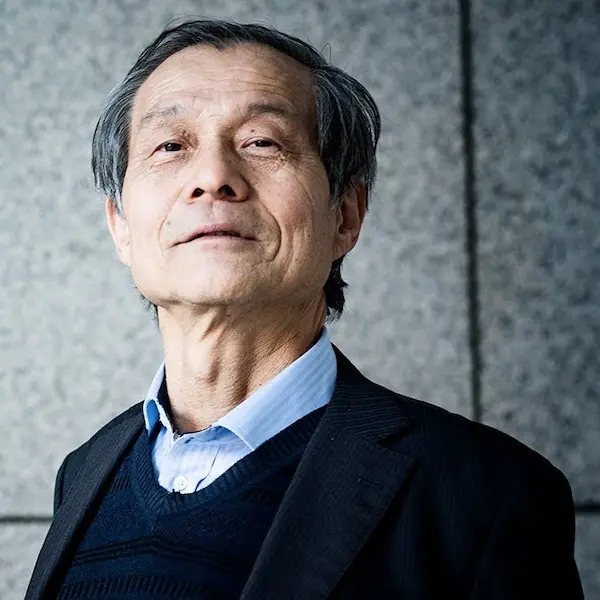
2026 Nobel Laureate in Chemistry | Discoverer of Asymmetric Autocatalysis & Creator of the 'Soai Reaction' | Professor Emeritus, Tokyo University of Science


© 2026 Aurum Speakers Bureau. All Rights Reserved

| Basic Data Protection Information | |
|---|---|
| Data controller | AURUM SPEAKERS BUREAU S.L. |
| Address | Parc Audiovisual de Catalunya 1, Oficina S11, 08225 Terrassa, Spain |
| Purposes | We will use your data to respond to your requests and deliver our services to you. |
| Marketing | We will only send you marketing correspondence if you have given your prior consent, which you can do by ticking the box for that purpose. |
| Lawful basis | We will only process your data if you have given your prior consent, which you can do by ticking the box for that purpose. |
| Recipients | Generally, only our members of staff who have been duly authorised may access the data that you have provided. |
| Your Rights | You have the right to know what information we hold about you, to rectify it and to erase it, as explained in the additional information available on our website. |
| Additional Information | For more information, please see our "PRIVACY POLICY". |