
Sara Blakely
Founder of Spanx & Sneex | World's Youngest Self-Made Female Billionaire | National Inventors Hall of Fame | TIME 100 Most Influential


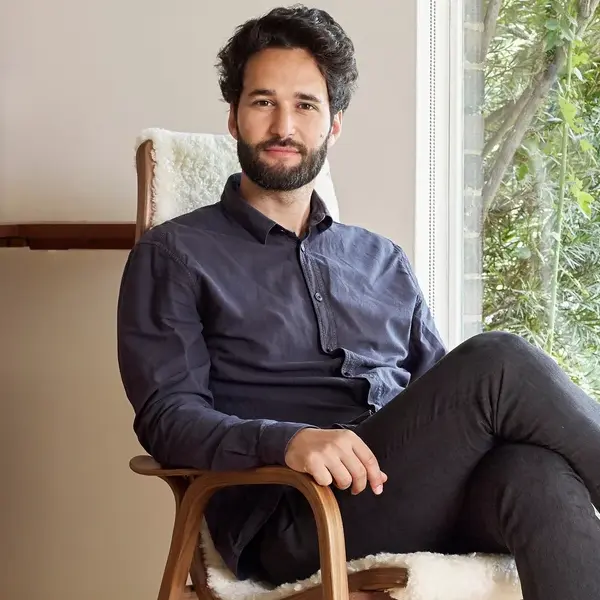
Author of What Should My Children Do?, Growth & A World Without Work | Mercers' Professor, Gresham College | Oxford & Stanford Economist | AI & Future of Work Expert
Daniel Susskind is one of the world's leading economists on what AI means for work, growth, and society. In his major new book What Should My Children Do?, he asks what the next generation must learn to flourish in the age of AI. Author of the Obama-endorsed Growth and the acclaimed A World Without Work, and a former UK government adviser, he gives leaders rigorous, optimistic, and practical frameworks for navigating profound technological change.
Want to book Daniel Susskind as a speaker for your event? Please provide the info below and we’ll get in touch within 24h:
Future of work speaker Daniel Susskind is one of the world’s foremost economists on the impact of artificial intelligence on work, growth, and society, and the author of the major new book What Should My Children Do? He holds the Mercers’ School Memorial Professorship in Business at Gresham College, is Research Professor in Economics at King’s College London, and holds senior research positions at Oxford University and the Stanford Digital Economy Lab.
Susskind’s work has shaped the global debate on technology and the economy. His book Growth: A Reckoning was chosen by President Barack Obama as one of his favorite books of the year and was a runner-up for the Financial Times Business Book of the Year, with reviews in the Wall Street Journal, The New Yorker, and Foreign Affairs. He also sits on the UK Government’s Expert Panel on AI and the Future of Work.
In his major new book, What Should My Children Do?, Susskind tackles one of the most urgent questions of our time: what the next generation should learn, and what they can stop worrying about, in a world transformed by AI. Drawing on fifteen years of research, he cuts through outdated advice to show how people can master new technologies without losing other essential skills, reorganizing education and reimagining careers around the opportunities AI creates. Published by Allen Lane in the UK and Penguin Random House in the US, the book was named by The New York Times among the nonfiction everyone will be talking about, and has been praised by figures from Microsoft AI CEO Mustafa Suleyman to Oxford University Chancellor William Hague.
His earlier books cemented his reputation as a leading voice on the future of work. A World Without Work was called required reading by The New York Times and was a runner-up for the FT Business Book of the Year, while his co-authored bestseller The Future of the Professions built the framework underpinning his research. His TED Talk on the myths of automation has been viewed more than 1.7 million times. Earlier in his career he advised the UK Government in the Prime Minister’s Strategy Unit, at 10 Downing Street, and in the Cabinet Office, and was a Kennedy Scholar at Harvard.
As a speaker, Daniel Susskind brings economic rigor and clear-eyed optimism to the questions most pressing for senior leaders: how AI will transform industries and the workforce, how to prepare the next generation and reskill today’s, and what a smarter model of growth could look like. Grounded in frontline research, real policy experience, and four acclaimed books, his talks give audiences practical, evidence-based frameworks for thriving through one of the most consequential transitions of our age.
AI is rewriting the rules in the classroom, the job market, and the workplace, leaving parents, teachers, students, and workers unsure how to prepare. Drawing on his new book, Daniel Susskind cuts through outdated advice to show what young people, and today's professionals, actually need to succeed. He argues for mastering new technologies without eroding other essential skills, reorganizing education, and reimagining white-collar careers around the opportunities AI creates. Above all, he calls for a mindset shift: embracing the extraordinary possibilities of AI, from personal tutors to scientific breakthroughs, rather than retreating from them. The result is an evidence-based, optimistic roadmap for one of the most urgent questions of our time.
Economic growth is perhaps civilization's most powerful achievement. Over the past two centuries, it has freed billions from poverty, extended human life expectancy, and expanded education and opportunity across the world. Yet this progress has come at a steep price: deepening inequality, environmental destruction, and technological disruption that strains the social fabric. In this keynote, drawing on his critically acclaimed book Growth: A Reckoning, Susskind argues that the answer is not to abandon growth but to fundamentally rethink what we mean by it — reorienting economies around what societies genuinely value rather than what is simply easiest to measure. He offers leaders a rigorous but accessible account of growth's past and a practical framework for shaping its future.
What fuelled growth in the 20th century was investment in human capital — expanding access to schools, universities, and professional training. The century ahead will look different. As AI systems become capable of generating the new ideas and knowledge that previously required human expertise, the engine of economic progress is shifting. Countries and companies that understand this transition and invest accordingly in the technologies and institutions behind it will pull ahead; those that don't will fall behind. In this forward-looking keynote, Susskind sets out a rigorous yet optimistic roadmap for navigating the new economics of growth in an age of machine intelligence.
AI systems can now write code, draft documents, design buildings, and diagnose medical conditions — tasks that were, until very recently, considered exclusively human. What does this mean for the future of work? It is one of the defining questions of our time, and in this keynote Susskind draws on his bestselling books and years of academic research to offer a clear-eyed answer. Rather than catastrophizing or dismissing the challenge, he maps out what is genuinely at stake — for workers, organizations, and policymakers — and explains what leaders can do to ensure their people and institutions are well-positioned for the transition ahead.
Technology has always changed work, but something qualitatively different is happening now. For the first time, machines are taking on not just manual or routine tasks but the knowledge-intensive work traditionally performed by lawyers, doctors, architects, accountants, teachers, and other professionals. Drawing on his co-authored bestseller and years of subsequent research, Susskind argues that we will neither need nor want professionals to work in the future the way they did in the 20th century. This is ultimately an optimistic talk: one that helps leaders in the professions understand the forces reshaping their fields — and how to position themselves to flourish in the decades to come.
To prepare people for the future of work, the education system must change — not incrementally, but fundamentally. What we teach, how we teach, and when we teach must all be rethought. The challenge is that our educational institutions were largely designed for the 20th-century economy, not the one that is emerging. AI is now performing tasks we once believed required years of specialist training: medical diagnosis, legal drafting, architectural design. Susskind examines what this means for how individuals should invest in their own development, and what organizations and governments need to do to build workforces capable of thriving alongside increasingly capable machines.
The debate about technology and work has generated enormous amounts of writing — much of it contradictory, alarmist, or simply wrong. In this keynote, Susskind cuts through the noise by identifying the core myths distorting our thinking about automation and AI, explaining why they mislead, and offering a more grounded framework for what is actually likely to happen. Drawing on his celebrated TED Talk and research from A World Without Work, he helps audiences separate genuine structural threats from exaggerated fears — and equips them to make better decisions in a landscape defined as much by hype as by real technological change.
Founder of Spanx & Sneex | World's Youngest Self-Made Female Billionaire | National Inventors Hall of Fame | TIME 100 Most Influential
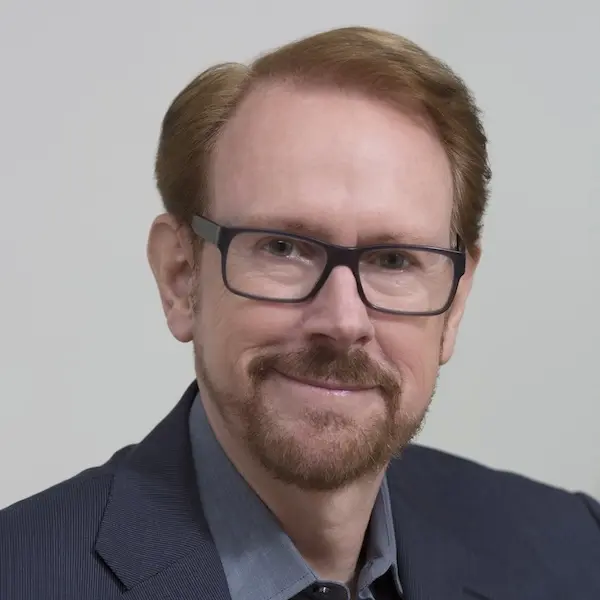
Global Futurist & AI Strategist | Founder & CEO, Burrus Research | NYT & WSJ Bestselling Author | Professional Speakers Hall of Fame

Bestselling Author, A Story is a Deal & The Status Game | Award-Winning Journalist | Storytelling & Behavioral Science Expert
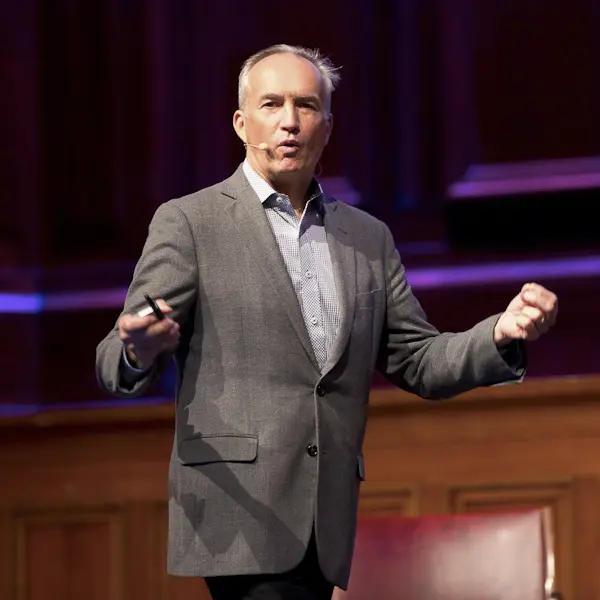
Bestselling Author | Co-founder, Peppers & Rogers Group | Global Customer Experience Authority


© 2026 Aurum Speakers Bureau. All Rights Reserved

| Basic Data Protection Information | |
|---|---|
| Data controller | AURUM SPEAKERS BUREAU S.L. |
| Address | Parc Audiovisual de Catalunya 1, Oficina S11, 08225 Terrassa, Spain |
| Purposes | We will use your data to respond to your requests and deliver our services to you. |
| Marketing | We will only send you marketing correspondence if you have given your prior consent, which you can do by ticking the box for that purpose. |
| Lawful basis | We will only process your data if you have given your prior consent, which you can do by ticking the box for that purpose. |
| Recipients | Generally, only our members of staff who have been duly authorised may access the data that you have provided. |
| Your Rights | You have the right to know what information we hold about you, to rectify it and to erase it, as explained in the additional information available on our website. |
| Additional Information | For more information, please see our "PRIVACY POLICY". |