
The pressure on organizations to move beyond sustainability pledges and into meaningful action has never been greater. Regulatory frameworks are tightening, investor scrutiny is intensifying, and employees and customers alike are demanding more than annual reports. The right keynote speaker doesn’t just inform an audience, they shift the way an entire organization thinks about its role in the world.
This list brings together the sustainability keynote speakers who are doing exactly that: combining rigorous expertise with the ability to move a room.
Carl Honoré: The Case for Slowing Down – and Why It Matters for Sustainability
The connection between sustainability and speed is one that most organizations miss entirely. Carl Honoré has spent two decades making the case that the relentless pursuit of faster – in production, in consumption, in decision-making – is precisely what drives unsustainable outcomes.
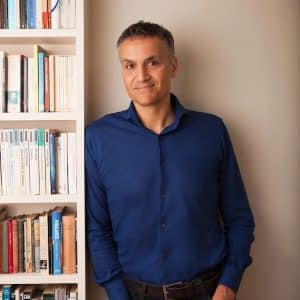
Carl Honoré: Slow movement pioneer helping organizations rethink speed, wellbeing, and sustainable performance
His first book, In Praise of Slow, sparked an international conversation about the cost of speed culture. His subsequent work has expanded this into leadership, aging, and organizational behavior, with books translated into 36 languages and bestseller lists across multiple continents. What makes Honoré exceptional as a keynote speaker is that he doesn’t moralize – he uses data, storytelling, and a journalist’s instinct for the surprising angle to show why slowing down is a competitive advantage, not a retreat.
For sustainability events, his message lands on two levels: it speaks directly to the supply chain and production decisions that drive environmental impact, and it speaks to the kind of organizational culture that can sustain long-term change rather than lurching between ESG initiatives. He’s a strong fit for leadership summits, HR conferences, and corporate sustainability days where the audience needs a new frame, not another data presentation.
Keynote topics include:
- The Slow Movement: why deceleration drives better outcomes
- Sustainable leadership: building cultures that last
- The future of work in a world that must do less and do it better
Henk Rogers: From Tetris to a Carbon-Free Planet
Few sustainability speakers arrive with a backstory that commands immediate attention in any room. Henk Rogers is the entrepreneur who brought Tetris to the world – the subject of the 2023 Apple TV+ film of the same name – and then walked away from the games industry to spend the rest of his career on a single mission: ending the use of carbon-based fuels on Earth by 2045.

Henk Rogers bringing entrepreneurial thinking to the challenge of global decarbonization
That pivot is not a rebrand. Rogers founded the Blue Planet Alliance, led the campaign that made Hawaii the first US state to pass a 100% renewable energy law, and has since been replicating that model across island nations and states worldwide. His framework is grounded in one insight most climate advocates miss: changing the business model of energy utilities so that they profit more from renewables than from fossil fuels. When the incentives align, the transition accelerates faster than any government mandate alone can achieve.
What Rogers brings to a corporate stage that few sustainability speakers can match is entrepreneurial credibility. He doesn’t speak in the language of policy or academia. He speaks in the language of deals, leverage, and systems change – which makes him unusually effective with business audiences who are skeptical of climate rhetoric but receptive to a commercial argument for transformation.
For events focused on the energy transition, clean tech, or corporate decarbonization strategy, he is a standout choice.
Keynote topics for Henk Rogers include:
- The business case for 100% renewable energy: lessons from Hawaii
- How to change the incentives, not just the intentions
- From Tetris to a carbon-free world: what entrepreneurship teaches us about systems change
For events in the blue economy or ocean conservation space, Alexandra Cousteau – President of Oceans 2050 and granddaughter of Jacques Cousteau – is also worth exploring.
Mariana Mazzucato: Rethinking the Role of Business in a Sustainable Economy
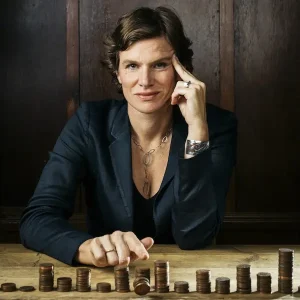
Mariana Mazzucato: Leading economist redefining value creation and guiding mission-driven innovation for sustainable growth
Few economists have had more influence on climate and sustainability policy in recent years than keynote speaker Mariana Mazzucato. A professor at University College London and founding director of the Institute for Innovation and Public Purpose, she is the intellectual force behind a growing consensus that markets alone will not solve the climate crisis – and that businesses need to rethink their relationship with both government and purpose. In 2025, she was appointed Commander of the British Empire (CBE) for services to economics in the King’s Birthday Honours List.
Her landmark books – The Entrepreneurial State, The Value of Everything, and Mission Economy – have shaped policy in the EU, the UK, and across multilateral institutions. Mission Economy in particular, which draws on NASA’s Apollo program as a model for how ambitious, goal-oriented public-private collaboration can solve seemingly intractable problems, has become required reading in boardrooms serious about sustainability strategy.
What Mazzucato brings to a keynote stage is intellectual weight paired with genuine urgency. She doesn’t offer platitudes about ESG scoring. She challenges organizations to think about what it means to actually create value – not just extract it – and what role they want to play in solving the defining challenges of the century.
She is a particularly powerful choice for C-suite events, investor conferences, and forums where the audience is ready for a systemic argument rather than an operational how-to.
Keynote topics include:
- Mission Economy: public-private collaboration for climate goals
- The Value of Everything: reimagining how business measures success
- Innovation policy and the green transition
Paul Polman: The Business Leader Who Proved Sustainability and Profit Aren’t in Conflict
As CEO of Unilever for a decade, Paul Polman did what many said was impossible: he eliminated quarterly earnings reporting, set an ambitious sustainability agenda with the Unilever Sustainable Living Plan, and delivered consistent shareholder returns
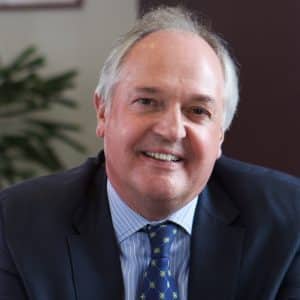
The former Unilever CEO who proved sustainability and shareholder returns can go hand in hand
throughout. When he stepped down in 2019, Unilever was widely regarded as the world’s most admired sustainable business.
Since then, Polman has become one of the most respected voices on stakeholder capitalism, corporate courage, and the responsibility of business leaders to act on climate. His book Net Positive: How Courageous Companies Thrive by Giving More Than They Take, co-authored with Andrew Winston, is a direct challenge to CEOs to move from doing less harm to making a net positive contribution. In 2025, Thinkers50 ranked Polman and Winston first in their global ranking – recognition of a lifetime’s work, not a single book.
What sets Polman apart on a conference stage is credibility. He is not an academic telling executives what they should do. He is someone who ran one of the world’s largest consumer goods companies and made the sustainability case from inside the machine. For boards, executive leadership teams, and corporate sustainability forums, that distinction matters enormously.
Keynote topics include:
- Net positive: what it means and how to get there
- Stakeholder capitalism in practice
- Why business must lead on climate when governments cannot
Carlos Alvarado Quesada: What a Country That Actually Did It Can Teach Your Organization
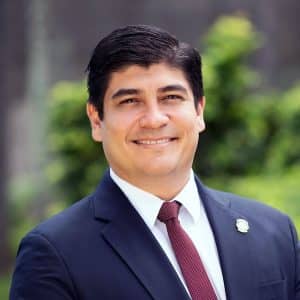
The former president who turned national climate ambition into measurable results
Most sustainability keynotes describe what needs to happen. Carlos Alvarado Quesada describes what it looks like when a country actually delivers. As the 48th President of Costa Rica from 2018 to 2022, he launched the country’s National Decarbonization Plan – the first of its kind following the Paris Agreement – and oversaw a model of sustainable development that the rest of the world has studied ever since: reversing deforestation, expanding ocean protection from 3% to 30% of territorial waters, and demonstrating that environmental ambition and economic growth are not in conflict.
During his presidency, Costa Rica won the Earthshot Prize and received the UN Champion of the Earth Award for policy leadership. The National Geographic Society awarded him the 2022 Planetary Leadership Award for his ocean conservation commitments. Since leaving office he has joined The Fletcher School at Tufts University as a Professor of Practice in Diplomacy, bringing the same clarity of purpose to the next generation of global leaders.
For corporate audiences, Alvarado’s value is specific: he shows that bold sustainability commitments, properly executed, create economic opportunity rather than destroying it. That argument, made by a head of state who governed it rather than theorized it, carries a weight in the boardroom that no consultant or academic can replicate.
Keynote topics include:
- Costa Rica’s decarbonization model: what business can learn from it
- How to build political and organizational will for sustainability transformation
- Leading through crisis: the intersection of climate, pandemic, and economic reform
Tom Rivett-Carnac: Translating Climate Urgency into Organizational Action
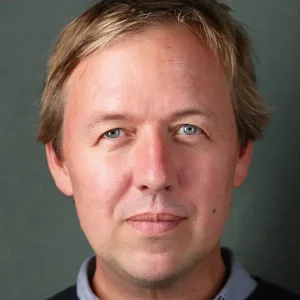
Tom Rivett-Carnac: Paris Agreement architect helping organizations lead on climate strategy and systemic change
Tom Rivett-Carnac was alongside Christiana Figueres as Senior Advisor to the Executive Secretary of the UNFCCC during the negotiations that produced the Paris Agreement. He is now a founding partner of Global Optimism and co-author of The Future We Choose, and brings to corporate audiences something rare: the inside view of how the world’s most complex climate deal was actually made, and what it demands from organizations today.
His career spans climate diplomacy, energy policy, finance, and the non-profit sector – a breadth that allows him to speak credibly across the full range of an organization’s sustainability challenges, from supply chain decarbonization to board-level governance. He frames climate action not as compliance or risk management but as the defining leadership opportunity of the current decade.
Rivett-Carnac is particularly effective with audiences that have already committed to sustainability targets and are grappling with delivery – helping teams move from strategy documents to cultural change and operational execution. He is a strong choice for leadership offsites, sustainability summits, and events where the audience is ready to move from “what” to “how.”
Keynote topics include:
- From commitment to delivery: closing the climate action gap
- Leadership in the decade of transformation
- The Future We Choose: what organizations owe the next generation
FAQ
Why should organizations book a sustainability keynote speaker?
The gap between sustainability pledges and meaningful action is a significant challenge for most organizations today. A strong sustainability keynote speaker helps bridge that gap – not by adding to the list of things that need to be done, but by shifting how leaders think about why those actions matter and what’s at stake. Speakers on this list bring the scientific authority, business credibility, and communication skills to move leadership teams from passive awareness to active strategy. Reach out to Aurum Speakers Bureau to explore which speaker is the right fit for your event’s audience and goals.
What types of events are sustainability keynote speakers best suited for?
Sustainability speakers work across a wide range of event formats: annual leadership summits, ESG investor days, employee engagement events, corporate strategy offsites, industry conferences, and public-sector forums. The best choice depends on whether the audience needs inspiration, strategic frameworks, scientific context, or a combination of all three – which is why the speakers on this list vary considerably in style and approach.
What is the difference between a sustainability speaker and a climate change speaker?
While there is considerable overlap, sustainability speakers tend to address the full spectrum of environmental, social, and governance issues – including the circular economy, biodiversity, supply chain ethics, and long-term business model redesign. Climate change speakers focus more specifically on atmospheric science, decarbonization pathways, and energy transition. Several speakers on this list, including Carlos Alvarado Quesada and Tom Rivett-Carnac, span both categories effectively. For guidance on which framing best fits your event, contact the Aurum team.
How far in advance should we book a sustainability keynote speaker?
For high-profile leadership speakers working across international markets, six to twelve months’ lead time is standard for premium conferences. Many speakers on this list maintain packed schedules through the major conference season, which peaks between April and June and again in October and November. Booking early also allows time to work with the speaker on customizing content to your organization’s specific sustainability context.
The speakers listed here represent Aurum’s broader roster of sustainability speakers and leadership speakers with deep expertise in environmental strategy and organizational transformation. Contact Aurum Speakers Bureau to discuss availability, fees, and the right fit for your next event.