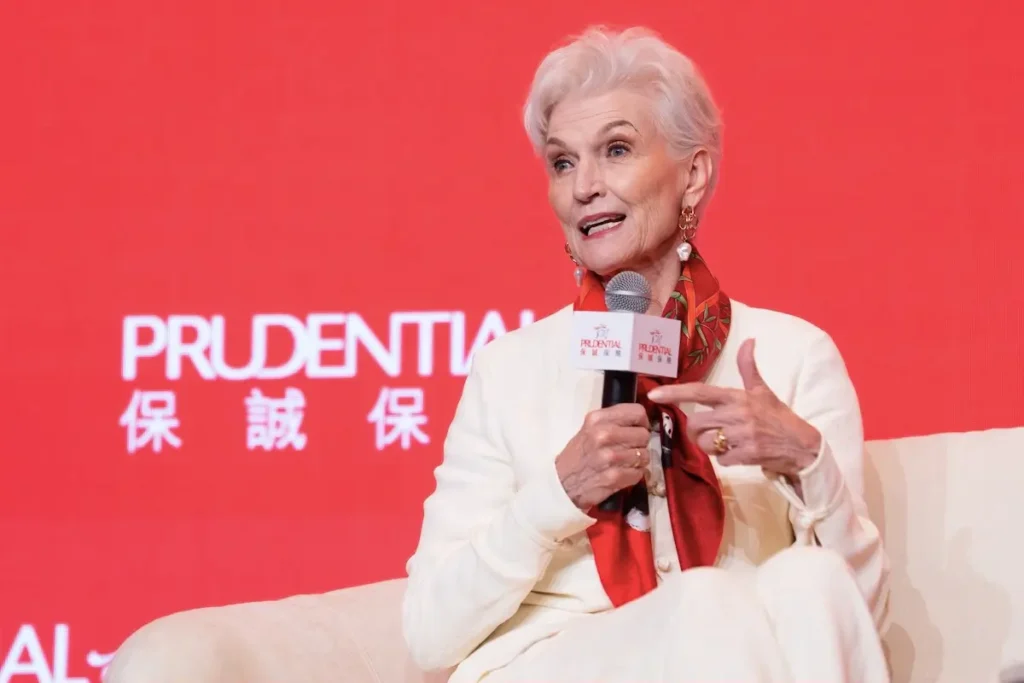
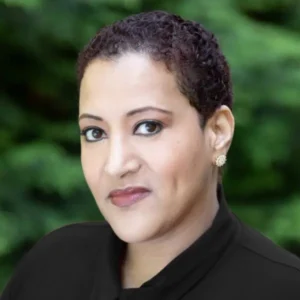
Tsedal Neeley is a Harvard Business School professor and founding Chair of the HBS AI Academy. Ranked among the Thinkers50, she helps leaders build the mindset their teams need to thrive alongside AI.
Most organizations approach AI as a technology problem: buy the tools, run the pilots, wait for results. Tsedal Neeley argues that this is exactly why so many of those efforts stall.
A Harvard Business School professor and one of the world’s leading authorities on digital transformation, she makes a case that is both reassuring and demanding: thriving in the age of AI is far less about mastering the technology than about adopting a new way of thinking.
For leaders trying to move their people from anxiety to fluency, that reframing is the difference between an AI strategy that sticks and one that quietly fails.
A Harvard authority at the center of the AI conversation
Neeley’s credibility is hard to overstate. She is the Naylor Fitzhugh Professor of Business Administration at Harvard Business School, where she also serves as Senior Associate Dean and Chair of the MBA Program and, tellingly, as founding Chair of the HBS AI Academy, the school’s initiative to prepare leaders for an AI-driven economy.
Ranked number ten on the Thinkers50 list of the world’s most influential management thinkers, and named to Forbes’ Future of Work 50, she advises the leaders of some of the most complex organizations on earth.
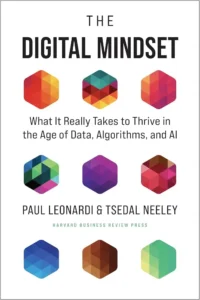
In The Digital Mindset, Neeley introduces the 30% rule: you don’t need to be an engineer to thrive with AI, just enough fluency to ask the right questions and decide well.
When a Harvard professor who chairs the institution’s own AI education effort speaks about where work is heading, audiences are hearing from someone shaping the conversation, not just commenting on it.
For a complementary economist’s view on preparing people for that shift, see our feature on Daniel Susskind on AI and the future of work.
The digital mindset and the 30% rule
Neeley’s central idea, drawn from her book The Digital Mindset, co-authored with Paul Leonardi, is liberating for any leader intimidated by the pace of technological change. You do not need to become a data scientist to thrive in the age of AI. You need what she calls a digital mindset, and her research puts a number on it: the 30% rule.
Leaders and employees need roughly thirty percent fluency in concepts like data, algorithms, and AI, enough to ask the right questions, collaborate with technical teams, and make sound decisions, not the total mastery most people assume is required.
That single insight reframes the entire challenge of workforce transformation from an impossible retraining burden into an achievable, human goal.
It is a message that resonates powerfully with audiences among the most sought-after digital transformation speakers, because it makes the future feel navigable rather than threatening.
From remote work to the future of work
Neeley first reached a global audience with Remote Work Revolution, the evidence-based playbook that guided countless organizations through the shift to distributed work, but her thinking has always been about something larger than location.
The through-line across her three award-winning books is how people and organizations adapt to technological and global change, whether that change is a dispersed workforce, a common corporate language, or an AI-augmented team.
That places her squarely among the voices shaping the future of work conversation: she connects the practical mechanics of how teams collaborate to the deeper question of what capabilities they need to build next.
For organizations that navigated the remote-work era with her guidance and now face the AI era, she offers a rare continuity of insight. For the leadership-and-identity side of that same shift, see our feature on Herminia Ibarra on leadership and reinvention.
What audiences take away
Neeley delivers the rigor of Harvard research with the clarity of a master teacher, and she tailors the substance to the room: practical frameworks for leaders driving digital change, the mindset shifts that help teams embrace new tools, and evidence-based strategies for building trust and productivity across distributed, global, and increasingly AI-augmented workforces.
Audiences leave with something more durable than enthusiasm, a concrete sense of what digital fluency actually requires and how to build it across an organization.
She is a strong fit for leadership summits, technology and transformation conferences, HR and future-of-work events, and any gathering where the agenda centers on preparing people, not just systems, for what comes next.
Frequently Asked Questions
Why should organizations book Tsedal Neeley?
Because she offers a rare combination: a Harvard Business School professor and founding Chair of the HBS AI Academy who translates rigorous research into practical guidance leaders can act on. She helps organizations move past AI anxiety and tool fatigue to build the digital mindset their people actually need. She is furthermore ideal for events on digital transformation, the future of work, leadership, and AI adoption.
To check her availability and fit, contact Aurum Speakers Bureau and a dedicated advisor will respond within 24 hours with a tailored proposal.
What does Tsedal Neeley speak about?
She speaks on building a digital mindset for the age of AI, the 30% rule for digital fluency, leading digital and global transformation, remote and hybrid work, and building trust and productivity across distributed teams.
Drawing on her books The Digital Mindset, Remote Work Revolution, and The Language of Global Success, she tailors each talk to the audience.
Who is Tsedal Neeley?
Tsedal Neeley is the Naylor Fitzhugh Professor of Business Administration at Harvard Business School, where she also serves as Senior Associate Dean and Chair of the MBA Program and founding Chair of the HBS AI Academy. Ranked number ten on the Thinkers50 list in 2023 and named to Forbes’ Future of Work 50, she is the author of three award-winning books on organizations, technology, and transformation, and holds a PhD from Stanford University.
What types of events suit a speaker like Tsedal Neeley?
She is a strong fit for leadership summits, digital transformation and technology conferences, HR and future-of-work programs, and executive or board sessions focused on AI adoption and workforce readiness, especially audiences that want rigorous, evidence-based guidance rather than hype.
The organizations that thrive in the age of AI will not be the ones with the most tools, but the ones whose people know how to think alongside them.
Tsedal Neeley gives leaders a clear, research-backed path to building exactly that capability. To bring her perspective on the digital mindset to your stage, reach out to Aurum Speakers Bureau to discuss availability and dates.