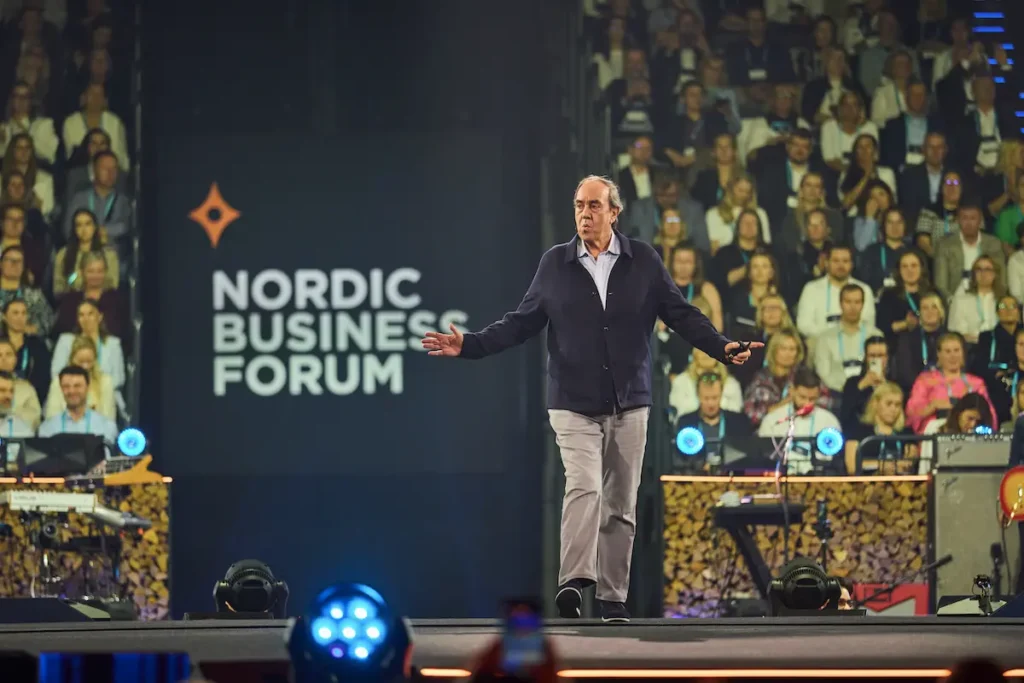
“Technology” is not a single topic, and that is exactly why choosing a technology speaker is harder than it looks. The word covers artificial intelligence, cybersecurity, robotics, cloud, quantum, and the broad question of where all of it is heading. A speaker who is electric in front of a room of engineers can lose a boardroom, and a visionary futurist can frustrate an audience that came for something they can act on Monday. The mismatch, not the speaker, is almost always what makes a technology keynote fall flat.
This guide walks through how to match the right technology speaker to your audience and your event’s purpose, so the decision becomes a matching exercise rather than a guess.
Start With What the Audience Needs to Do Differently
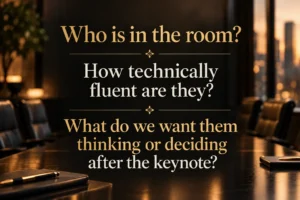 Before looking at names, get clear on three things:
1. Who is in the room
2. How technically fluent they are, and
3. What you want them thinking or deciding after the keynote.
A CIO audience wants depth and defensible claims. A mixed leadership audience wants clarity about what a shift like AI actually means for their business. A frontline or sales audience, on the other hand, wants relevance to their day, not a tour of the frontier. The same speaker rarely serves all three.
The Main Types of Technology Speaker
The Practitioner
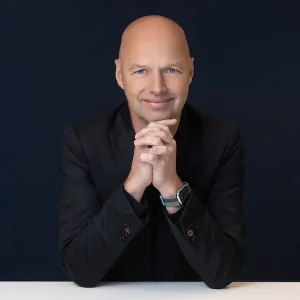
Sebastian Thrun, who built Google’s self-driving car program and founded Udacity, the kind of practitioner whose authority comes from having built the technology, not just studied it.
Someone who has built the technology, not only studied it. Best when credibility matters most and the audience will challenge anything that sounds like hype.
Sebastian Thrun, the pioneer behind Google’s self-driving car program and founder of Udacity, is a great example. He carries the authority of having actually built the systems about which he speaks. That’s the kind of credibility we explore in our feature on the AI speakers who built the technology.
The trade-off with deep practitioners is that they can go too technical for a general audience, so brief them on the room.
The Futurist
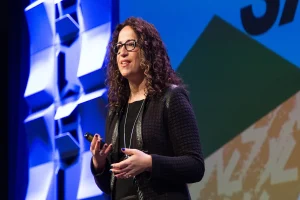
Amy Webb, quantitative futurist and founder of the Future Today Strategy Group, who helps leadership teams map how AI and emerging tech will reshape the years ahead.
Focused on where technology is heading and what it means for strategy. Best for executive audiences setting direction.
Amy Webb, quantitative futurist and founder of the Future Today Strategy Group, is a perfect example of someone built precisely for this: she helps leadership teams map how AI and emerging technology reshape the years ahead. For more info, check our feature on Amy Webb on the convergence of AI and technology.
A good futurist speaker is less effective when the audience wants concrete next steps rather than a horizon scan, so match them to direction-setting moments.
The Domain Expert

Mikko Hyppönen, who has tracked cybercrime for over three decades, the kind of domain expert a security-focused audience trusts for real depth on one field.
Specialists in a specific field who bring real depth on one subject.
For cybersecurity, for example, Mikko Hyppönen, who has tracked cybercrime for over three decades and delivered an opening keynote at Black Hat USA, is the kind of authority a security-focused audience trusts. We cover more of his work in our feature on why Mikko Hyppönen is a leading voice on cybersecurity and AI threats.
Domain experts like this are the right call for industry-specific events and for audiences who need substance on one topic such as AI or security, rather than a broad overview.
What Good Looks Like
Whatever the type, the strongest technology speakers share one trait: they translate complexity into decisions.
A useful test when you shortlist is whether the speaker helps the audience think differently, not just sound informed.
To keep bouncing off our given examples above, a practitioner like Sebastian Thrun brings the authority of having built the technology, while a strategist like Amy Webb is built for leadership audiences mapping what it all means. A domain expert like Mikko Hyppönen brings unmatched depth on a single field.
Different rooms, different choices.
Common Mistakes to Avoid
The frequent errors are choosing on fame alone, booking someone too technical for the room, and mistaking novelty for relevance.
Booking late is another: the strongest technology speakers are reserved well in advance, especially around major industry events, which is why it helps to know how far in advance to book a keynote speaker.
And underinvesting in the brief is the quiet killer, because even the right speaker struggles without a clear read on the audience and the outcome you want. Our guide on how to brief a speakers bureau helps you get that right.
Finally, for a great sample of the power a technology speaker can bring to an audience when addressing what’s next at a given contextual moment, see Sebastian Thrun’s keynote at South Summit above.
Furthermore, for a curated starting point, see our list of the top technology speakers, or browse the full technology speakers roster. If you have any questions, need any information, or are interested in booking a technology speaker, don’t hesitate to contact Aurum Speakers Bureau with your event date, audience profile, and objectives. One of our co-founders will respond within 24 hours with the technology speaker whose expertise and style fit your event.
Frequently Asked Questions
How do I choose the right technology speaker for my event?
Start with the audience and the outcome, not names. Decide whether you need a practitioner for credibility, a futurist for direction, or a domain expert for depth on one subject such as AI or cybersecurity, then match accordingly.
What is the difference between a technology speaker and a futurist?
A technology speaker may focus on a specific field or current application, while a futurist concentrates on where technology is heading and what it means for long-term strategy. Futurists suit direction-setting; domain experts suit depth.
How do I book a technology speaker through Aurum?
Contact Aurum Speakers Bureau with your event date, audience profile, and objectives, and our team will recommend the technology speaker whose expertise and style fit your event.