
The best AI speakers aren’t always the ones with the most viral TED talks. They’re the engineers, founders, and researchers who spent decades in labs and boardrooms turning science fiction into commercial reality. These are the AI keynote speakers who built the technology itself.
Corporate audiences are tired of surface-level AI hype. They want speakers who’ve actually shipped products, led teams through technical dead ends, and made billion-dollar bets on unproven technology. They want people who know what AI can and can’t do – because they built it.
This is a different kind of AI speakers list. Not theorists. Not futurists speculating from the sidelines. These are five keynote speakers who created the autonomous systems, humanoid robots, and machine learning platforms that define the field today.
If your organization is serious about understanding where AI is going, start with the people who’ve been building it all along.
Sebastian Thrun: The Godfather of Autonomous Vehicles Who Continues to Shape AI’s Future
Before self-driving cars were everywhere, keynote speaker Sebastian Thrun was leading the Stanford team that won DARPA’s Grand Challenge in 2005. That victory didn’t just prove autonomous vehicles were possible – it launched an industry.
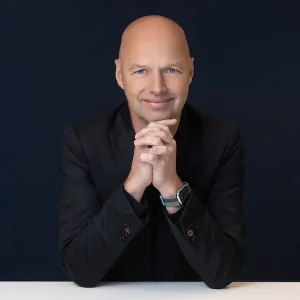
Sebastian Thrun, pioneer of autonomous vehicles and founder of Google X’s self-driving car project, continues to shape the future of AI through research, education, and real-world innovation.
Thrun went on to found Google X’s self-driving car project, which became Waymo. He pioneered AI-powered education by founding Udacity, which was acquired by Accenture in 2024 after training over 21 million professionals worldwide in AI, machine learning, and software development. He co-founded Kitty Hawk Corporation, which developed electric flying vehicles and sold its flagship project to Boeing. Currently, he serves as co-founder and board member of Cresta AI, a startup enhancing customer service through real-time AI coaching software.
What makes Thrun essential for corporate audiences is his ability to translate cutting-edge research into business strategy. He doesn’t just explain how neural networks work – he explains why companies that ignore AI will lose to competitors who don’t. His keynotes connect technical innovation to competitive advantage, talent strategy, and long-term planning.
As a Stanford professor and AI researcher with over 171,000 academic citations, Thrun continues to shape the field’s theoretical foundations while building commercial applications. In recent speaking appearances throughout 2025 and early 2026, he’s focused on how AI is unlocking unprecedented human productivity and the responsible regulation needed as the technology advances. Learn more about his work at robots.stanford.edu.
Marc Raibert: The Robotics Visionary Now Leading the AI Institute
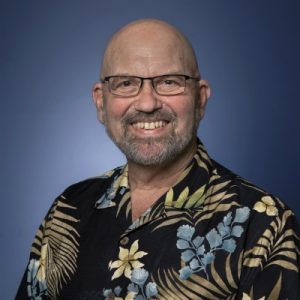
Marc Raibert, founder of Boston Dynamics and Executive Director of the AI Institute, has spent decades redefining what intelligent robots can do.
Speaker Marc Raibert spent 30 years building robots that could run, jump, and navigate terrain no machine had conquered before. As founder of Boston Dynamics, he created Atlas, Spot, Handle, and other robots that redefined what’s physically possible with AI-driven motion.
Raibert didn’t just engineer robots. He solved problems most people assumed were unsolvable – dynamic balance, real-time environmental adaptation, multi-terrain navigation. His work bridged neuroscience, physics, machine learning, and mechanical engineering. Today, Raibert serves as Executive Director of the Boston Dynamics AI Institute, a research lab funded by Hyundai Motor Group that opened in 2022 and now employs 260 people working to combine robots’ athletic capabilities with cognitive intelligence.
He also remains Chairman of Boston Dynamics, which under Hyundai’s ownership has successfully commercialized Spot and Stretch robots now used by organizations worldwide. As of summer 2025, Raibert opened a pop-up robotics exhibit at Cambridge Side mall, attracting over 1,000 visitors per week and working to combat negative Hollywood stereotypes about robots.
What makes Raibert valuable for keynotes is his long-term perspective. He can talk about what it takes to pursue a vision for decades, how to lead technical teams through uncertainty, and how to commercialize technology that’s ahead of the market. At 75, he’s as actively engaged in pushing robotics boundaries as ever.
Corporate audiences, especially in manufacturing, logistics, and defense, book Raibert when they need to understand where robotics is going and what it takes to build technology that doesn’t exist yet. Explore more at Boston Dynamics and The AI Institute.
Zack Kass: The OpenAI Insider Who Just Published a National Bestseller on AI’s Impact
Keynote speaker Zack Kass was inside OpenAI as the company went from research lab to global phenomenon. As Head of Go-to-Market for OpenAI, he built the teams responsible for sales, partnerships, and customer success, turning GPT technology into real-world business solutions and personally advising executives across dozens of industries on deploying AI at scale.

Zack Kass, former Head of Go-to-Market at OpenAI and author of The Next RenAIssance, helps organizations translate AI innovation into real-world business advantage.
In January 2026, Kass released The Next RenAIssance: AI and the Expansion of Human Potential, which immediately became a USA Today and LA Times bestseller. The book explores his theory of “Unmetered Intelligence” – the idea that as AI makes cognition abundant and accessible everywhere, the source of competitive advantage shifts from how smart teams can be to where humans create irreplaceable value.
Kass isn’t an engineer, and that’s precisely why he’s valuable. He understands AI from the business side – how companies actually use it, where implementation fails, what executives need to know, and how to think about AI strategy without getting lost in technical jargon. He now advises Fortune 1,000 companies including Coca-Cola, Morgan Stanley, and Amgen, and serves as Executive-in-Residence at the University of Virginia’s McIntire School of Commerce, where he develops coursework on using generative AI in early careers.
His keynotes focus on practical implications: how AI changes competitive dynamics, what skills employees need, how to evaluate AI vendors, and where the hype ends and real opportunity begins. He’s particularly strong on AI ethics, societal readiness, and the gap between what technology can do versus what society is willing to accept.
Organizations book Kass when they need someone who can speak to leadership teams, boards, and non-technical audiences about AI without dumbing it down or overhyping it. His OpenAI credibility gives him authority, but his communication style makes him accessible.
Ian Beacraft: The Gonzo Futurist Helping Organizations Master AI Transformation
Speaker Ian Beacraft is the founder, CEO, and Chief Futurist of Signal and Cipher, a strategic foresight and development agency that guides companies through the rapidly changing AI landscape. Unlike many futurists, Beacraft doesn’t just predict – he helps organizations build, prototype, and implement.
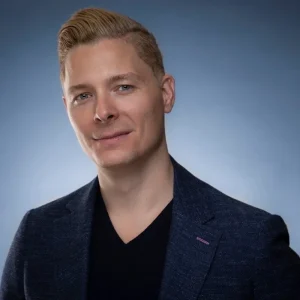
Ian Beacraft, founder of Signal and Cipher and known as the Gonzo Futurist, helps organizations move from AI experimentation to enterprise-wide transformation.
Known as a “Gonzo Futurist,” Beacraft actively experiments with emerging technologies before they leave research labs, understanding their implications for the future of work. He was the first person to host a news segment as a synthetic human, streaming to over 100 million devices worldwide. He’s also co-owner of a production studio designing virtual worlds, bringing firsthand expertise in immersive technology and extended reality.
Beacraft has advised major brands including Samsung, Intel, Coca-Cola, Google, Microsoft, Nike, Universal Pictures, and dozens more. Previously responsible for P&L and innovation departments at the world’s largest agencies, he’s known for making bleeding-edge technology both understandable and monetizable.
His approach is grounded in practical implementation. He helps organizations move beyond AI as a bolt-on tool and instead rewire how value is created across the enterprise. His keynotes address the shift from rigid roles to fluid skills, from policies to possibilities, and from fear-based leadership to learning-focused transformation. Throughout 2025, Beacraft has emphasized that leadership mindsets – not AI itself – pose the greatest threat to successful transformation.
Corporate audiences book Beacraft when they need a strategic partner who can move beyond buzzwords and help leadership teams make actual decisions about AI investment, talent, and cultural change. He’s particularly effective for executive retreats, board presentations, and hands-on transformation workshops.
Mo Gawdat: The Former Google X Leader Warning About AI While Offering Hope
Mo Gawdat spent more than a decade as Chief Business Officer at Google X, where he worked alongside teams building self-driving cars, delivery drones, and other moonshot AI projects. He’s the author of three bestselling books: Solve for Happy (2017), Scary Smart (2021), and That Little Voice in Your Head (2022). In February 2025, he released Unstressable: A Practical Guide to Stress-Free Living.
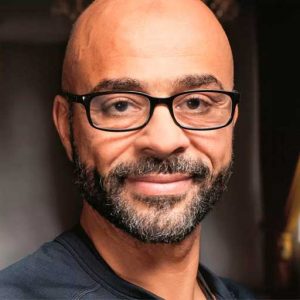
Mo Gawdat, former Chief Business Officer at Google X and author of Scary Smart, explores the future of AI with equal parts technical insight, ethical urgency, and human optimism.
What makes Gawdat unique among technology speakers is his willingness to issue stark warnings while maintaining optimism about humanity’s future. Since ChatGPT’s release in 2023, he’s been recognized as an early voice warning about AI’s unregulated development. In recent interviews throughout 2025 and early 2026, he’s predicted that AI could replace CEOs and dismantle traditional capitalism by 2026-2027, as machines already outperform human executives in strategic decision-making across many dimensions.
Yet Gawdat isn’t a doomsayer. He founded One Billion Happy, a global initiative to teach people happiness using scientific and emotional tools. He hosts the chart-topping podcast Slo Mo with Mo Gawdat, exploring purpose and happiness. He’s currently co-founder of Emma, a startup he built in six weeks with a single co-founder using AI – a project he says “will blow humanity away” when it launches.
Gawdat’s talks blend technology expertise with philosophy, psychology, and deeply personal stories including the tragic loss of his son Ali in 2014. He makes technical concepts emotionally resonant and connects AI to human values, ethics, and long-term societal impact without losing technical grounding.
Organizations book Gawdat when they need an AI voice who can engage diverse audiences – from engineers to HR leaders to board members. His Google X credibility establishes authority, but his storytelling and focus on human meaning makes the content memorable and actionable. Read more in Scary Smart on Amazon.
Why These AI Speakers Stand Out
Most AI keynotes focus on what’s coming. These speakers focus on what they’ve already built – and what it taught them.
They’ve all led teams, shipped products, raised capital, navigated regulatory challenges, and made technical decisions with billion-dollar consequences. They don’t speculate about AI’s potential. They’ve lived its reality.
That lived experience translates into keynotes that feel different. They’re more grounded. More credible. More useful. Audiences leave with frameworks, not just inspiration.
Thrun sold Udacity to Accenture and now leads Cresta AI, and in 2026 revealed a new stealth robotics startup, Dulo. Raibert founded Boston Dynamics and now runs a 260-person AI research institute. Kass just published a national bestseller after three years inside OpenAI. Beacraft was the first synthetic human news host and advises Fortune 1,000 companies on AI transformation. Gawdat built a startup in six weeks using AI after spending a decade at Google X’s moonshot factory.
These aren’t theorists. They’re practitioners who’ve built the technology that’s reshaping industries.
If your organization is evaluating innovation speakers for an upcoming event, consider whether you want someone who talks about AI or someone who built it. The difference shows up in every slide, every story, and every answer during Q&A.
For a broader list of AI speakers, see our post on the top 5 AI speakers.
And, if you happen to be choosing between a practitioner, a futurist, and a domain expert, our guide on how to choose a technology speaker could help.
However, please always feel free to contact Aurum Speakers Bureau to discuss which speaker best aligns with your event objectives and audience needs.
Frequently Asked Questions
Why Should Organizations Book AI Speakers Who Built the Technology?
Organizations should book speakers like Sebastian Thrun and Marc Raibert because credibility matters. These speakers have solved real technical problems, led engineering teams, and commercialized breakthrough technologies. Their insights come from direct experience, not trend analysis. For audiences tired of AI hype, speakers who built the technology offer a grounded, actionable perspective that translates into better strategic decisions. Contact Aurum Speakers Bureau to explore which speaker fits your event goals.
What Topics Do These AI Speakers Cover in Their Keynotes?
These AI speakers cover topics depending on the audience. Sebastian Thrun focuses on autonomous systems, AI-powered education, and innovation leadership. Marc Raibert addresses robotics, long-term R&D strategy, and combining athletic robot capabilities with cognitive intelligence. Zack Kass speaks on AI’s business implications, the concept of “Unmetered Intelligence,” and preparing organizations for AI-driven transformation. Ian Beacraft covers AI strategy, workforce transformation, and leadership mindset shifts. Mo Gawdat explores AI’s societal impact, ethical considerations, and what makes humans irreplaceable as intelligence becomes abundant. All can customize keynotes for specific industries or themes.
Are These Speakers Suitable for Non-Technical Audiences?
Yes. While all five have deep technical backgrounds, they’ve each developed the ability to translate complex AI concepts for business leaders, boards, and general audiences. Zack Kass and Mo Gawdat are particularly strong with non-technical crowds. Sebastian Thrun and Ian Beacraft excel at connecting technology to strategy and business outcomes. Marc Raibert brings technical topics to life through storytelling about decades of robotics development. The key is matching the speaker to the audience’s knowledge level and goals.
How Do I Choose Between These AI Speakers for My Event?
Choosing depends on your event’s focus. For deep technical credibility spanning autonomous vehicles to AI education, book Sebastian Thrun. When it comes to robotics and long-term innovation leadership with cutting-edge AI research, Marc Raibert is your person. As for AI business strategy informed by three years at OpenAI and a new bestselling book, Zack Kass is the go-to-point. For hands-on futurism and AI transformation with immersive presentation techniques, seek Ian Beacraft. And, in regards to AI ethics and human impact delivered with philosophical depth and personal storytelling, Mo Gawdat is your reference. Consider your audience, your theme, and whether you need inspiration, frameworks, or both. Get in touch with our team to find the right keynote speaker for your audience.