When one of the world’s most respected futurists stages a funeral for the very report that made her famous, it is worth asking what she is building in its place.
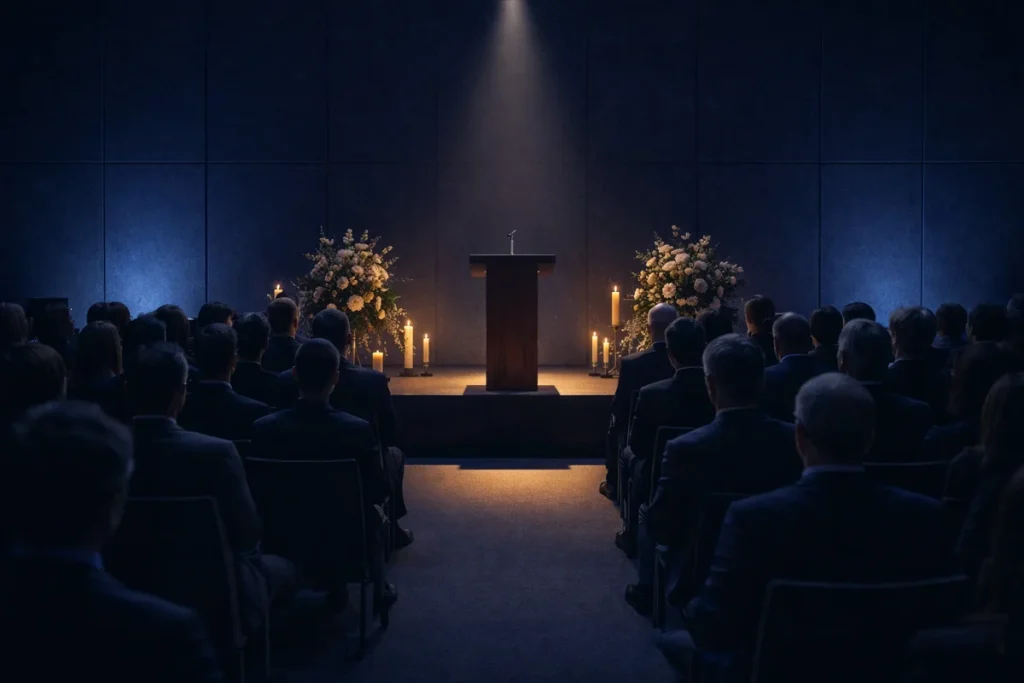
At SXSW 2026 this week in Austin, futurist speaker Amy Webb opened her session not with slides or statistics, but with funeral music, candles, and tissue paper handed to attendees at the door. The subject of the ceremony was her own annual Emerging Tech Trend Report — an institution she first launched in 2008 and which has since been downloaded more than one million times a year. After nearly two decades, she declared it officially dead.
The reason was not failure. It was obsolescence by design.
Why the Trend Report No Longer Works
The annual tech trends report — a format Webb helped define and that hundreds of organizations have since replicated — was built for a world where forces of change moved in sequence. A technology would emerge, gain traction, and eventually reshape a market. Organizations could spot it early, plan accordingly, and act.
That linear model no longer fits reality. As Founder and CEO of the Future Today Strategy Group and Adjunct Professor of Strategic Foresight at NYU Stern School of Business, Webb has spent two decades mapping how technology reshapes organizations. Her conclusion at SXSW was direct: today, the most consequential disruptions do not arrive one at a time. Artificial intelligence, biotechnology, geopolitical pressure, capital flows, and behavioral shifts are colliding simultaneously — each one accelerating the others. A static PDF, however thorough, is outdated by the time it is published.
In its place, Webb and the Future Today Strategy Group have launched the Convergence Outlook — a new framework built around the concept that matters most right now: not what is changing, but what happens when multiple systems change at once.
What the Convergence Outlook Actually Says
The Convergence Outlook identifies ten structural shifts Webb calls convergences: Compute Shock, Programmable Biology, Polycompute, Emotional Outsourcing, Autonomous Care, The Corporate Panopticon, The New Labor Equation, Human Augmentation, Agentic Economy, and Living Intelligence.
Three of them dominated her SXSW presentation and deserve particular attention from business leaders.
Human Augmentation moves the conversation about enhancement from science fiction into human resources. Brain-computer interfaces and genetic editing are no longer theoretical. When enhancement becomes available — and eventually expected — biological inequality stops being reversible. The hiring, performance, and equity frameworks most organizations have today are not designed for that world.
The New Labor Equation — or what Webb frames around the concept of unlimited labor — addresses what happens when lights-out factories and agentic AI systems decouple GDP from human work entirely. Output scales without headcount. This is not a prediction about job losses in the abstract. It is a structural shift in the economic logic of paying people to do things, and it is already underway in manufacturing and knowledge work alike.
Emotional Outsourcing may be the least obvious and most underestimated of the three. Loneliness, Webb argues, is now a market. The infrastructure of how people feel — before they think, before they decide, before they buy — is being quietly privatized through AI companions, synthetic relationships, and emotion-aware platforms. For organizations thinking about culture, retention, and customer relationships, this convergence is not peripheral. It is central.
From Observers to Architects
The sharpest part of Webb’s SXSW argument was not the taxonomy. It was the challenge she issued to the leaders in the room.
Most organizations believe they are preparing for the future. Webb draws a harder distinction: there is a difference between becoming more informed observers of your own disruption and building the capacity to act on what you see. The Convergence Outlook is not designed to be read. It is designed to force decisions — what to accelerate, what to pause, what to reframe entirely.
That is precisely the posture Webb brings to corporate keynotes. As a futurist speaker whose client work spans Fortune 100 companies, the White House, the European Union, and the United Nations, she does not deliver forecasts as entertainment. She delivers them as strategic tools. Her books — including the international bestseller The Big Nine and The Genesis Machine, named by The New Yorker as one of the year’s best nonfiction works — have been translated into 23 languages and optioned for film. Her Thinkers50 ranking as the world’s #4 most influential management thinker reflects the reach of that work inside organizations that are serious about long-term strategy.
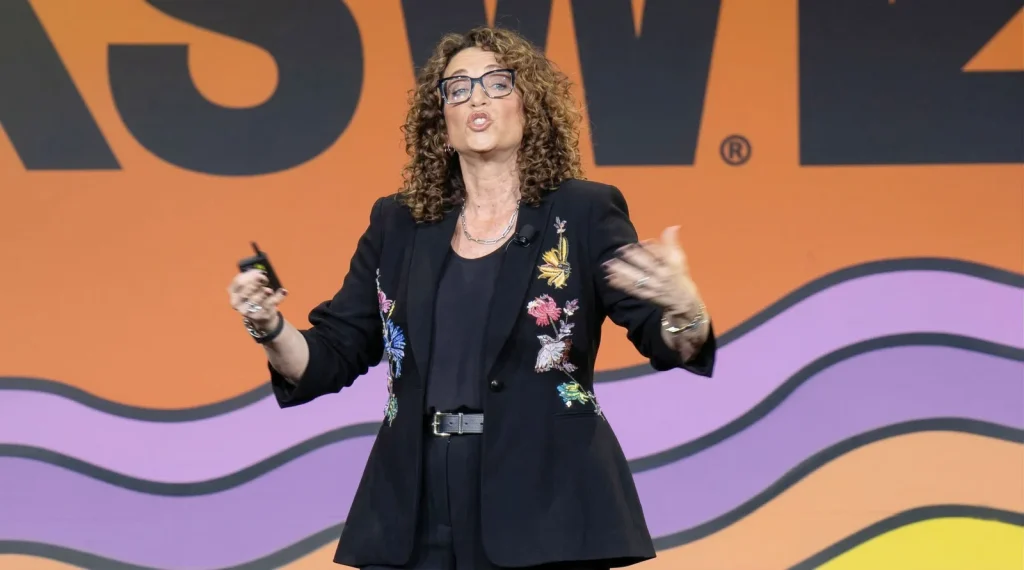
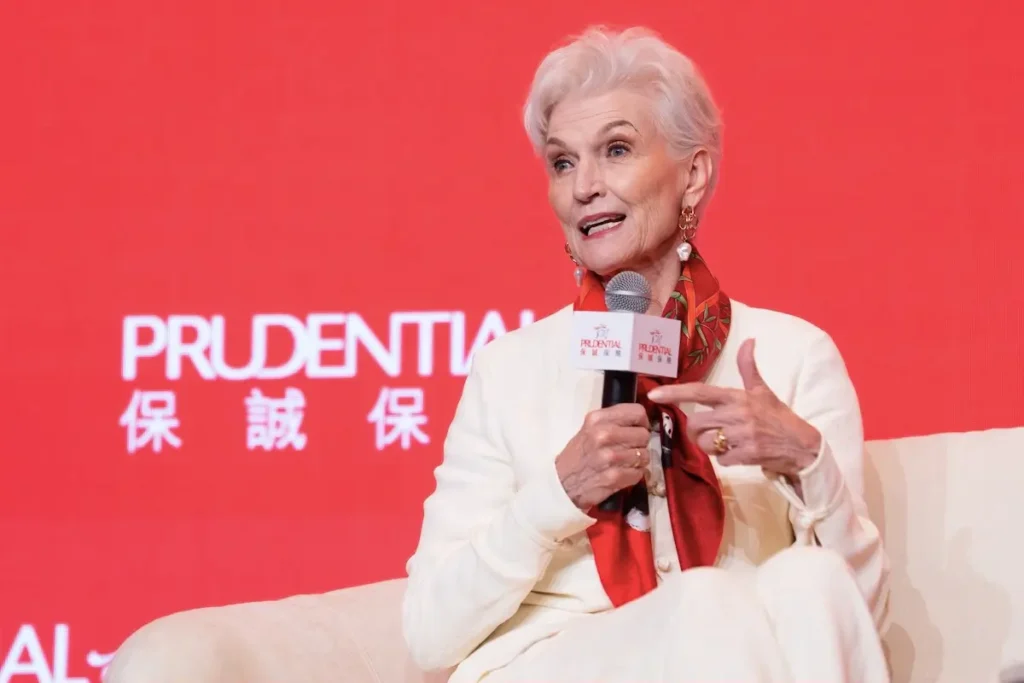
Amy Webb on stage at SXSW 2026, challenging conventional thinking and reframing how we understand the future — not as a series of trends, but as a convergence of forces reshaping business, technology, and society.
What It Means for Event Organizers
The shift from trends to convergences is not a semantic update. It reflects a real change in the conditions organizations are navigating — and in what executive audiences want from a keynote.
Leaders attending a strategy conference in 2026 do not need another list of things to watch. They need a framework for making decisions when several things are happening at once and none of them can be addressed in isolation. That is the gap Amy Webb fills, and it is why demand for her as a technology speaker continues to grow at a moment when most organizations are overwhelmed by the sheer volume of signals competing for their attention.
Booking her now — in the immediate wake of a SXSW session that has generated coverage across strategy, technology, and leadership media globally — gives event organizers access to the framework while it is actively shaping the conversation at the highest levels.
Webb is one of six futurists Aurum considers essential for corporate event programming in the current moment. See the full overview in Aurum’s top futurist keynote speakers. To discuss availability and how Amy Webb’s keynote can be built around your event’s strategic priorities, contact Aurum Speakers Bureau. For how a futurist like Webb fits alongside other kinds of tech speakers, see our guide on how to choose a technology speaker.
FAQ
Why should organizations book Amy Webb as a keynote speaker?
Amy Webb brings something most futurists cannot: a rigorous, data-driven methodology rather than informed speculation. As founder of the Future Today Strategy Group and a professor at NYU Stern, she translates complex technological and geopolitical signals into frameworks leadership teams can act on. Her keynotes are built around the strategic challenges of the audience — not a generic forecast. Organizations that book her leave with a sharper lens on decisions they are already facing, not just a list of trends to monitor.
What topics does Amy Webb cover in her keynotes?
Her core themes include strategic foresight and decision-making under uncertainty, the convergence of artificial intelligence with biotechnology and advanced sensors, the future of work and labor economics in an age of agentic AI, AI governance and the geopolitics of technology, and how organizations can build the internal capacity to act early rather than react late. The Convergence Outlook framework she launched at SXSW 2026 is now a central thread across all of her presentations.
What is the Convergence Outlook, and how is it different from a trends report?
A trends report identifies individual forces changing in isolation. The Convergence Outlook maps what happens when multiple forces — AI, biotechnology, capital flows, geopolitical pressure, behavioral shifts — collide and accelerate one another simultaneously. Webb’s argument is that the most consequential disruptions of the next decade will not come from any single trend but from the intersections between them. The Outlook is built to help leaders identify those intersections early enough to make strategic choices, not just informed observations.
What types of events and audiences is Amy Webb best suited for?
Amy Webb performs best with senior executive audiences at strategy conferences, leadership summits, and innovation forums where the agenda goes beyond inspiration to equip leaders with actionable frameworks. She is regularly booked for C-suite offsites, industry association annual meetings, global technology conferences, and events organized around the themes of AI strategy, digital transformation, and long-range organizational planning. Her keynotes are customized to the industry and strategic context of each client.