
Angela Duckworth
Psychologist & #1 NYT Bestselling Author | MacArthur Fellow | Rosa Lee & Egbert Chang Professor, UPenn | Founder, Character Lab



2019 Nobel Laureate in Physiology or Medicine | Sidney Farber Professor of Medicine, Harvard & Dana-Farber | Howard Hughes Medical Institute Investigator
One of medicine's most transformative minds, William G. Kaelin Jr. won the 2019 Nobel Prize in Medicine for cracking the code of how cells sense oxygen, work that gave rise to new cancer therapies. Sidney Farber Professor at Harvard and a Howard Hughes Medical Institute Investigator, he turned fundamental biology into approved treatments for kidney cancer. On stage, he makes the science of discovery urgently relevant.
Want to book William G. Kaelin Jr as a speaker for your event? Please provide the info below and we’ll get in touch within 24h:
William G. Kaelin Jr. is one of the most consequential figures in modern cancer biology, a physician-scientist whose work on oxygen sensing reshaped how we understand the way cells survive, adapt, and, when the process fails, turn malignant. He is the Sidney Farber Professor of Medicine at Harvard Medical School and Dana-Farber Cancer Institute, a Senior Physician-Scientist at Brigham and Women’s Hospital, and a Howard Hughes Medical Institute Investigator, roles he has held since the late 1990s and early 2000s. Nobel Prize speaker William G. Kaelin Jr. built his reputation on a discovery that runs from fundamental biochemistry to life-saving medicine.
Kaelin is best known for deciphering the molecular mechanism by which cells detect and respond to changes in oxygen availability, a discovery with implications for cancer, anemia, cardiovascular disease, and macular degeneration. Studying the von Hippel-Lindau (VHL) tumor suppressor gene and its protein product, he showed that the VHL protein acts as a critical regulator of hypoxia-inducible factors (HIFs), the master switches that control how genes respond to low oxygen. When VHL is mutated or absent, as in clear-cell kidney cancer, HIFs run unchecked, driving abnormal blood vessel growth and fueling tumor progression.
This work, carried out in parallel with the independent research of Sir Peter J. Ratcliffe and Gregg L. Semenza, directly enabled a new class of targeted cancer therapies: VEGF inhibitors and, in December 2023, belzutifan, the first HIF2 inhibitor approved by the FDA for kidney cancer. Few basic-science discoveries reach patients with such speed and scope.
In 2019, Kaelin, Ratcliffe, and Semenza shared the Nobel Prize in Physiology or Medicine for their discoveries of how cells sense and adapt to oxygen availability, work that moved from biochemistry to approved treatments within a single generation. His honors also include the Albert Lasker Basic Medical Research Award, the Canada Gairdner International Award, and election to the National Academy of Medicine, the National Academy of Sciences, and the American Academy of Arts and Sciences. He was later named to the Forbes list of America’s Greatest Innovators for the commercial impact of his oxygen-sensing research.
As a speaker, William G. Kaelin Jr. offers scientific, academic, corporate, and philanthropic audiences a rare vantage point: how curiosity-driven science produces breakthroughs that applied research alone cannot, why sustained support for basic research underpins long-term medical and economic progress, and how physician-scientists move between clinical insight and laboratory discovery. As a Nobel Prize speaker, he leaves audiences both inspired by his career and clearer on how transformative science actually happens.
This keynote follows the scientific path from a simple question, how do cells detect and adapt to oxygen levels, to a Nobel Prize-winning answer and an entirely new class of cancer drugs. Kaelin recounts how studying the VHL tumor suppressor gene exposed a master regulatory system governing the body's response to low oxygen, and how that insight drove treatments for kidney cancer and anemia. It is a vivid demonstration of how curiosity-driven science delivers results that targeted research alone never could.
Drawing on his own career and on broader trends in research funding, Kaelin makes a rigorous and personal case for sustaining investment in fundamental science. He questions the prevailing bias toward applied research and argues that the most transformative medical advances, including his own Nobel-recognized work, emerged not from structured programs but from scientists following unexpected leads. Essential for research institutions, philanthropic foundations, and science-policy audiences.
An authoritative exploration of how mutations in tumor suppressor genes drive malignancy, and what that means for the next generation of cancer therapies. Kaelin explains the biological logic of VHL, pRB, and related proteins, how their loss creates specific vulnerabilities in cancer cells, and why synthetic lethality strategies hold promise against cancers that have long resisted treatment. Pitched for scientific and biomedical audiences seeking depth alongside inspiration.
A candid, personal account of Kaelin's path from self-described late bloomer to Nobel Laureate, including early failures, the mentors who made the difference, and the moments of unexpected discovery that defined his career. He draws on the analogy between fishing and science: the interplay of skill, intuition, and luck that governs both pursuits. Ideal for students, early-career researchers, and any audience that values honest reflection on long-term ambition and resilience.
Psychologist & #1 NYT Bestselling Author | MacArthur Fellow | Rosa Lee & Egbert Chang Professor, UPenn | Founder, Character Lab
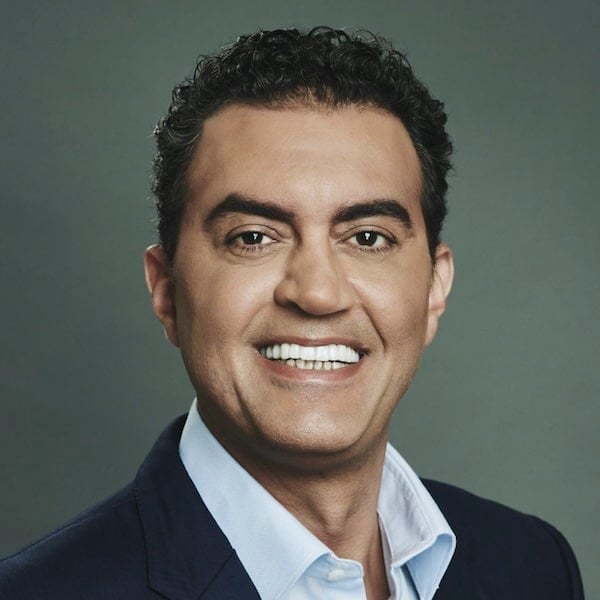
U.S. Under Secretary of Defense for Research & Engineering | Former Chief Business Officer at Uber | Tech Investor and Strategic Advisor
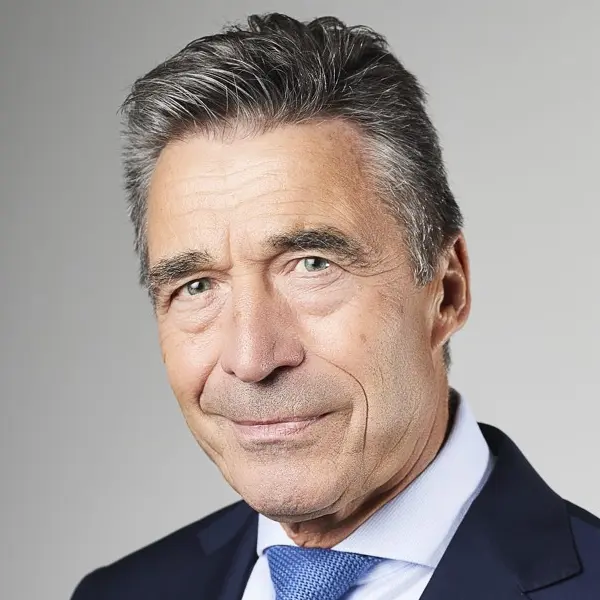
Former NATO Secretary General (2009–2014) | Former Prime Minister of Denmark | Founder, Rasmussen Global & Alliance of Democracies Foundation
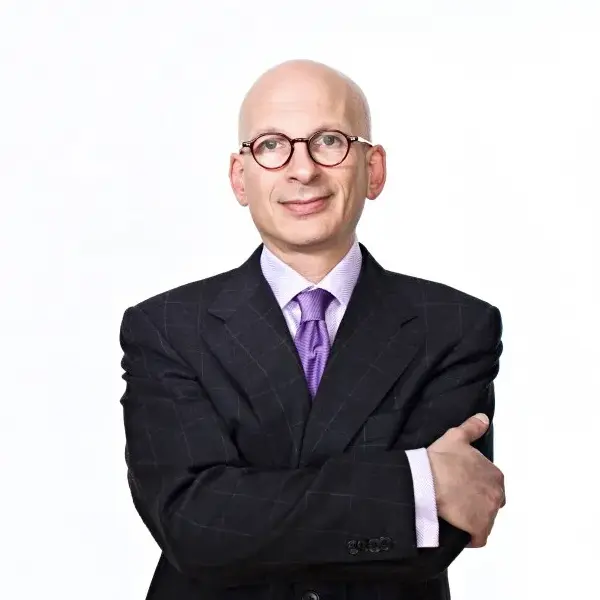
Author of 21 International Bestsellers incl. This Is Strategy & Purple Cow | 5x TED Speaker | Marketing Hall of Fame | Inventor of Email Marketing


© 2026 Aurum Speakers Bureau. All Rights Reserved

| Basic Data Protection Information | |
|---|---|
| Data controller | AURUM SPEAKERS BUREAU S.L. |
| Address | Parc Audiovisual de Catalunya 1, Oficina S11, 08225 Terrassa, Spain |
| Purposes | We will use your data to respond to your requests and deliver our services to you. |
| Marketing | We will only send you marketing correspondence if you have given your prior consent, which you can do by ticking the box for that purpose. |
| Lawful basis | We will only process your data if you have given your prior consent, which you can do by ticking the box for that purpose. |
| Recipients | Generally, only our members of staff who have been duly authorised may access the data that you have provided. |
| Your Rights | You have the right to know what information we hold about you, to rectify it and to erase it, as explained in the additional information available on our website. |
| Additional Information | For more information, please see our "PRIVACY POLICY". |