
Martin Eberhard
Co-Founder & First CEO of Tesla Motors | Pioneer of the Modern Electric Vehicle | Silicon Valley Inventor with 22+ Patents | Innovation & Sustainability Speaker



2011 Nobel Laureate in Economic Sciences | W.R. Berkley Professor, NYU | Senior Fellow, Hoover Institution | Co-Founder, QuantEcon
Thomas Sargent's Nobel Prize-winning research on rational expectations and macroeconomic policy reshaped how the world thinks about the relationship between government action and economic outcomes. W.R. Berkley Professor at NYU, Senior Fellow at Hoover, and co-founder of QuantEcon, he now brings that same rigor to questions of AI, fiscal sustainability, and monetary policy. An essential voice for any senior audience navigating economic uncertainty.
Want to book Thomas Sargent as a speaker for your event? Please provide the info below and we’ll get in touch within 24h:
Thomas J. Sargent is one of the most influential macroeconomists of the past half-century — a 2011 Nobel Laureate in Economic Sciences whose work on rational expectations and empirical macroeconomics fundamentally changed how governments, central banks, and policymakers understand the relationship between economic policy and economic outcomes. Born in Pasadena, California, he earned his bachelor’s degree from the University of California, Berkeley — graduating as the university’s Most Distinguished Scholar in the Class of 1964 — and his doctorate from Harvard University in 1968. He has held endowed chairs at the University of Minnesota, the University of Chicago, and Stanford University, and since 2002 has served as the William R. Berkley Professor of Economics and Business at New York University. He is also a Senior Fellow at the Hoover Institution at Stanford and, since August 2024, a Visiting Scholar at the Cato Institute’s Center for Monetary and Financial Alternatives, where he focuses on research at the intersection of fiscal and monetary policy.
Economics speaker Thomas Sargent shared the 2011 Nobel Memorial Prize in Economic Sciences with Christopher A. Sims, recognized for their empirical research on cause and effect in the macroeconomy. Sargent’s core contribution was developing rigorous methods for analyzing how major, permanent shifts in economic policy — new inflation targets, structural fiscal reforms, changes in monetary regimes — ripple through entire economies over time. His insight that citizens and firms continuously update their expectations in response to policy signals, and that this feedback loop fundamentally shapes economic outcomes, overturned dominant post-Keynesian assumptions and launched what became known as the rational expectations revolution in macroeconomics.
Beyond his Nobel-winning theoretical work, Sargent has spent decades pushing the frontier of quantitative and computational economics. In 2016, he co-founded QuantEcon, a nonprofit dedicated to open-source computational tools for economics, econometrics, and decision-making — making frontier methods accessible to researchers and students worldwide. He serves as Director of the Sargent Institute of Quantitative Economics and Finance (SIQEF) at Peking University HSBC Business School in Shenzhen, where he designed the PhD program and has organized international research conferences bridging Chinese and global scholars. His most recent books include Economic Networks (2024) and Dynamic Programming (2025), both published by Cambridge University Press, extending his decades-long collaboration with Lars Ljungqvist whose graduate textbooks remain standard reading in PhD programs worldwide. In December 2025, he delivered a landmark public lecture at Peking University, AI: Past, Present, and Future, drawing on the history of science, cognitive theory, and economics to offer one of the most rigorous intellectual frameworks yet for understanding what artificial intelligence actually is — and what it is not.
As a speaker, Thomas Sargent offers what few economists can: Nobel-level intellectual authority combined with the clarity of a devoted teacher who has spent his career explaining complex ideas to diverse audiences. His keynotes connect the deepest questions in macroeconomics — how policy shapes behavior, how expectations drive outcomes, how uncertainty should inform decision-making — to the strategic challenges facing executives, central bankers, and institutional leaders today. For senior audiences wrestling with inflation, fiscal sustainability, AI’s economic implications, or the future of monetary policy, Sargent delivers the kind of rigorous, evidence-based perspective that simply cannot be found elsewhere.
Why do well-intentioned government interventions so often produce unintended consequences? Sargent's Nobel-winning answer lies in rational expectations: the insight that people adjust their behavior in anticipation of policy changes, transforming the very outcomes policymakers are trying to shape. This keynote explains how this framework was built, what it overturned, and why it remains the most powerful lens available for evaluating fiscal and monetary policy — from central bank rate decisions to structural tax reform. Rigorous, historically grounded, and directly relevant to anyone who makes or is affected by large institutional decisions.
Drawing on his landmark studies of hyperinflation episodes and the stagflation of the 1970s, Sargent examines what history consistently teaches about the conditions under which price stability is achieved — and lost. He traces the fiscal roots of monetary crises, explains why the coordination between central banks and fiscal authorities matters more than most commentators acknowledge, and offers a framework for assessing where today's economies stand relative to historical warning signs. An essential perspective for institutional investors, central banking audiences, and corporate strategists planning across uncertain macro horizons.
Based on his December 2025 lecture at Peking University HSBC Business School, Sargent traces the intellectual roots of artificial intelligence through the history of science — statistics, biology, physics, and economics — and argues that AI is not a 21st-century invention but the long-term product of cross-disciplinary convergence. He explores what AI genuinely does well — pattern recognition, optimization, decision-making under known constraints — and where it fundamentally falls short: proposing new rules, constructing novel cognitive frameworks, generating genuinely new knowledge. A rare, philosophically rigorous perspective on AI that cuts through hype without dismissing the technology's transformative potential.
In collaboration with Lars Peter Hansen, Sargent has developed a framework for decision-making under deep uncertainty — situations where decision-makers do not fully trust their own models. Drawing on tools from robust control theory, this keynote explores how institutions — governments, central banks, corporations — should make consequential decisions when their models of the world may be wrong. The implications extend well beyond economics: for any organization navigating environments of structural uncertainty, Sargent offers a framework that is both technically grounded and immediately practical.
Co-Founder & First CEO of Tesla Motors | Pioneer of the Modern Electric Vehicle | Silicon Valley Inventor with 22+ Patents | Innovation & Sustainability Speaker
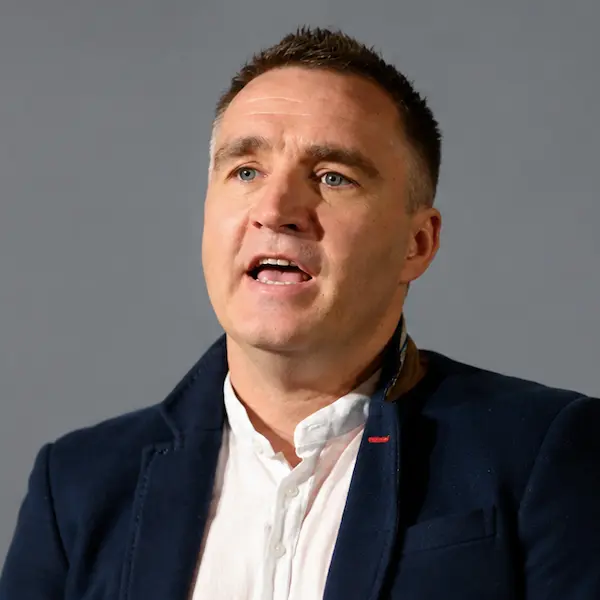
Risk & Decision-Making Expert and Former Professional Poker Player | Poker Advisor on the James Bond Film Casino Royale | Cambridge-Educated Speaker to Google, IBM & Visa
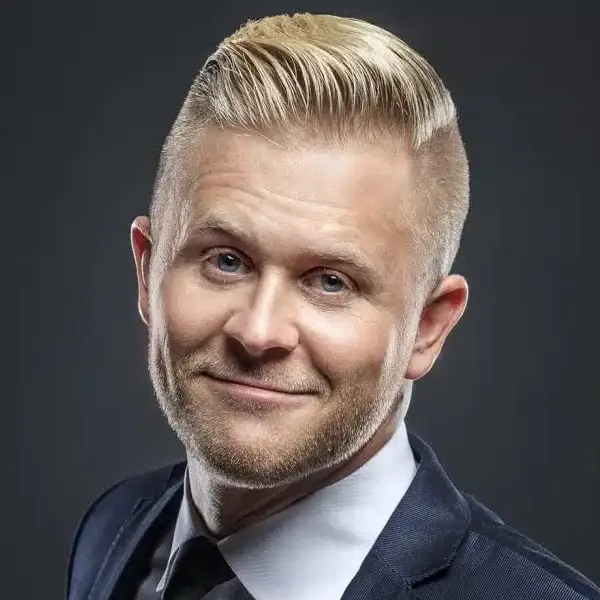
Emmy Award Winner & Speaker Hall of Fame Inductee | Leading Authority on Employee Retention | Bestselling Author, I Love It Here | Founder, Center for Employee Retention

Generative AI Strategy Advisor at Dell Technologies | Former Cisco Managing Director of Global Innovation | Wall Street Journal Bestselling Author of Fearless Innovation


© 2026 Aurum Speakers Bureau. All Rights Reserved

| Basic Data Protection Information | |
|---|---|
| Data controller | AURUM SPEAKERS BUREAU S.L. |
| Address | Parc Audiovisual de Catalunya 1, Oficina S11, 08225 Terrassa, Spain |
| Purposes | We will use your data to respond to your requests and deliver our services to you. |
| Marketing | We will only send you marketing correspondence if you have given your prior consent, which you can do by ticking the box for that purpose. |
| Lawful basis | We will only process your data if you have given your prior consent, which you can do by ticking the box for that purpose. |
| Recipients | Generally, only our members of staff who have been duly authorised may access the data that you have provided. |
| Your Rights | You have the right to know what information we hold about you, to rectify it and to erase it, as explained in the additional information available on our website. |
| Additional Information | For more information, please see our "PRIVACY POLICY". |