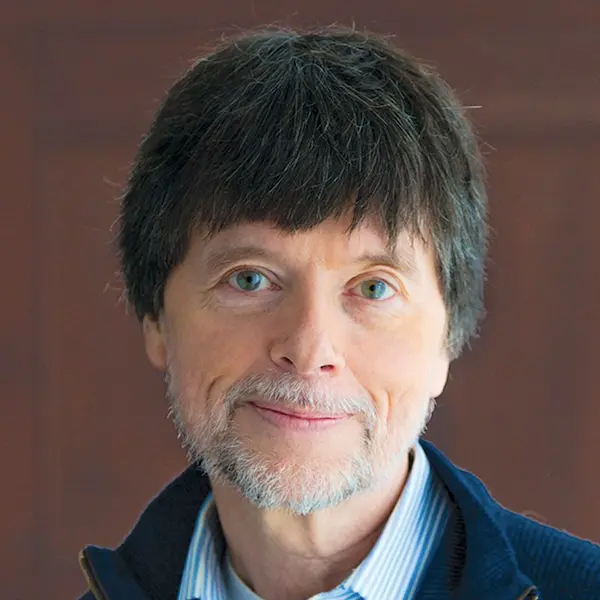
Ken Burns
Legendary Documentary Filmmaker | Creator of The Civil War, The Vietnam War & The American Revolution | Multiple Emmy & Grammy Winner | Master of Storytelling


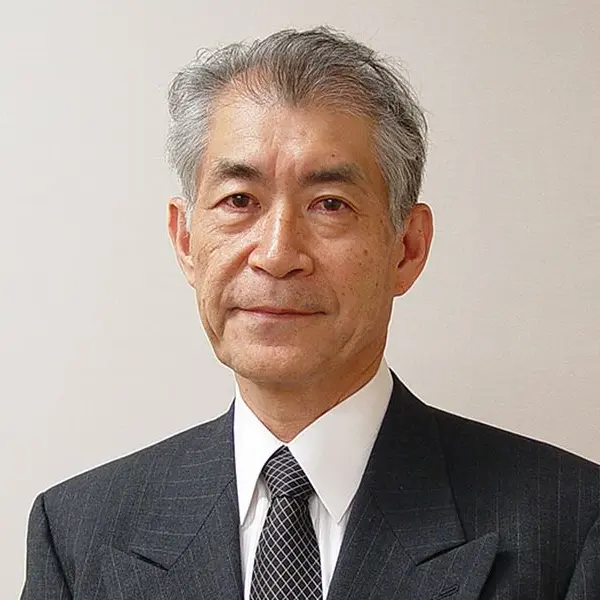
2018 Nobel Laureate in Physiology or Medicine | Discoverer of PD-1 | Pioneer of Cancer Immunotherapy | Deputy Director-General, Kyoto University Institute for Advanced Study
Tasuku Honjo's discovery of PD-1, a protein that cancer cells exploit to evade immune attack, gave rise to checkpoint immunotherapy, now one of oncology's most powerful treatment classes. The 2018 Nobel Laureate in Physiology or Medicine, he remains at the forefront of immuno-oncology research at Kyoto University. His talks illuminate the long, patient journey from fundamental science to world-changing impact.
Want to book Tasuku Honjo as a speaker for your event? Please provide the info below and we’ll get in touch within 24h:
Nobel Prize speaker Tasuku Honjo is one of the most transformative figures in modern medicine: a physician-scientist whose decades of fundamental research at Kyoto University gave rise to an entirely new class of cancer therapies now used to treat patients worldwide. He is the 2018 Nobel Laureate in Physiology or Medicine, Distinguished Professor and Deputy Director-General of the Kyoto University Institute for Advanced Study, and Director of the university’s Center for Cancer Immunotherapy and Immunobiology.
Honjo is best known for his discovery of PD-1 (programmed cell death protein 1), a molecule expressed on the surface of immune T cells that acts as a natural brake on immune responses. Identified in 1992 during research into how the immune system distinguishes self from non-self, PD-1 proved to hold extraordinary clinical significance: cancer cells exploit this pathway to evade immune attack. By blocking PD-1, it became possible to lift that suppression and unleash the body’s own defenses against tumors. This insight seeded a revolution. Anti-PD-1 therapies, including the blockbuster drugs nivolumab and pembrolizumab, are now approved for more than a dozen cancer types, from melanoma and lung cancer to lymphoma and kidney cancer, extending survival for patients who had exhausted every other option.
Honjo’s scientific contributions extend well beyond PD-1. Earlier in his career he made foundational discoveries in B cell biology, identifying key cytokines including IL-4 and IL-5, and uncovering the mechanism of class switch recombination, the process by which B cells diversify antibody types. His discovery of activation-induced cytidine deaminase (AID), the enzyme that drives both class switching and somatic hypermutation, is considered a landmark in understanding adaptive immunity.
In 2018, Honjo was awarded the Nobel Prize in Physiology or Medicine jointly with James P. Allison of MD Anderson Cancer Center, recognized for establishing an entirely new principle for cancer treatment through inhibition of negative immune regulation. The pair had also shared the Tang Prize in Biopharmaceutical Science in 2014. Honjo’s broader recognition includes the Kyoto Prize in Basic Sciences, the Robert Koch Prize, the Warren Alpert Prize, the William B. Coley Award, and the Imperial Prize of the Japan Academy, among many others. He is a member of the U.S. National Academy of Sciences, the German Academy of Natural Scientists Leopoldina, and the Japan Academy.
His ongoing research at Kyoto University’s Center for Cancer Immunotherapy and Immunobiology continues to explore the frontier of PD-1 biology, including the metabolic mechanisms of T cell exhaustion and the next generation of combination immunotherapy strategies.
As a speaker, Tasuku Honjo offers audiences an extraordinary vantage point on one of medicine’s greatest breakthroughs, from the curiosity-driven bench science that uncovered PD-1 to the global clinical reality it created. He speaks with authority and humility about the long arc of scientific discovery, the value of fundamental research, the future of immuno-oncology, and the role of perseverance in translating laboratory insights into life-saving treatments. His talks resonate with senior audiences in healthcare, biopharma, life sciences, and corporate innovation: any organization wrestling with how bold, patient research becomes transformative impact.
This keynote traces the journey from a fundamental question in immunology — how does the body distinguish self from non-self? — to the discovery of PD-1 and the development of checkpoint therapies now saving lives across the world. Honjo shares the intellectual process, the setbacks, and the pivotal moments that turned decades of basic research into a transformational clinical breakthrough, offering a masterclass in what genuine scientific innovation looks like from the inside.
With checkpoint blockade therapies now established as a pillar of cancer treatment, the field faces its next set of frontier challenges: overcoming resistance, improving combination strategies, reducing immune-related side effects, and expanding access. Honjo outlines where the science is heading, what the next generation of immunotherapies may look like, and how sustained investment in fundamental research creates the conditions for breakthroughs that no one could have predicted.
A deeply personal reflection on what it takes to pursue a scientific question for decades without knowing where it leads. Honjo explores the values — intellectual honesty, tolerance for uncertainty, rigorous method — that guide great science, and why the most important discoveries rarely follow a straight line. This talk resonates far beyond medicine, speaking to any leader navigating long-horizon challenges where the payoff is real but distant.
Drawing on his advocacy for HPV vaccination in Japan and his broader engagement with science policy, Honjo examines the relationship between scientific expertise and public decision-making. He makes the case for evidence-based policy, warns against the costs of allowing misinformation to override scientific consensus, and reflects on the responsibilities that come with scientific authority at a societal level.
Legendary Documentary Filmmaker | Creator of The Civil War, The Vietnam War & The American Revolution | Multiple Emmy & Grammy Winner | Master of Storytelling
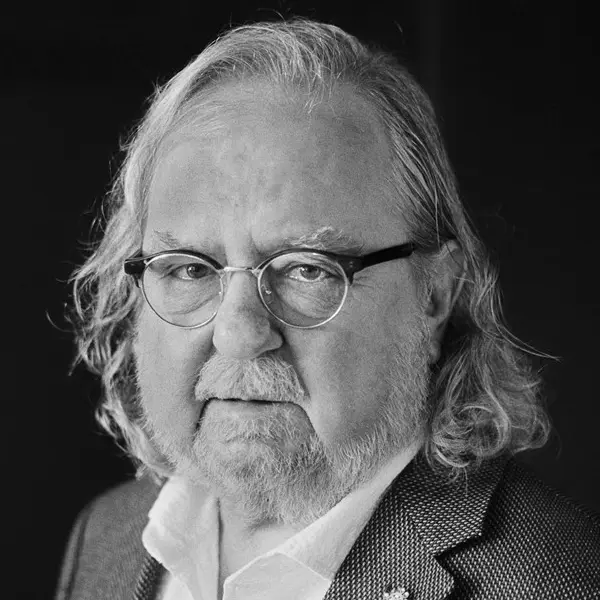
2018 Nobel Laureate in Physiology or Medicine | Founding Director, James P. Allison Institute at MD Anderson | Chair of Immunology | Pioneer of Cancer Immunotherapy
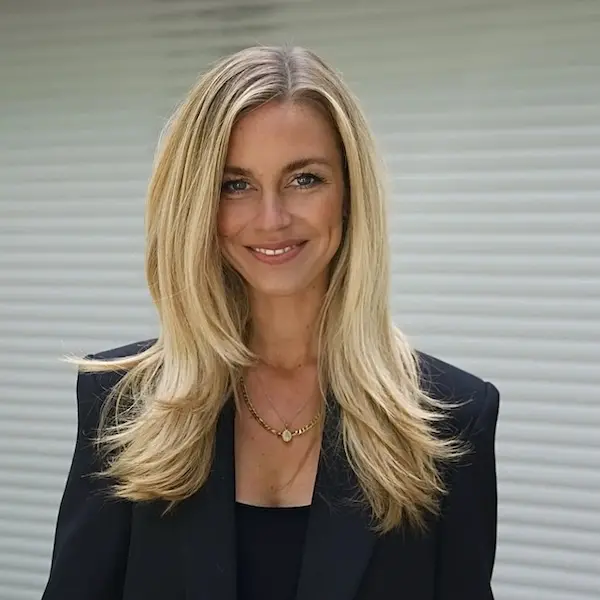
Global Tech Influencer & 'Tech Translator' | Forbes 30 Under 30 Europe | LinkedIn Top Voice, Tech & AI | Creator of the Corporate Influencer Role (ex-Deloitte)

Author, Good to Great and What to Make of a Life | Creator of Level 5 Leadership, the Flywheel & BHAGs | 11M+ Books Sold | Forbes 100


© 2026 Aurum Speakers Bureau. All Rights Reserved

| Basic Data Protection Information | |
|---|---|
| Data controller | AURUM SPEAKERS BUREAU S.L. |
| Address | Parc Audiovisual de Catalunya 1, Oficina S11, 08225 Terrassa, Spain |
| Purposes | We will use your data to respond to your requests and deliver our services to you. |
| Marketing | We will only send you marketing correspondence if you have given your prior consent, which you can do by ticking the box for that purpose. |
| Lawful basis | We will only process your data if you have given your prior consent, which you can do by ticking the box for that purpose. |
| Recipients | Generally, only our members of staff who have been duly authorised may access the data that you have provided. |
| Your Rights | You have the right to know what information we hold about you, to rectify it and to erase it, as explained in the additional information available on our website. |
| Additional Information | For more information, please see our "PRIVACY POLICY". |