
Jacinda Ardern
40th Prime Minister of New Zealand (2017-2023) | Founder of the Field Fellowship | Board Member, The Earthshot Prize | Bestselling Author of A Different Kind of Power


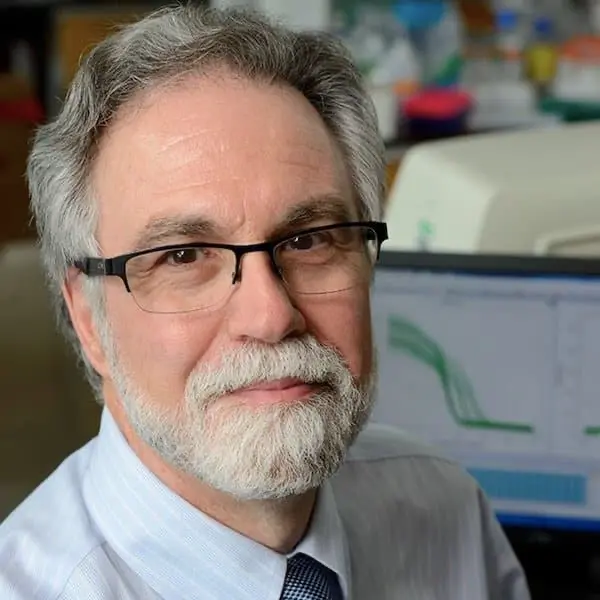
2019 Nobel Laureate in Physiology or Medicine | Discoverer of HIF-1 | C. Michael Armstrong Professor, Johns Hopkins University
Gregg Semenza helped answer one of biology's oldest questions, how cells sense and respond to oxygen, and shared the 2019 Nobel Prize in Medicine for identifying the master switch HIF-1. A professor at Johns Hopkins, he brings to the stage both scientific authority and a gift for making complex biology feel immediate and human. Audiences leave understanding not only the science, but why it matters to every living cell.
Want to book Gregg Semenza as a speaker for your event? Please provide the info below and we’ll get in touch within 24h:
Gregg Semenza is the scientist who helped answer one of biology’s most fundamental questions: how do the cells of the body sense when oxygen is running low, and how do they respond? Nobel Prize speaker Gregg Semenza identified hypoxia-inducible factor 1, known as HIF-1, a molecular switch so central to life that it influences processes ranging from embryonic development to the growth of tumors and the production of red blood cells. For this work he shared the 2019 Nobel Prize in Physiology or Medicine with William Kaelin Jr. and Sir Peter Ratcliffe.
Semenza is the C. Michael Armstrong Professor of Genetic Medicine at the Johns Hopkins University School of Medicine, where he founded and directs the vascular program within the Institute for Cell Engineering. He trained at Harvard, earned his MD-PhD at the University of Pennsylvania, and completed further training at Duke before joining Johns Hopkins, where he has built his research career for more than three decades.
The discovery began with a deceptively simple puzzle: why does the body produce more red blood cells when oxygen levels fall? Semenza traced the answer to HIF-1, a protein complex that acts as a master regulator of the cellular response to low oxygen. Under normal conditions the HIF-1 alpha subunit is rapidly broken down; when oxygen drops, it stabilizes and switches on programs of gene activity that stimulate new blood vessel formation, adjust metabolism, and help cells adapt and survive. Because this mechanism operates in virtually every cell, its relevance reaches across the whole of modern medicine.
The science of oxygen sensing has since moved from the laboratory toward the clinic. A class of drugs known as HIF stabilizers, including roxadustat, has been approved in several countries to treat anemia in chronic kidney disease, offering an oral alternative to injectable therapies, while researchers continue to explore how targeting the same pathway might help in cancer and other conditions. The field Semenza helped open remains one of the most active areas of biomedical research.
As a speaker, Gregg Semenza offers audiences something rare: the chance to hear a Nobel laureate explain, in clear and vivid terms, how patiently following a single scientific question can reshape our understanding of medicine. He speaks on the process of discovery as much as the result, and his talks resonate with audiences in healthcare, biotech, and any organization that treats curiosity as a driver of breakthrough. Discover more Nobel Prize speakers to bring that perspective to your stage.
The story of HIF-1 is one of the great detective stories of modern science, a decades-long pursuit that began with a question about red blood cells and ended with a Nobel Prize. Semenza walks audiences through the discovery process: what was known, what was inexplicable, which experiments led where, and what it felt like to realize the molecular switch he had found was active in every cell of the body. Accessible, fascinating, and a masterclass in what patient, rigorous science can achieve.
Tumors are not passive masses; they are adaptive systems that exploit the body's own machinery to survive. Semenza explains how cancer cells hijack the oxygen-sensing response to grow blood vessels, fuel their metabolism, and spread, and why the same pathway has become such a compelling target for a new generation of therapies. A clear scientific briefing and a view of the near future, delivered by the scientist who helped open the field.
What does it actually take to make a landmark discovery? Semenza's answer is not about genius but about the daily discipline of following a question wherever it leads, tolerating failure, building a team, and having the courage to use whatever method a problem demands. This keynote is an inspiring and practical exploration of what scientific leadership and creative persistence look like across a full career.
The path from a laboratory observation to an approved treatment is long, uncertain, and expensive, and it begins with scientists asking questions that have no obvious commercial value. Semenza uses the story of oxygen sensing as a case study in how foundational biology, pursued for its own sake, ultimately reshapes medicine. Essential for biotech, pharma, and healthcare audiences thinking about research investment, innovation pipelines, and the cultures that produce breakthroughs.
40th Prime Minister of New Zealand (2017-2023) | Founder of the Field Fellowship | Board Member, The Earthshot Prize | Bestselling Author of A Different Kind of Power

Author Of Converted | Chief Strategist At Google | Senior Fellow At Wharton

Quantitative Futurist | Founder & CEO, Future Today Strategy Group | Professor, Strategic Foresight at NYU Stern | Thinkers50 Leader | Bestselling Author

Executive President, Grupo Ambrosía | Investor, Shark Tank México | Founder, Meraki Ventures | One Young World Entrepreneur of the Year 2022 | Harvard MBA


© 2026 Aurum Speakers Bureau. All Rights Reserved

| Basic Data Protection Information | |
|---|---|
| Data controller | AURUM SPEAKERS BUREAU S.L. |
| Address | Parc Audiovisual de Catalunya 1, Oficina S11, 08225 Terrassa, Spain |
| Purposes | We will use your data to respond to your requests and deliver our services to you. |
| Marketing | We will only send you marketing correspondence if you have given your prior consent, which you can do by ticking the box for that purpose. |
| Lawful basis | We will only process your data if you have given your prior consent, which you can do by ticking the box for that purpose. |
| Recipients | Generally, only our members of staff who have been duly authorised may access the data that you have provided. |
| Your Rights | You have the right to know what information we hold about you, to rectify it and to erase it, as explained in the additional information available on our website. |
| Additional Information | For more information, please see our "PRIVACY POLICY". |