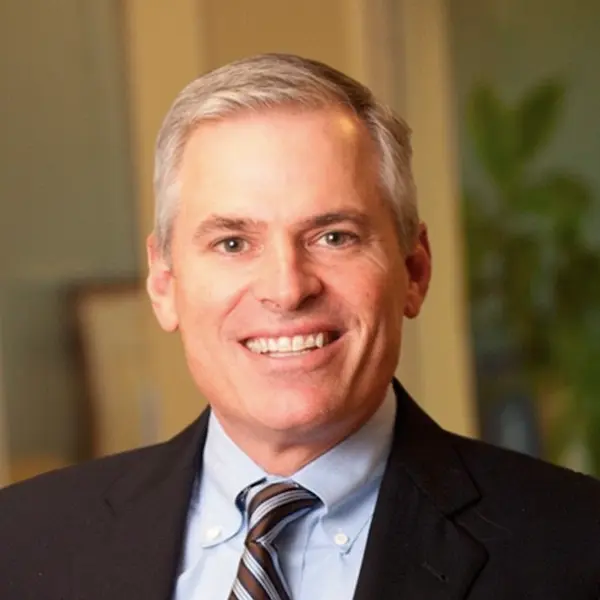
Patrick Lencioni
Bestselling Author of The Five Dysfunctions of a Team & The 6 Types of Working Genius | Founder, The Table Group | Leadership & Organizational Health Expert


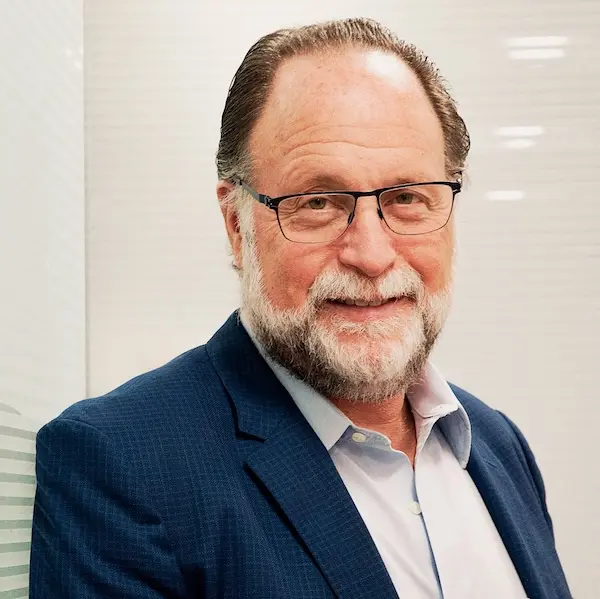
Rafik Hariri Professor, Harvard Kennedy School | Founder & Director, Harvard Growth Lab | Pioneer of Economic Complexity & Powershoring
Ricardo Hausmann is the Rafik Hariri Professor at Harvard Kennedy School and Founder of the Growth Lab — the world's leading applied research center on economic growth. Creator of the Economic Complexity framework, Growth Diagnostics methodology, and the concept of powershoring, his work has been cited over 59,000 times and has directly shaped development strategies across more than 30 countries. His keynotes give senior audiences the sharpest available lens on what drives growth, why economies fail, and how the energy transition is reshaping global opportunity.
Want to book Ricardo Hausmann as a speaker for your event? Please provide the info below and we’ll get in touch within 24h:
Ricardo Hausmann is one of the world’s foremost authorities on economic growth, development, and structural transformation. He is the Rafik Hariri Professor of the Practice of International Political Economy at Harvard Kennedy School, and the Founder and Director of Harvard’s Growth Lab — one of the most influential applied research centers on economic development anywhere in the world. His work has been published in top journals including Science, the Journal of Development Economics, and the Proceedings of the National Academy of Sciences, and has been cited more than 59,000 times. Over the course of his career, he has advised more than 80 governments across emerging and developing economies on growth strategies, diversification, and long-term economic resilience.
Economics speaker Ricardo Hausmann is best known for frameworks that have fundamentally reshaped how economists, policymakers, and institutional investors think about growth and development. His Economic Complexity methodology — developed with César Hidalgo — models economies as ecosystems of productive capabilities, revealing why some countries grow sustainably while others stagnate regardless of their natural resources. His Growth Diagnostics framework provides a structured method for identifying the most binding constraints on a country’s growth at any given moment, replacing generic policy prescriptions with rigorous, context-specific diagnosis. He has also introduced widely adopted concepts including Dark Matter (which explains current account puzzles in global finance), Original Sin (the structural vulnerability created when countries cannot borrow internationally in their own currency), and Self-Discovery (the process by which economies learn what they can profitably produce and export).
Hausmann’s most active current research sits at the intersection of economic complexity and the global energy transition — a frontier he has been defining. His concept of “powershoring” — the relocation of energy-intensive industries to regions with abundant cheap renewable energy, since clean electricity is costly to transport — offers developing economies a new path to industrialization within a decarbonizing world. Through the Growth Lab’s Greenplexity tool, he has built a data-driven platform that maps which countries are best positioned to supply the value chains at the heart of the energy transition: solar panels, wind turbines, batteries, electric vehicles, green steel, and more. In 2025, he published research on industrial policy for the green transition with Bruegel, contributed to the OECD Climate Club’s report on catalyzing green growth, and delivered high-profile commentary on how Trump-era tariffs and geopolitical fragmentation are reshaping the global growth landscape. Since the Growth Lab’s founding in 2006, Hausmann has served as principal investigator on more than 50 research initiatives in over 30 countries across five continents, directly informing national and regional development strategies.
Before joining Harvard, Hausmann served as the first Chief Economist of the Inter-American Development Bank (1994–2000), where he founded the Research Department; as Minister of Planning of Venezuela (1992–1993); as a member of the Board of the Central Bank of Venezuela; and as Chair of the IMF-World Bank Development Committee. He holds a Ph.D. in Economics from Cornell University.
As a speaker, Ricardo Hausmann combines Nobel-adjacent intellectual authority with deep policy and advisory experience, offering leaders clear frameworks to understand growth, manage risk, and make better strategic decisions in uncertain economic environments — whether they are running a country, a multilateral institution, or a global business.
Drawing on his Economic Complexity framework, Hausmann explains growth through a powerful and accessible lens: economies prosper by accumulating capabilities — the productive know-how embedded in people, institutions, and networks — not simply by exploiting resources or attracting capital. Through concrete country examples and data visualizations developed at the Growth Lab, he reveals what actually drives productive capacity, why the gap between rich and poor economies persists despite decades of conventional development policy, and what realistic strategies look like for countries and regions determined to break out of structural stagnation. Essential for sovereign wealth fund forums, multilateral institution events, and any senior audience with a stake in emerging market growth.
The global decarbonization transition is not just a climate challenge — it is a structural economic shift that will redraw comparative advantage, relocate industries, and create new paths to prosperity for countries and regions with the right endowments and capabilities. In this keynote, Hausmann presents his concept of powershoring — the logic of moving energy-intensive industries to where clean energy is abundant and cheap — and demonstrates how countries can use the Growth Lab's Greenplexity tool to identify their most promising positions in the green value chains of solar, wind, batteries, EVs, green steel, and more. A forward-looking framework for leaders in energy, finance, sovereign wealth, and industrial policy who want to understand where the next wave of economic geography is forming.
Why do countries with abundant resources, talented populations, and real capabilities sometimes fail so catastrophically? Drawing on decades of research and case studies including Venezuela, Argentina, and others, Hausmann analyzes the structural and institutional forces behind economic collapse: fiscal mismanagement, policy credibility failures, overdependence on narrow commodity sectors, currency mismatches, and the political economy of reform paralysis. The talk offers a clear analytical framework for understanding how fragility accumulates before it becomes crisis — and what institutional and policy choices create genuine resilience. Directly relevant for risk officers, institutional investors, and policymakers operating in or exposed to emerging market environments.
For decades, industrial policy was treated as a relic of failed statism. That consensus has collapsed — replaced by a global wave of active government intervention from the US CHIPS Act to European green industrial strategies to emerging market diversification programs. In this timely keynote, Hausmann examines what the evidence actually says about when and how industrial policy works, how it differs from old-style protectionism, and what the structural conditions are for governments to guide economic diversification effectively without distorting the market signals that make it possible. Drawing on his 2025 research with Bruegel and the OECD Climate Club, this is a rigorous, non-ideological framework for leaders navigating the return of the state to center stage in economic strategy.
Emerging markets account for the majority of global growth potential — but they also carry structural vulnerabilities that are poorly understood by those relying on conventional financial metrics alone. In this keynote, Hausmann applies his Growth Diagnostics methodology to help senior audiences distinguish genuine opportunity from superficially attractive traps: why some economies with strong fundamentals on paper persistently underperform, how to identify the binding constraints that actually limit growth, and what institutional and productive conditions are necessary for investment returns to materialize at scale. A practical, evidence-based framework for any organization with significant exposure to the developing world.
Rather than offering short-term market forecasts, this keynote provides a structured framework for interpreting the major structural shifts reshaping the global economy: geopolitical fragmentation, the reordering of global value chains, protectionism and tariff escalation, the decoupling of great powers, and the implications for emerging market growth strategies. Drawing on his most current research and commentary, Hausmann helps leaders separate cyclical noise from the deeper structural trends that will define economic geography over the coming decade — and think more clearly about strategic positioning in an era of persistent uncertainty.
Bestselling Author of The Five Dysfunctions of a Team & The 6 Types of Working Genius | Founder, The Table Group | Leadership & Organizational Health Expert

National Geographic Fellow | Five-Time NYT Bestselling Author | Founder of Blue Zones | Emmy-Winning Netflix Host | Longevity & Happiness Researcher

Global AI Advisor, Author & Researcher | Co-Founder of Korza | Former Head of Go-To-Market at OpenAI
Global Authority on Strengths & Performance | Head of People + Performance Research, ADP | Author of Design Love In & Love + Work


© 2026 Aurum Speakers Bureau. All Rights Reserved

| Basic Data Protection Information | |
|---|---|
| Data controller | AURUM SPEAKERS BUREAU S.L. |
| Address | Parc Audiovisual de Catalunya 1, Oficina S11, 08225 Terrassa, Spain |
| Purposes | We will use your data to respond to your requests and deliver our services to you. |
| Marketing | We will only send you marketing correspondence if you have given your prior consent, which you can do by ticking the box for that purpose. |
| Lawful basis | We will only process your data if you have given your prior consent, which you can do by ticking the box for that purpose. |
| Recipients | Generally, only our members of staff who have been duly authorised may access the data that you have provided. |
| Your Rights | You have the right to know what information we hold about you, to rectify it and to erase it, as explained in the additional information available on our website. |
| Additional Information | For more information, please see our "PRIVACY POLICY". |