
Celia Sandys
Granddaughter of Sir Winston Churchill | Author of Five Books on Churchill | Founder of Churchill Leadership | Historian & Broadcaster


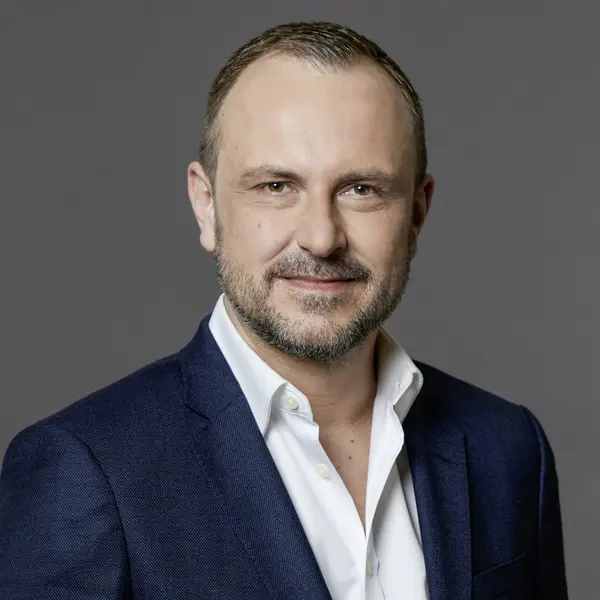
Professor of Security Studies, King's College London | Founding Director, ICSR | Expert on Terrorism, Radicalisation & the Far Right
Peter Neumann is the world's foremost academic authority on radicalisation and terrorism, founder of the International Centre for the Study of Radicalisation (ICSR) at King's College London and author of nine books. Cited nearly 8,000 times and advising governments from Washington to Brussels, he brings rare clarity to the forces driving political violence, extremism, and the erosion of democratic institutions.
Want to book Peter Neumann as a speaker for your event? Please provide the info below and we’ll get in touch within 24h:
Peter Neumann is one of the world’s most respected authorities on terrorism, radicalisation, and political violence, and the founding director of the International Centre for the Study of Radicalisation (ICSR) at King’s College London — widely recognised as the world’s leading research institution on radicalisation and extremism. A Professor of Security Studies in the Department of War Studies, Neumann has spent over two decades building the intellectual and institutional infrastructure that governments, security agencies, and international organisations rely on to understand and respond to some of the most dangerous phenomena of our time.
Global affairs speaker Peter Neumann is best known for founding ICSR in 2008 and directing it for a decade, during which it became the definitive academic source on jihadist networks, online radicalisation, foreign fighter flows, and deradicalisation policy. His work has been cited nearly 8,000 times in academic literature, placing him among the most influential scholars in his field worldwide. He has given evidence before committees of the U.S. House of Representatives and the UK House of Commons, advised the Club de Madrid — the association of former heads of state and government — and served in 2017 as the OSCE’s Special Representative on Countering Violent Extremism. He is also a Research Fellow at Oxford’s Changing Character of War Programme and a Senior Researcher at the European Commission’s Radicalisation Awareness Network.
Neumann has authored or co-authored nine books on terrorism and security. His English-language titles include Bluster: Donald Trump’s War on Terror (Oxford University Press, 2020), Radicalized: New Jihadists and the Threat to the West (IB Tauris, 2016), Old and New Terrorism (Polity Press, 2009), and The Strategy of Terrorism (Routledge, 2008). His most recent work, co-authored with journalist Richard C. Schneider, is Das Sterben der Demokratie (Rowohlt, 2025) — an investigative account of how right-wing populists in Europe and the United States are systematically eroding democratic institutions, praised by the Süddeutsche Zeitung as analytically sharp and urgently necessary.
Neumann’s institutional reach is matched by his public profile. His analysis has appeared in the New York Times, the Wall Street Journal, the New Statesman, the London Review of Books, and New Scientist, and he is a frequent commentator on radio and television in Germany, the UK, and internationally. He sits on the editorial boards of three leading peer-reviewed journals — Studies in Conflict and Terrorism, the Journal of Strategic Studies, and Democracy and Security — and co-directs the MA in Terrorism, Security and Society at King’s. He has taught at King’s College London, Georgetown University, Johns Hopkins University, and Sciences Po. He holds an MA in Political Science from the Free University of Berlin and a PhD in War Studies from King’s College London, and before entering academia worked as a radio journalist in Berlin.
As a speaker, Peter Neumann brings intellectual authority and analytical precision to some of the most difficult and consequential subjects on the global agenda: the radicalisation of individuals and communities, the evolution of jihadist and far-right extremism, the use of the internet and social media as tools of recruitment, and the policy choices that separate effective counter-terrorism from counterproductive approaches. His talks challenge audiences to move beyond headlines and into the strategic reality of how violent extremism actually develops — and what organisations and governments can do to prevent it.
Why do individuals embrace extremist ideologies — and what actually works to prevent it? In this keynote, Peter Neumann draws on over two decades of frontline research at ICSR to provide a rigorous, evidence-based account of how radicalisation happens, what factors drive individuals toward political violence, and what distinguishes effective prevention from well-intentioned failure. He examines the interplay between ideology, identity, grievance, and social dynamics; the specific pathways taken by jihadist and far-right recruits; and the lessons — often hard-won — from deradicalisation programmes around the world. Audiences leave with a clear framework for understanding radicalisation not as a mysterious or inevitable process, but as one that can be mapped, interrupted, and countered.
Based on his most recent work, this keynote examines one of the defining political challenges of our era: the deliberate, strategic erosion of democratic institutions by right-wing populist movements across Europe and the United States. Drawing on investigative research conducted in Hungary, France, the Netherlands, Italy, and the US, Peter Neumann traces the playbook that populist movements use to undermine checks and balances, capture institutions, delegitimise opponents, and consolidate power — and assesses how far advanced this process already is in different contexts. For senior audiences concerned about political risk, institutional resilience, and the future of the international order, this talk offers the most analytically grounded perspective available on a phenomenon that is reshaping the world.
The internet did not create extremism — but it has transformed how it spreads, who it reaches, and how quickly individuals can move from curiosity to commitment. In this keynote, Peter Neumann cuts through the myths that surround online radicalisation — that it is purely a tech problem, that algorithms are the sole driver, that banning content solves the underlying issue — and presents what the research actually shows about how online environments interact with offline grievances to produce radicalized individuals. He examines specific platforms, specific movements, and specific interventions that have worked, and offers practical guidance for organisations — from tech companies to employers to government agencies — seeking to understand their role in a more complex and dynamic information landscape.
Granddaughter of Sir Winston Churchill | Author of Five Books on Churchill | Founder of Churchill Leadership | Historian & Broadcaster

Bestselling Author of The Creator's Code | Founder & CEO of Ingenuity | Stanford Graduate School of Business Lecturer | Former White House Fellow

Astronaut | First Woman to Pilot & Command a Space Shuttle | Leadership & Performance Speaker

High-Performance & Mentorship Expert | Chief Learning Officer, Weill Cornell Medicine | Award-Winning Author of 'The Success Factor' | Thinkers50 #1 Emerging Management Thinker


© 2026 Aurum Speakers Bureau. All Rights Reserved

| Basic Data Protection Information | |
|---|---|
| Data controller | AURUM SPEAKERS BUREAU S.L. |
| Address | Parc Audiovisual de Catalunya 1, Oficina S11, 08225 Terrassa, Spain |
| Purposes | We will use your data to respond to your requests and deliver our services to you. |
| Marketing | We will only send you marketing correspondence if you have given your prior consent, which you can do by ticking the box for that purpose. |
| Lawful basis | We will only process your data if you have given your prior consent, which you can do by ticking the box for that purpose. |
| Recipients | Generally, only our members of staff who have been duly authorised may access the data that you have provided. |
| Your Rights | You have the right to know what information we hold about you, to rectify it and to erase it, as explained in the additional information available on our website. |
| Additional Information | For more information, please see our "PRIVACY POLICY". |