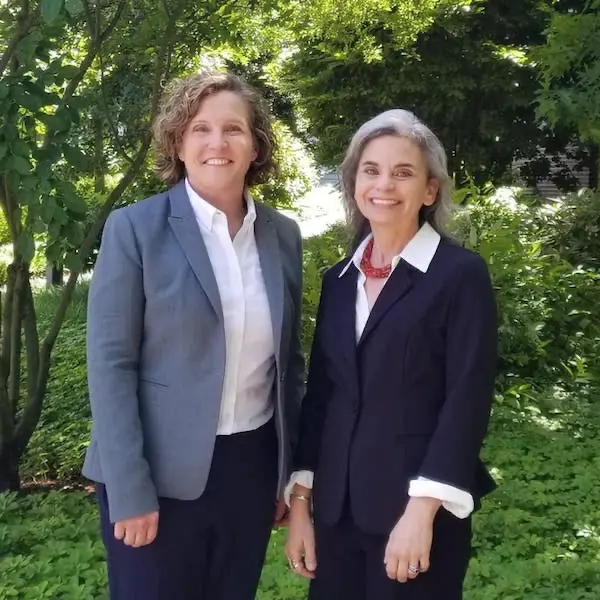
Wendy K. Smith and Marianne W. Lewis
Co-Authors of Both/And Thinking | World's Leading Experts on Paradox | Thinkers50 Breakthrough Idea Award Winners | University of Delaware & Cincinnati Professors



2022 Nobel Laureate in Economic Sciences | Merton H. Miller Professor, Chicago Booth | Banks, Financial Crises & Systemic Risk
The 2022 Nobel Laureate Douglas Diamond wrote the theory of why banks fail, and why they don't have to. The Chicago Booth economist whose Diamond–Dybvig model shaped banking regulation worldwide and helped avert a second Great Depression in 2008 gives finance leaders and policymakers the sharpest available lens on systemic risk, liquidity crises, and financial resilience. Few speakers connect frontier theory to real-world stakes with such authority.
Want to book Douglas Diamond as a speaker for your event? Please provide the info below and we’ll get in touch within 24h:
Douglas W. Diamond is the 2022 Nobel Laureate in Economic Sciences and the world’s foremost authority on why banks exist, why they fail, and how societies can make finance more resilient. He is the Merton H. Miller Distinguished Service Professor of Finance at the University of Chicago Booth School of Business, where he has taught since 1979. His theoretical work underpins modern bank regulation, central bank policy, and the global architecture of financial stability, making finance speaker Douglas Diamond one of the most consequential economic thinkers of his generation.
Diamond is best known for two landmark contributions. The Diamond–Dybvig model, developed in 1983 with Philip Dybvig, explains why banks are inherently vulnerable to runs: because they fund long-term, illiquid loans with short-term deposits, a self-fulfilling panic can topple even a solvent institution. That insight became the intellectual foundation for deposit insurance and emergency liquidity facilities worldwide. His 1984 paper on financial intermediation and delegated monitoring established the first rigorous theory of why banks exist at all, showing that they act as delegated monitors who solve information problems individual savers cannot. The Royal Swedish Academy honored Diamond alongside Ben Bernanke and Philip Dybvig for research on banks and financial crises.
A graduate of Brown University with a doctorate from Yale, Diamond is a member of the National Academy of Sciences and has led both the American Finance Association and the Western Finance Association. His long collaboration with Chicago Booth colleague Raghuram Rajan, former Governor of the Reserve Bank of India, produced influential work on liquidity risk, credit freezes, and financial fragility. Together they examined why fire-sale fears amplify crises and what separates a manageable liquidity shock from systemic collapse, giving regulators and finance leaders a rigorous toolkit for diagnosing danger before it becomes catastrophe. His research remains essential reading among the leading voices in finance.
As a speaker, Douglas Diamond translates four decades of Nobel-caliber research into frameworks that senior audiences can act on. His keynotes address why financial crises recur, what the history of bank runs, from the 1930s to Silicon Valley Bank, teaches about systemic risk in shadow banking, money market funds, and crypto, and how regulation can reduce fragility without choking off credit. Booking him brings the architect of modern banking theory directly to your stage.
Drawing on his Nobel-winning research, Diamond lays bare the structural tension inside every bank: illiquid long-term assets funded by liquid short-term liabilities. That mismatch creates enormous value in calm periods and acute fragility under stress. He traces how the same architecture drove crises from the Great Depression to 2008 to recent regional bank failures, and shows what deposit insurance, central bank backstops, and liquidity rules are meant to do and where they break down. A foundational session for anyone who needs to understand why crises keep recurring.
Every crisis exploits the weak points of its own era, and Diamond argues the next will surface where traditional regulation has yet to reach. Drawing on his research into shadow banking, money market funds, and the liquidity dynamics of crypto assets, he maps the emerging fault lines in today's financial system and what regulators and institutions can do now to limit their exposure. A forward-looking keynote for risk leaders who would rather anticipate than react.
Building on his influential work with Raghuram Rajan, Diamond dissects how fear of fire sales and debt overhang turn a local liquidity shock into an economy-wide credit freeze. He explains how a modest drop in asset values can cascade into deleveraging, credit withdrawal, and prolonged recession, and what separates a manageable correction from systemic failure. CFOs, treasurers, and boards leave with a rigorous model of the credit environment and the early warnings worth watching.
Diamond weighs the genuine trade-offs at the heart of financial regulation: containing fragility without strangling the credit that fuels growth. He assesses what capital requirements, deposit insurance, liquidity rules, and resolution frameworks actually accomplish, where they fall short, and what a truly resilient system demands. A high-value session for regulators, central bankers, and board members who shape or live within the rules governing finance.
Co-Authors of Both/And Thinking | World's Leading Experts on Paradox | Thinkers50 Breakthrough Idea Award Winners | University of Delaware & Cincinnati Professors
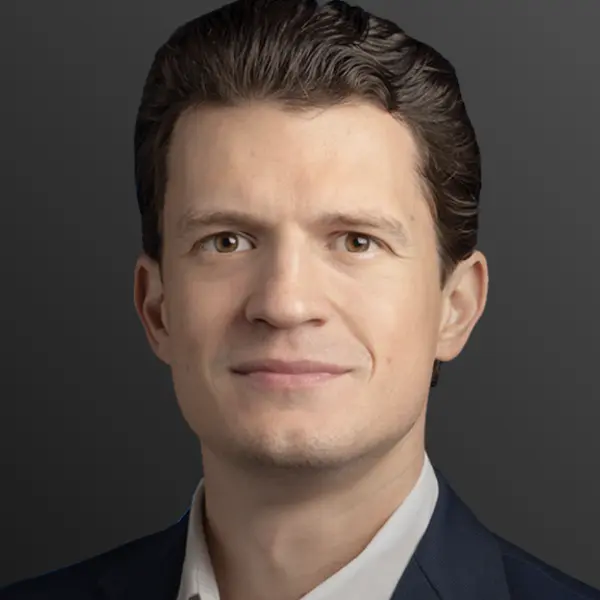
Author Of Converted | Chief Strategist At Google | Senior Fellow At Wharton
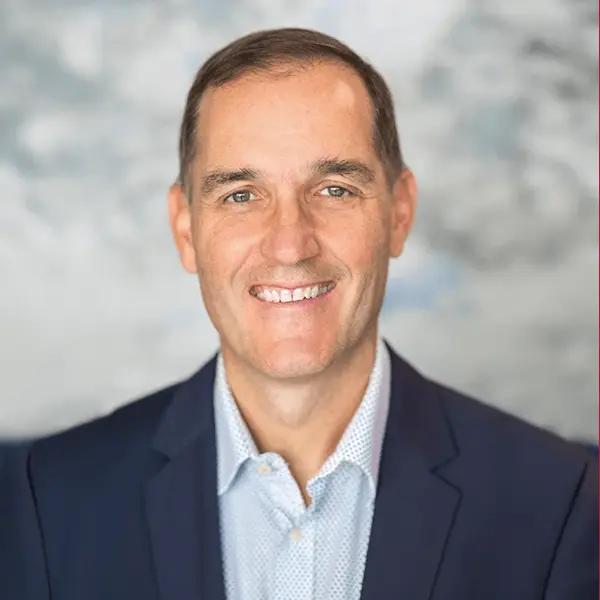
World-Renowned Futurist | Founding Chairman, Advanced Human Technologies Group | Bestselling Author | Board Advisor | Founder, Bondi Innovation | AI Strategy Expert

Mathematician, Broadcaster & Best-Selling Author | Professor of the Public Understanding of Mathematics, University of Cambridge | President, IMA


© 2026 Aurum Speakers Bureau. All Rights Reserved

| Basic Data Protection Information | |
|---|---|
| Data controller | AURUM SPEAKERS BUREAU S.L. |
| Address | Parc Audiovisual de Catalunya 1, Oficina S11, 08225 Terrassa, Spain |
| Purposes | We will use your data to respond to your requests and deliver our services to you. |
| Marketing | We will only send you marketing correspondence if you have given your prior consent, which you can do by ticking the box for that purpose. |
| Lawful basis | We will only process your data if you have given your prior consent, which you can do by ticking the box for that purpose. |
| Recipients | Generally, only our members of staff who have been duly authorised may access the data that you have provided. |
| Your Rights | You have the right to know what information we hold about you, to rectify it and to erase it, as explained in the additional information available on our website. |
| Additional Information | For more information, please see our "PRIVACY POLICY". |