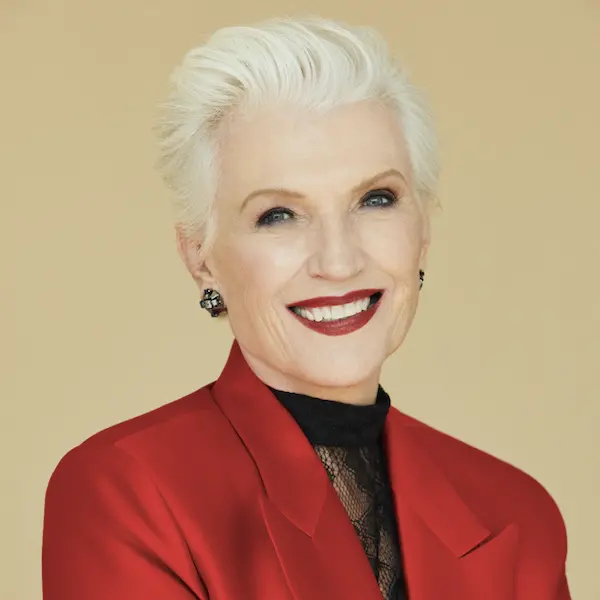
Maye Musk
Bestselling Author of A Woman Makes a Plan & Timeless | International Supermodel & Oldest-Ever CoverGirl | Doctor of Dietetics | Voice on Aging & Resilience


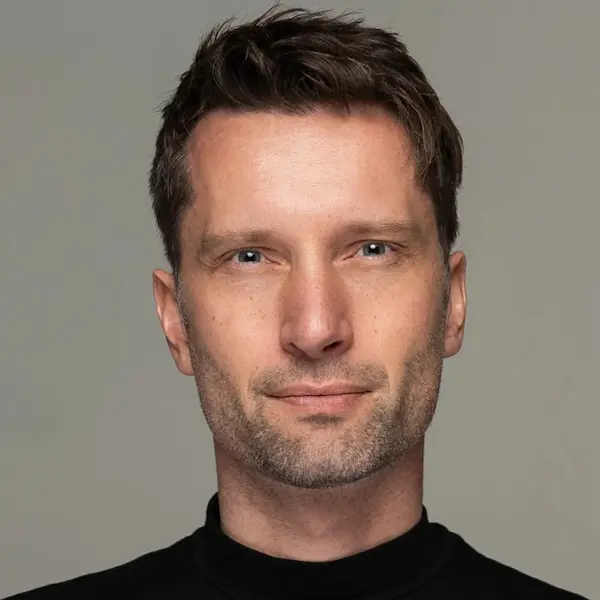
Professor of Management & Strategy, University of Hong Kong | Former Stanford GSB Professor | Top 1% Highly Cited Researcher | Psychology of AI & Digital Footprints
As AI systems grow more capable and harder to read, few researchers understand both people and machines as deeply as Michal Kosinski. A University of Hong Kong professor and former Stanford GSB faculty member, he pioneered predicting psychological traits from digital footprints and was behind the first press warning about Cambridge Analytica. His talks give leaders a practical mental model of what AI can and cannot do, and when to trust it.
Want to book Michal Kosinski as a speaker for your event? Please provide the info below and we’ll get in touch within 24h:
Michal Kosinski is a computational psychologist and Professor of Management and Strategy at the University of Hong Kong, which he joined after more than a decade on the faculty of Stanford Graduate School of Business. He uses AI to study people and psychology to study AI, and ranks among the top 1% of highly cited researchers worldwide.
AI speaker Michal Kosinski is best known for pioneering methods that predict personality, values, and other psychological traits from digital footprints such as Facebook likes, language, and facial images. Developed at the University of Cambridge, where he earned his PhD and served as Deputy Director of the Psychometrics Centre, this work showed how much algorithms can infer about people without their awareness, and why that matters for business, politics, and regulation.
His research has appeared in PNAS, Nature Computational Science, and the Journal of Personality and Social Psychology, and has been cited more than 31,000 times. He coauthored the textbook Modern Psychometrics, his work on the risks of facial recognition inspired a cover of The Economist, and he previously worked as a researcher in Microsoft Research’s Machine Learning Group. He also serves on the AI Board of TELUS.
Kosinski was behind the first press report warning about Cambridge Analytica, published years before the scandal became global news. His research exposed the privacy risks the firm exploited, and he has testified before the U.S. Federal Trade Commission, the Department of Justice, the Equal Employment Opportunity Commission, and the European Parliament. His findings informed privacy regulation and the FTC case that ended in a record $5 billion penalty for Facebook.
More recently, his research has turned to the cognitive and social capacities of large language models, including widely discussed studies on whether AI systems can track what others believe, a capacity psychologists call theory of mind. His honors include the Society for Personality and Social Psychology’s Diener Award in Personality Psychology, of which he is the youngest recipient to date, and he has appeared in the documentaries iHuman and Do You Trust This Computer?
As a speaker, Michal Kosinski gives senior leaders a clear, evidence-based picture of how modern AI actually works, what it does well, and where it reliably fails. He has addressed world leaders, regulators, and executive teams at Google, Microsoft, McKinsey, PwC, and Deutsche Telekom, and organizers regularly rank him as the highest-rated speaker of their programs. Attendees leave with sharper judgment about when to trust AI, how to validate it, and where human leadership remains essential.
Kosinski explains in plain language what is actually happening inside today's AI systems, including the agents now entering the enterprise. He separates the tasks where these models are genuinely strong from the situations where they fail in predictable ways.
Leaders leave with a practical mental model of AI and clearer criteria for deployment: when to trust a system's output, how to validate it, and which decisions must stay with people. The session works equally well as a keynote or as an intimate, conversational briefing for executive teams.
Drawing on his research into the cognitive and social abilities of large language models, Kosinski applies the tools psychologists use to study people to the study of AI. He shows how capacities such as reasoning about others' beliefs have emerged in these systems, and why their behavior can surprise even the engineers who build them.
Audiences gain a fresh perspective on what AI understands, how it may evolve, and what that means for trust, safety, and human collaboration with machines.
Digital records now allow AI to build detailed models of individuals' traits, preferences, and likely actions. Kosinski explores how these digital twins are being applied in leadership, talent management, marketing, and healthcare, and where they create real risks of manipulation and surveillance.
Leaders come away knowing what these models can reliably predict, where their accuracy breaks down, and which ethical lines organizations should not cross.
Our digital traces reveal personality, values, abilities, and preferences, often more accurately than traditional assessments and usually without our knowledge. Drawing on the research that first exposed these risks, Kosinski shows what profiling can and cannot do.
The session equips organizations to use behavioral data responsibly while avoiding the ethical, legal, and reputational failures that have damaged some of the world's best-known companies.
Bestselling Author of A Woman Makes a Plan & Timeless | International Supermodel & Oldest-Ever CoverGirl | Doctor of Dietetics | Voice on Aging & Resilience

World's First Chief AI Officer | Bestselling Author of Your AI Survival Guide | Forbes Contributor | Responsible AI & Workforce Leadership
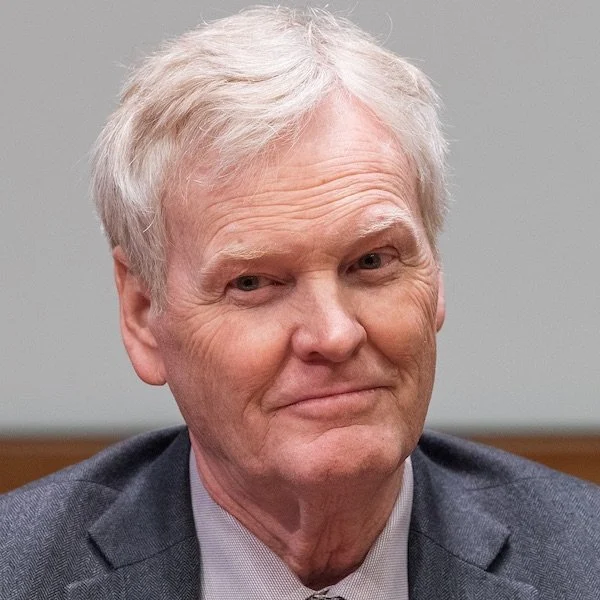
2017 Nobel Laureate in Physiology or Medicine | Richard & Jeanne Fisher Professor, Rockefeller University | Circadian Rhythms & Sleep Science
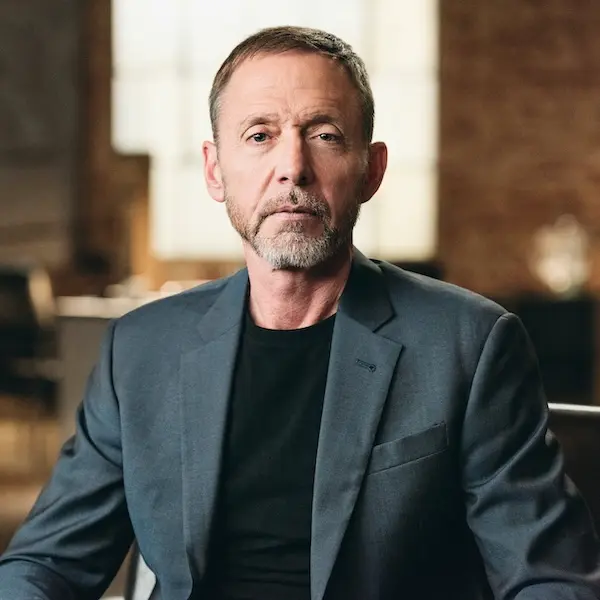
Former Lead FBI International Kidnapping Negotiator | Bestselling Author of Never Split the Difference | Founder & CEO, The Black Swan Group | World's #1 Negotiation Coach


© 2026 Aurum Speakers Bureau. All Rights Reserved

| Basic Data Protection Information | |
|---|---|
| Data controller | AURUM SPEAKERS BUREAU S.L. |
| Address | Parc Audiovisual de Catalunya 1, Oficina S11, 08225 Terrassa, Spain |
| Purposes | We will use your data to respond to your requests and deliver our services to you. |
| Marketing | We will only send you marketing correspondence if you have given your prior consent, which you can do by ticking the box for that purpose. |
| Lawful basis | We will only process your data if you have given your prior consent, which you can do by ticking the box for that purpose. |
| Recipients | Generally, only our members of staff who have been duly authorised may access the data that you have provided. |
| Your Rights | You have the right to know what information we hold about you, to rectify it and to erase it, as explained in the additional information available on our website. |
| Additional Information | For more information, please see our "PRIVACY POLICY". |