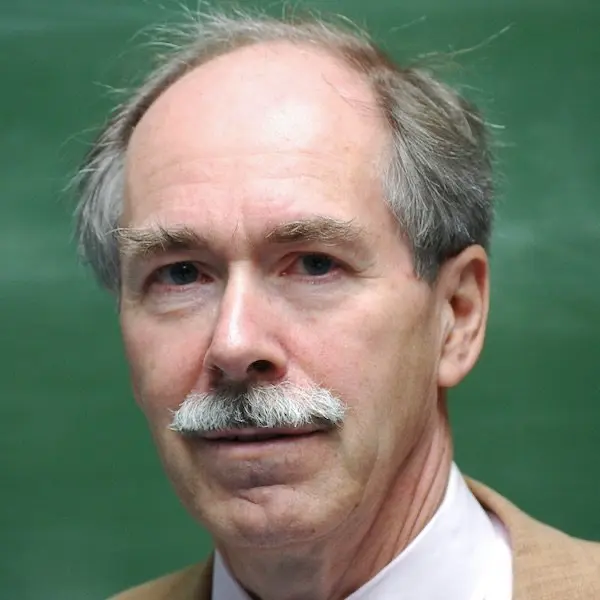
Gerard ‘t Hooft
1999 Nobel Laureate in Physics | Distinguished Professor Emeritus, Utrecht University | Pioneer of the Holographic Principle | Expert on Quantum Gravity & Black Holes



2002 Nobel Laureate in Chemistry | Professor of Biophysics, ETH Zürich & Scripps Research | Pioneer of NMR Spectroscopy for Biological Macromolecules
Kurt Wüthrich solved one of the central technical problems of modern biology: how to see the three-dimensional structure of a protein as it actually behaves in living conditions. His Nobel Prize-winning development of NMR spectroscopy transformed drug discovery, structural biology, and our understanding of molecular life — and at over 85, he remains an active scientist at the frontier of GPCR research and aging biology across laboratories on three continents.
Want to book Kurt Wüthrich as a speaker for your event? Please provide the info below and we’ll get in touch within 24h:
Kurt Wüthrich is one of the most consequential figures in the history of structural biology — a Swiss biophysicist whose decades of methodological innovation gave scientists their first detailed window into the three-dimensional architecture of proteins in their natural, solution-like environment. His work did not just advance a scientific technique; it created an entirely new capability for understanding life at the molecular level, with transformative applications in drug discovery, medicine, and biotechnology that continue to shape the pharmaceutical industry today.
Science speaker Kurt Wüthrich was awarded the 2002 Nobel Prize in Chemistry for his development of nuclear magnetic resonance (NMR) spectroscopy for determining the three-dimensional structure of biological macromolecules in solution. Before his contributions, NMR — a technique that exploits the magnetic properties of atomic nuclei to reveal molecular structure — was well-established for small molecules but broke down entirely for larger biological ones such as proteins. Wüthrich solved this fundamental problem: he developed systematic methods for assigning each NMR signal to the correct hydrogen nucleus within a protein, established the Nuclear Overhauser Effect as a tool for measuring distances between atoms, and applied these techniques to determine complete three-dimensional protein structures in solution for the first time. The advantage over crystallography is decisive: proteins can be studied in an environment closely resembling physiological conditions, revealing not just structure but dynamics.
His career spans more than five decades of continuous scientific contribution. After his PhD at the University of Basel and postdoctoral work at UC Berkeley and Bell Labs — where he first led research on one of the earliest superconducting NMR spectrometers — Wüthrich joined the ETH Zürich in 1969, rising to Professor of Biophysics by 1980. There he collaborated with fellow Nobel laureate Richard Ernst on developing foundational two-dimensional NMR experiments. Since 2001, he has also held the Cecil H. and Ida M. Green Chair in Structural Biology at Scripps Research in La Jolla, California, and since 2013 serves as Distinguished Senior Professor at the iHuman Institute of ShanghaiTech University in Shanghai, where his groups continue active research on G protein-coupled receptors (GPCRs) — the largest family of drug targets in the human body.
Wüthrich has published more than 600 scientific articles and reviews, as well as landmark monographs on NMR methodology. His bibliography spans five decades of continuous innovation, from foundational protein structure determination to current work on GPCR signal transmission, sarcopenia, and osteoporosis in aging populations. Among his many honors are the Kyoto Prize in Advanced Technology, the Louisa Gross Horwitz Prize from Columbia University, the Louis-Jeantet Prize for Medicine, the Otto Warburg Medal, and election as a Foreign Member of the Royal Society. He is a member of the U.S. National Academy of Sciences and the American Academy of Arts and Sciences.
As a speaker, Kurt Wüthrich brings the rare authority of a Nobel laureate who remains an active scientist — one who can speak not only to the foundational discoveries that earned him the world’s highest scientific honor, but to the ongoing questions that still drive him into the laboratory. His keynotes illuminate how structural biology works, what it has unlocked for medicine and drug discovery, how curiosity-driven science produces breakthroughs no one planned for, and why investing in fundamental research is the engine of technological progress. For audiences in science, healthcare, pharmaceuticals, and innovation, few voices command more credibility.
Proteins are the molecular machines of life — and for most of scientific history, we could not see them clearly enough to understand how they worked. In this keynote, Wüthrich tells the story of how decades of methodological innovation, rooted in deep curiosity and willingness to pursue problems others had abandoned, produced the NMR techniques that earned him the Nobel Prize. He explores what it took to solve the technical obstacles, what the first protein structures revealed, and how the capability his group created has since become a foundational tool in structural biology, drug design, and biomedical research worldwide.
How do we design a drug that precisely targets a single protein without disrupting everything else in the cell? The answer begins with knowing the protein's three-dimensional structure — and NMR spectroscopy is one of the primary tools for obtaining it. In this keynote, Wüthrich explains how structural knowledge translates into pharmaceutical opportunity: from understanding the binding pockets through which drugs interact with their targets, to the ongoing revolution in G protein-coupled receptor biology, which governs the mechanism of roughly one-third of all drugs currently in clinical use. Essential for audiences in pharma, biotech, and healthcare innovation.
The NMR methods that transformed structural biology were not developed because anyone predicted their applications — they were developed because a scientist wanted to understand how proteins work. In this keynote, Wüthrich makes a compelling case for the foundational importance of basic research: the kind of open-ended, question-driven science that governments and corporations are often reluctant to fund, but which has consistently produced the most transformative breakthroughs in human history. Drawing on his own career, he explores the relationship between curiosity, persistence, and discovery — and what institutions, funders, and policymakers must understand to keep the pipeline of scientific innovation flowing.
Wüthrich's current research focuses on two of the most pressing challenges of aging societies: sarcopenia — the progressive loss of muscle mass that limits independence and quality of life in older adults — and osteoporosis. In this forward-looking keynote, he shares what structural biology and NMR research are revealing about the molecular mechanisms of aging tissues, where the scientific frontier currently stands, and what the healthcare implications are for societies facing rapidly increasing elderly populations. A rare opportunity to hear a Nobel laureate speak not about past discoveries, but about the scientific questions he is actively working to answer today.
1999 Nobel Laureate in Physics | Distinguished Professor Emeritus, Utrecht University | Pioneer of the Holographic Principle | Expert on Quantum Gravity & Black Holes

2017 Nobel Laureate in Physics | Co-Founder of LIGO | Feynman Professor Emeritus, Caltech | Science Advisor, Interstellar
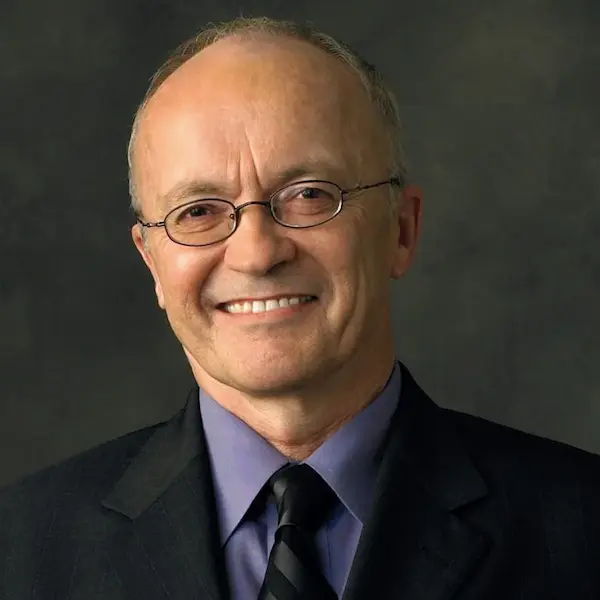
2004 Nobel Laureate in Economic Sciences | Jeffrey Henley Professor, UC Santa Barbara | Macroeconomics, Business Cycles & Monetary Policy

1983 Nobel Peace Prize Laureate | Founder & Leader of Solidarity | First Democratically Elected President of Poland | Icon of the Fall of Communism


© 2026 Aurum Speakers Bureau. All Rights Reserved

| Basic Data Protection Information | |
|---|---|
| Data controller | AURUM SPEAKERS BUREAU S.L. |
| Address | Parc Audiovisual de Catalunya 1, Oficina S11, 08225 Terrassa, Spain |
| Purposes | We will use your data to respond to your requests and deliver our services to you. |
| Marketing | We will only send you marketing correspondence if you have given your prior consent, which you can do by ticking the box for that purpose. |
| Lawful basis | We will only process your data if you have given your prior consent, which you can do by ticking the box for that purpose. |
| Recipients | Generally, only our members of staff who have been duly authorised may access the data that you have provided. |
| Your Rights | You have the right to know what information we hold about you, to rectify it and to erase it, as explained in the additional information available on our website. |
| Additional Information | For more information, please see our "PRIVACY POLICY". |