
Jason Sudeikis
Emmy & Golden Globe-Winning Actor | Co-Creator, Writer & Star of Ted Lasso | Saturday Night Live Alum | Comedian, Producer & Cultural Icon


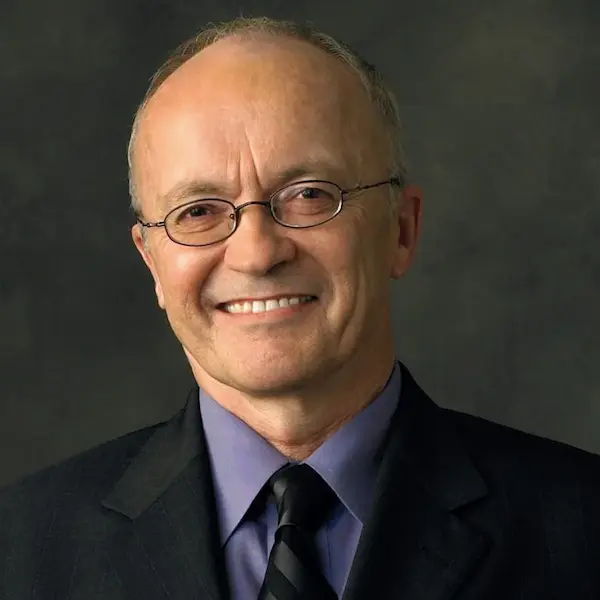
2004 Nobel Laureate in Economic Sciences | Jeffrey Henley Professor, UC Santa Barbara | Macroeconomics, Business Cycles & Monetary Policy
Few economists have shaped the rules of modern monetary governance more directly than Finn Kydland. His Nobel Prize-winning work on time consistency became the intellectual foundation for independent central banking worldwide. As a speaker, he translates landmark macroeconomic research into practical insights on policy credibility, business cycles, and the long-term consequences of fiscal decisions.
Want to book Finn Kydland as a speaker for your event? Please provide the info below and we’ll get in touch within 24h:
Economics speaker Finn Kydland is one of the most influential macroeconomists of the modern era, a Nobel Laureate whose research fundamentally changed how central banks operate and how economists model business cycles. Born in Søyland, Norway, he completed his doctorate at Carnegie Mellon University, where he worked under Edward C. Prescott on a dissertation that would seed their most consequential collaboration. He holds the Jeffrey Henley Professorship in Economics at the University of California, Santa Barbara, the Richard P. Simmons Distinguished Professorship at Carnegie Mellon’s Tepper School of Business, and an adjunct appointment at the Norwegian School of Economics, a rare triple affiliation that reflects his standing across generations of economic thought.
Kydland is best known for two foundational contributions. First, with Prescott, he showed that the effectiveness of economic policy hinges not only on its design but on its credibility over time, the so-called “time consistency” problem. Their 1977 paper, Rules Rather than Discretion, demonstrated that discretionary policymakers who deviate from announced plans erode trust and ultimately worsen economic outcomes. This insight directly underpinned the global shift toward independent central banking in countries including the United Kingdom, Sweden, and New Zealand. Second, their real business cycle framework integrated growth theory with cycle dynamics, reshaping macroeconomic modeling at its core. More than 50 published papers, two of them cited over 1,500 times each, document the breadth of this influence.
In 2004, the Sveriges Riksbank Prize in Economic Sciences was awarded jointly to Kydland and Prescott “for their contributions to dynamic macroeconomics: the time consistency of economic policy and the driving forces behind business cycles.” The Royal Swedish Academy of Sciences described their work as of fundamental significance to macroeconomic research. Beyond the Nobel, Kydland has received the John Stauffer National Fellowship in Public Policy from the Hoover Institution and holds membership in the Norwegian Academy of Science and Letters. He directs the Laboratory for Aggregate Economics and Finance (LAEF) at UC Santa Barbara and serves as a Research Associate for the Federal Reserve Banks of Dallas and St. Louis.
As a speaker, Finn Kydland translates decades of frontier research into frameworks that matter to decision-makers: how institutions can commit to sound policy, what history teaches about fiscal and monetary discipline, and what drives economies into cycles of boom and recession. Senior audiences, from central bank governors to corporate boards, value his ability to ground complex macroeconomic dynamics in clear principles, evidence-based arguments, and comparative country insights drawn from his work on economies ranging from Argentina to Ireland. He is equally at home addressing financial institutions, policy bodies, and executive audiences navigating economic uncertainty.
When governments and central banks deviate from announced plans, they do not just make a bad decision, they destroy the institutional credibility that makes future policy effective. Drawing on his Nobel Prize-winning research, Kydland explains the mechanics of the time consistency problem, why discretionary economic policy so reliably underperforms, and what institutional design, from independent central banks to constitutional rules, can do to lock in long-term gains. A foundational talk for leaders in finance, government, and economic policy.
Kydland dismantles common assumptions about what causes economic fluctuations, presenting the evidence that real factors, technology shifts, productivity dynamics, and structural shocks, play a more decisive role than many policymakers acknowledge. He walks audiences through the real business cycle framework that transformed macroeconomics, connecting decades of academic research to the patterns organizations and governments actually observe. Attendees leave with a more rigorous mental model for reading economic conditions and stress-testing strategic decisions.
Using two countries that took dramatically different paths, one toward sustained growth, one toward repeated crisis, Kydland examines what policy choices actually look like when played out over decades. This comparative lens makes abstract macroeconomic principles concrete and actionable, drawing clear lessons about fiscal discipline, structural reform, productivity investment, and the institutional conditions that allow economies to recover and thrive.
Central bank independence is not a technical quirk, it is a direct policy conclusion from economic research. Kydland traces the intellectual journey from his foundational work with Edward Prescott to the institutional reforms it inspired in the UK, New Zealand, Sweden, and beyond. For executive and policy audiences, this talk offers a rigorous, research-grounded perspective on why monetary institutions are designed the way they are, what threatens their effectiveness, and what political interference looks like in practice.
Emmy & Golden Globe-Winning Actor | Co-Creator, Writer & Star of Ted Lasso | Saturday Night Live Alum | Comedian, Producer & Cultural Icon

MythBusters Co-Host & Executive Producer | NYT Bestselling Author | Board Member, Smithsonian Air & Space Museum | Innovation & Creativity
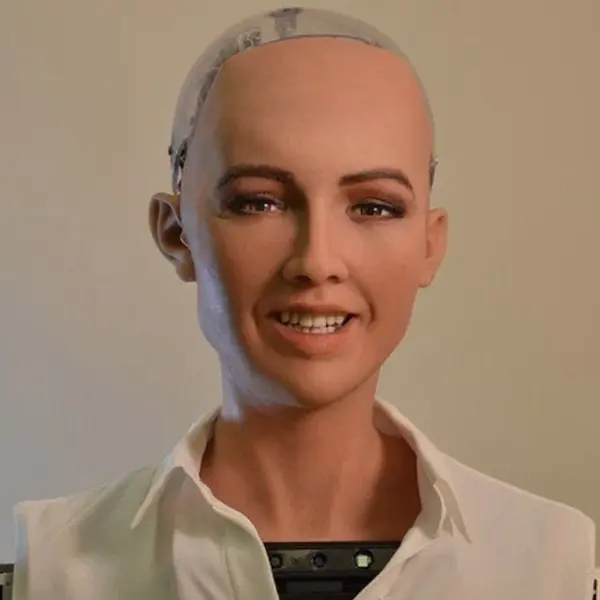
World's First Humanoid Robot Celebrity | UN Innovation Champion | Edison Prize Gold Winner | AI, Robotics & Human-Machine Collaboration

Nobel Peace Prize Laureate, 2021 | Co-Founder & CEO, Rappler | Professor of Practice, Columbia SIPA | Time Person of the Year, 2018


© 2026 Aurum Speakers Bureau. All Rights Reserved

| Basic Data Protection Information | |
|---|---|
| Data controller | AURUM SPEAKERS BUREAU S.L. |
| Address | Parc Audiovisual de Catalunya 1, Oficina S11, 08225 Terrassa, Spain |
| Purposes | We will use your data to respond to your requests and deliver our services to you. |
| Marketing | We will only send you marketing correspondence if you have given your prior consent, which you can do by ticking the box for that purpose. |
| Lawful basis | We will only process your data if you have given your prior consent, which you can do by ticking the box for that purpose. |
| Recipients | Generally, only our members of staff who have been duly authorised may access the data that you have provided. |
| Your Rights | You have the right to know what information we hold about you, to rectify it and to erase it, as explained in the additional information available on our website. |
| Additional Information | For more information, please see our "PRIVACY POLICY". |