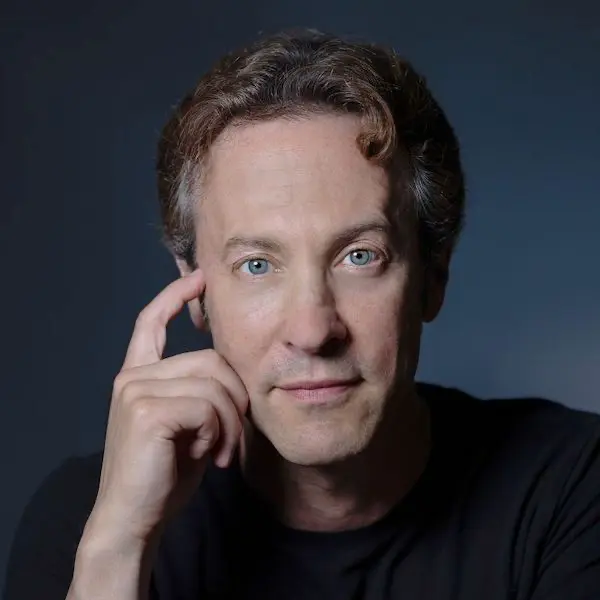
David Eagleman
Neuroscientist & Adjunct Professor at Stanford University | NYT Bestselling Author of Livewired & Incognito | CEO of Neosensory | Host of Inner Cosmos | TED Speaker


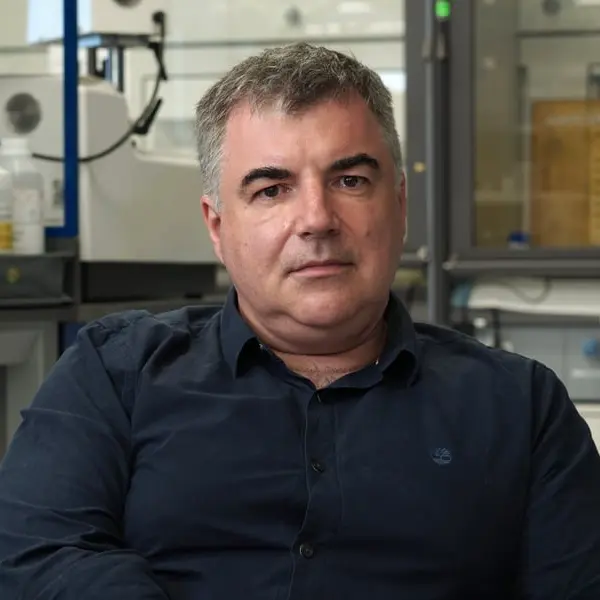
Nobel Laureate in Physics 2010 | Discoverer of Graphene | Tan Chin Tuan Centennial Professor, NUS | Langworthy Professor, University of Manchester
Sir Konstantin Novoselov is the Nobel Prize-winning physicist who co-discovered graphene in 2004 using adhesive tape — a moment that opened an entirely new chapter in materials science. One of the most cited scientists in the world every year since 2014, he now leads the Institute for Functional Intelligent Materials at the National University of Singapore and researches the intersection of AI, materials design, and 2D heterostructures.
Want to book Konstantin Novoselov as a speaker for your event? Please provide the info below and we’ll get in touch within 24h:
Professor Sir Konstantin Novoselov is one of the most decorated and consequential physicists of the past three decades. Born in Russia in 1974, educated at the Moscow Institute of Physics and Technology and Radboud University of Nijmegen, he is best known for a discovery made with adhesive tape. In 2004, working as a postdoctoral researcher at the University of Manchester alongside Professor Sir Andre Geim, he used sticky tape to peel single-atom-thick layers from a block of graphite. The result was graphene, the first two-dimensional material ever isolated: one atom thick, stronger than steel, lighter than paper, an excellent conductor of heat and electricity, and nearly transparent. Six years later, the discovery earned them both the Nobel Prize in Physics.
As a science speaker, Novoselov holds the Tan Chin Tuan Centennial Professorship at the National University of Singapore, where he also serves as Director of the Institute for Functional Intelligent Materials (IFIM), a research center he co-founded in 2021 with Professor Antonio Castro Neto. He simultaneously holds a part-time appointment as Langworthy Professor of Physics and Royal Society Research Professor at the University of Manchester, making him one of the rare scientists who bridges two of the world’s leading materials science institutions across continents. He was the youngest person to win the Nobel Prize in Physics in nearly 50 years when he received it at age 36. Every year since 2014, he has been listed among the most highly cited researchers in the world.
Beyond graphene, Novoselov’s research has expanded into the full family of two-dimensional materials and the van der Waals heterostructures that emerge when different 2D crystal layers are stacked with atomic precision. These “materials on demand” allow scientists and engineers to design structures with specific electrical, optical, mechanical, and thermal properties from the atomic level up, opening possibilities in electronics, photonics, energy storage, and biomedicine that were not conceivable with conventional three-dimensional materials. His most recent research direction applies artificial intelligence and machine learning to accelerate materials design, addressing the problem that the design space for 2D heterostructures is so large that human intuition alone is insufficient to navigate it.
Novoselov is clear-eyed about where graphene stands commercially today. It has found real applications in battery technology inside Chinese smartphones, in composite materials, and in an expanding range of industrial uses, and new applications continue to emerge as production scales. He has consistently argued that the most important legacy of graphene’s discovery is not any single application but the opening of an entire new field: the science and engineering of 2D materials now encompasses hundreds of materials with widely varying properties, and the ability to stack them into designer heterostructures is generating a new generation of electronic and photonic devices. He has also spoken publicly about the role of artificial intelligence in accelerating this research, and about what the next generation of “functional intelligent materials” — those with characteristics of biological systems, including self-healing, memory, and adaptive response — might look like.
As a speaker, Sir Konstantin Novoselov brings to the stage the intellectual authority of a Nobel laureate combined with a genuine gift for making the deepest concepts in condensed matter physics feel accessible, surprising, and directly relevant to the technology questions that matter most to business, policy, and investment audiences. Contact Aurum Speakers Bureau to book Sir Konstantin Novoselov for your next event.
Novoselov's foundational keynote tells the story of graphene's discovery, what it revealed about the physical world, and what it has since unlocked in terms of the broader family of two-dimensional materials and the van der Waals heterostructures they make possible. He explains what graphene actually is and why its properties are so unusual, where it has found real commercial applications, where the hype has outrun the reality, and why the most transformative dimension of the graphene story is not the material itself but the research field it opened. He draws a direct line from that 2004 adhesive tape experiment to the current frontier of designer materials with programmable properties, giving audiences a clear mental model of what the materials science revolution of the next two decades will actually look like.
The most significant development in materials science since graphene is the ability to stack different 2D crystal layers with atomic precision to create heterostructures whose properties can be engineered rather than discovered. Novoselov presents this concept — materials on demand — as a genuine paradigm shift: for the first time in history, materials scientists are no longer limited to what nature provides or what chemistry can accidentally produce. They can design structures with specific optical, electrical, mechanical, and thermal properties from first principles. He examines the current state of this capability, the applications beginning to emerge in electronics, photonics, and energy, and the role that AI and machine learning are starting to play in navigating a design space too vast for human intuition alone.
Novoselov's current research at the Institute for Functional Intelligent Materials is focused on applying artificial intelligence to the discovery and design of new materials. In this keynote he examines why the intersection of AI and materials science is one of the most productive in all of applied research: the number of possible 2D heterostructure combinations is astronomically large, but AI can identify patterns, predict properties, and suggest configurations that no human researcher would explore. He connects this to the broader question of what AI means for scientific discovery, how the relationship between human intuition and machine pattern recognition is evolving in laboratory science, and what classes of new materials — including functional intelligent materials with characteristics of biological systems — this combination might eventually produce.
Graphene was discovered not through a focused research program aimed at finding it but through what Novoselov and Geim describe as "Friday evening experiments" — playful, low-stakes investigations driven by curiosity rather than grant objectives. In this keynote, Novoselov reflects on what that story reveals about how transformative scientific discovery actually happens, why the most productive research environments protect space for exploratory work that has no guaranteed outcome, and what organizations outside science can learn from the culture of basic research about the conditions that allow genuine innovation to emerge. A keynote that resonates deeply with R&D leaders, innovation strategists, and anyone thinking about how to build environments where breakthrough thinking is possible.
Neuroscientist & Adjunct Professor at Stanford University | NYT Bestselling Author of Livewired & Incognito | CEO of Neosensory | Host of Inner Cosmos | TED Speaker

First Woman to Lead a Fortune 20 Company | Former CEO, Hewlett-Packard | Chair, Colonial Williamsburg Foundation

Founder & Creative Director, BIG – Bjarke Ingels Group | TED Speaker | Pioneer of Hedonistic Sustainability & Utopian Pragmatism
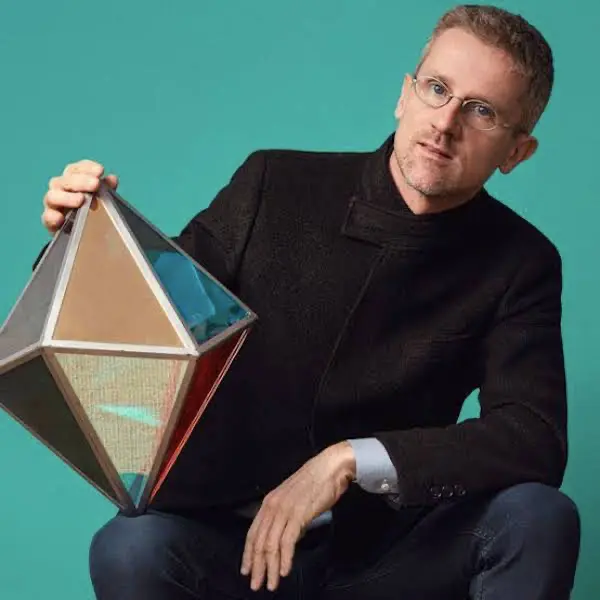
Architect & Engineer | Director of the MIT Senseable City Lab | Founding Partner, CRA-Carlo Ratti Associati | Curator of the 2025 Venice Architecture Biennale


© 2026 Aurum Speakers Bureau. All Rights Reserved

| Basic Data Protection Information | |
|---|---|
| Data controller | AURUM SPEAKERS BUREAU S.L. |
| Address | Parc Audiovisual de Catalunya 1, Oficina S11, 08225 Terrassa, Spain |
| Purposes | We will use your data to respond to your requests and deliver our services to you. |
| Marketing | We will only send you marketing correspondence if you have given your prior consent, which you can do by ticking the box for that purpose. |
| Lawful basis | We will only process your data if you have given your prior consent, which you can do by ticking the box for that purpose. |
| Recipients | Generally, only our members of staff who have been duly authorised may access the data that you have provided. |
| Your Rights | You have the right to know what information we hold about you, to rectify it and to erase it, as explained in the additional information available on our website. |
| Additional Information | For more information, please see our "PRIVACY POLICY". |