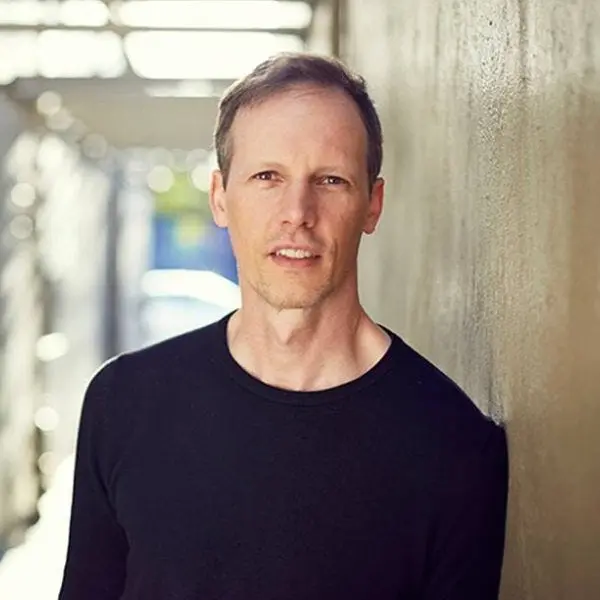
Jim McKelvey
Co-Founder of Square (now Block) | Founder of Invisibly | Author of The Innovation Stack | LaunchCode Co-Founder



Scientific Director, IDSIA | AI Director & Professor, KAUST | Father of Generative AI | Pioneer of LSTM & Deep Learning
Jürgen Schmidhuber is widely regarded as the father of modern AI — the scientist behind LSTM networks, foundational to Siri, Alexa, and ChatGPT, and the originator of Generative AI principles in the early 1990s. With 320,000+ academic citations and posts at IDSIA and KAUST, he offers senior audiences a uniquely unfiltered view of where artificial intelligence is truly headed.
Want to book Jürgen Schmidhuber as a speaker for your event? Please provide the info below and we’ll get in touch within 24h:
Jürgen Schmidhuber is one of the most consequential scientists in the history of artificial intelligence — a German computer scientist whose foundational research in the 1990s quietly built the technical infrastructure that now powers the AI revolution. He serves as Scientific Director of the Dalle Molle Institute for Artificial Intelligence Research (IDSIA) in Switzerland, a position he has held since 1995, and as Director of the AI Initiative and Professor of Computer Science at King Abdullah University of Science and Technology (KAUST) in Saudi Arabia, where he has been based since 2021.
AI speaker Jürgen Schmidhuber is best known as the co-inventor — with his student Sepp Hochreiter — of Long Short-Term Memory (LSTM) networks, published in 1997 and widely recognized as the most commercially valuable AI achievement of the 20th century. LSTM is the architecture that enabled modern speech recognition, machine translation, and natural language processing: it powers Apple’s Siri, Google Translate, Amazon’s Alexa, and was a foundational building block for the transformer models behind ChatGPT and today’s large language models. The 1997 LSTM paper is the most cited AI paper of the 20th century. His Google Scholar profile lists over 320,000 citations, placing him among the most referenced scientists in the field.
But LSTM is only part of the story. In what Schmidhuber calls his “Annus Mirabilis” of 1990–1991, he laid the theoretical foundations for what the world now calls Generative AI — introducing principles of unsupervised learning, hierarchical neural networks, and curiosity-driven AI exploration that presaged the architectures now dominating the field by more than two decades. The New York Times ran a profile under the headline “When A.I. Matures, It May Call Jürgen Schmidhuber ‘Dad'”, and Elon Musk wrote on X that “Schmidhuber invented it all.” He has received the Helmholtz Award from the International Neural Network Society (2013) and the IEEE Neural Network Pioneer Award (2016) for his contributions to deep learning.
Schmidhuber is not a figure who follows consensus — he shapes and challenges it. He has spent years publicly contesting the historical record of AI attribution, arguing that foundational contributions from European and Asian researchers were systematically overlooked in favor of a small group of North American academics. His 2024 technical report, updated in 2025, argues that the Nobel Prize in Physics awarded to Hopfield and Hinton rewarded work that built on prior unacknowledged research — a claim that has circulated widely in the AI research community. He is also notably contrarian on AI risk: where many peers warn of existential threats, Schmidhuber argues those fears are overstated and that AI will ultimately distribute intelligence and prosperity globally.
As a speaker, Jürgen Schmidhuber offers something genuinely rare: the perspective of a scientist who saw the current AI moment coming decades before it arrived, who built core pieces of the infrastructure that made it possible, and who holds strong, carefully argued views that cut against the dominant narratives in both industry and policy. His keynotes challenge audiences to think about AI’s past, present, and future with the rigor and independence of someone who has spent his career on the frontier — and who has little interest in comfortable consensus.
The popular narrative of AI's origins — centered on a small group of North American researchers — omits decades of foundational work done in European and Asian labs that made the current revolution possible. In this keynote, Schmidhuber reconstructs the actual history of deep learning, Generative AI, and neural network research, tracing the ideas behind today's most celebrated AI systems to their real origins. More than a history lesson, it is a framework for understanding how scientific credit, institutional power, and media narratives shape what gets built next — and who gets to build it. A uniquely authoritative and provocative talk for technology, science, and leadership audiences.
Since his teenage years, Schmidhuber's central scientific goal has been to build an AI smarter than himself in every meaningful way. In this keynote, he maps the technical and conceptual path from today's large language models toward artificial general intelligence — examining what current systems can and cannot do, which research directions are most likely to produce the next major breakthroughs, and what the arrival of truly general AI would mean for humanity, science, and the global order. Delivered with the authority of someone who has been at the frontier of this research for four decades — and who has a track record of being right about the future.
While much of the public debate on AI is dominated by warnings of existential risk and dystopian scenarios, Schmidhuber offers a rigorous counterargument: that these fears are largely overstated, that AI will ultimately distribute intelligence and prosperity globally rather than concentrating them, and that the greatest benefits of the technology will flow to those currently least served by existing institutions. Drawing on his decades of research and his current work at KAUST — at the intersection of AI and Saudi Arabia's Vision 2030 — he makes a compelling, evidence-based case for why the AI century is more likely to produce a new golden age of science than the catastrophe that dominates headlines.
A deep technical keynote for audiences who want to understand how modern AI actually works — and where it is going. Schmidhuber traces the evolution from his 1997 LSTM architecture through the attention mechanisms and transformer models that underpin today's large language models, explaining in accessible terms what each advance solved and what it left unresolved. He examines the current limitations of LLMs, the most promising directions in neural architecture research, and what the next generation of AI systems will need to do that today's cannot. An ideal keynote for technology, engineering, and R&D audiences seeking genuine technical depth from the scientist who built the foundations.
Co-Founder of Square (now Block) | Founder of Invisibly | Author of The Innovation Stack | LaunchCode Co-Founder

Futurist & Former Head of Innovation at Mattel | Author of The World After AI | AI Strategy Advisor to Fortune 500s | On AI, Foresight & the Future of Work

Future of Work Strategist | Forbes Top Futurist | Two-Time Bestselling Author | Honorary Doctorate, PA College of Art & Design

22nd U.S. Secretary of Defense | Former Director of the CIA | Advisor to Eight U.S. Presidents | Presidential Medal of Freedom | Authority on National Security & Leadership


© 2026 Aurum Speakers Bureau. All Rights Reserved

| Basic Data Protection Information | |
|---|---|
| Data controller | AURUM SPEAKERS BUREAU S.L. |
| Address | Parc Audiovisual de Catalunya 1, Oficina S11, 08225 Terrassa, Spain |
| Purposes | We will use your data to respond to your requests and deliver our services to you. |
| Marketing | We will only send you marketing correspondence if you have given your prior consent, which you can do by ticking the box for that purpose. |
| Lawful basis | We will only process your data if you have given your prior consent, which you can do by ticking the box for that purpose. |
| Recipients | Generally, only our members of staff who have been duly authorised may access the data that you have provided. |
| Your Rights | You have the right to know what information we hold about you, to rectify it and to erase it, as explained in the additional information available on our website. |
| Additional Information | For more information, please see our "PRIVACY POLICY". |