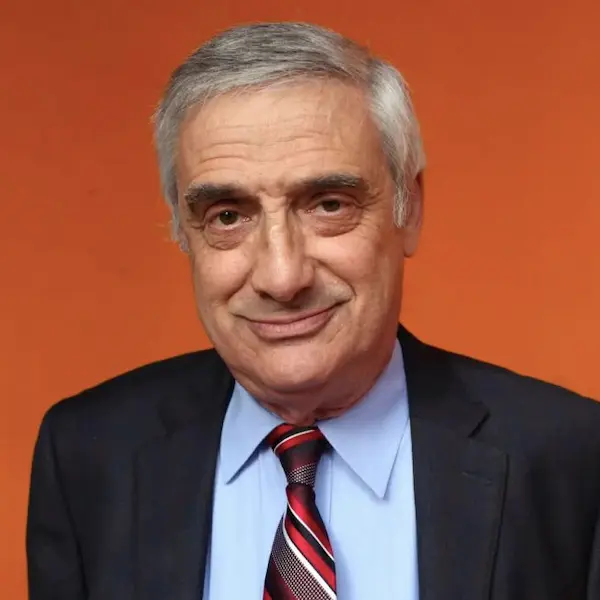
Joel Mokyr
2025 Nobel Laureate in Economic Sciences | Robert H. Strotz Professor, Northwestern University | Economic Historian of Innovation & Growth


2017 Nobel Laureate in Chemistry | Father of Cryo-EM | Professor, Columbia University | Member, National Academy of Sciences
Joachim Frank invented cryo-electron microscopy — a technique that lets scientists see the machinery of life at atomic resolution — earning him the 2017 Nobel Prize in Chemistry. A Columbia professor and published novelist, he speaks on scientific breakthroughs, drug discovery, and the deep connections between science and the arts.
Want to book Joachim Frank as a speaker for your event? Please provide the info below and we’ll get in touch within 24h:
Joachim Frank is the scientist who gave the world its most powerful tool for seeing the machinery of life — the founder of single-particle cryo-electron microscopy, a technique that allows researchers to visualize biological molecules at atomic resolution and has transformed structural biology, drug discovery, and our understanding of how living systems work. Born in Siegen, Germany in 1940, he studied physics at the University of Freiburg and the University of Munich before earning his doctorate at the Technical University of Munich in 1970. Postdoctoral work took him to NASA’s Jet Propulsion Laboratory, the University of California Berkeley, and Cornell University, before he joined the Wadsworth Center in Albany — where, over more than two decades, he developed the single-particle reconstruction methods that would become the foundation of modern cryo-EM.
Nobel Prize speaker Joachim Frank has been a Professor of Biochemistry and Molecular Biophysics and of Biological Sciences at Columbia University since 2008, where his lab continues to investigate ribosome structure and function using the very techniques he pioneered. From 1998 to 2017, he also served as an investigator at the Howard Hughes Medical Institute. He is a member of the National Academy of Sciences, the American Academy of Arts and Sciences, and the American Academy for Microbiology, and a Fellow of the American Association for the Advancement of Science. Among his earlier honors, the 2014 Franklin Medal in Life Science from the Franklin Institute stands as a milestone — as does the Honorary Doctorate from the University of Siegen and the Honorary Fellowship from the Royal Microscopical Society, both received in 2018.
In 2017, Frank shared the Nobel Prize in Chemistry with Jacques Dubochet and Richard Henderson, awarded for developing cryo-electron microscopy for the high-resolution structure determination of biomolecules in solution. The prize recognized decades of painstaking work: between 1975 and 1986, Frank developed computational methods that could take thousands of blurry two-dimensional electron microscope images of frozen biological molecules and merge them into sharp, detailed three-dimensional structures. The impact has been immense — cryo-EM is now the primary tool for determining the structures of proteins, viruses, and molecular machines, and has directly accelerated the development of drugs for cancer, Alzheimer’s disease, and infectious diseases, including the structural work that underpinned COVID-19 vaccine development.
What makes Frank singular as a science speaker is not merely his scientific standing, but the breadth of his intellectual life. A published fiction writer and poet listed in the Poets & Writers directory, he has written two novels — Aan Zee (2019) and Ierapetra, or His Sister’s Keeper (2024) — alongside dozens of short stories published in literary journals. His talks explore the nature of discovery, the role of visual intuition in science, the intersection of art and scientific thinking, and what cryo-EM means for the future of medicine and drug design. For audiences in science, healthcare, pharmaceuticals, innovation, and research leadership, Frank offers a perspective that is both technically rigorous and profoundly humanistic.
For decades, the most important molecular machines in living cells — the ribosomes, the viral proteins, the receptor complexes — could not be seen in sufficient detail to understand how they worked or how to design drugs against them. Frank tells the story of how he developed the computational methods that changed this, turning blurry electron microscope images into atomic-resolution three-dimensional structures. A compelling account of scientific persistence, visual intuition, and the transformative power of a technique that is now at the heart of modern pharmaceutical development.
Structural biology has become one of the most powerful engines of pharmaceutical innovation, and cryo-EM is its primary tool. Frank traces how the technique he developed has moved from academic curiosity to industrial workhorse — enabling the rapid identification of drug targets, the design of precision therapeutics, and the structural insights that underpinned COVID-19 vaccine development. A rigorous and forward-looking keynote for audiences in biotech, pharma, healthcare, and research strategy who want to understand where the next generation of medicines will come from.
Frank's life has run along two parallel tracks — one as the scientist who founded a field, the other as a published novelist and poet who has written and published fiction for decades. In this deeply personal keynote, he explores what scientific and artistic thinking share: the role of pattern recognition, visual intuition, the willingness to sit with uncertainty, and the discipline of building something from nothing. A rare and enriching address for any audience interested in creativity, innovation, and the full range of human intelligence.
2025 Nobel Laureate in Economic Sciences | Robert H. Strotz Professor, Northwestern University | Economic Historian of Innovation & Growth
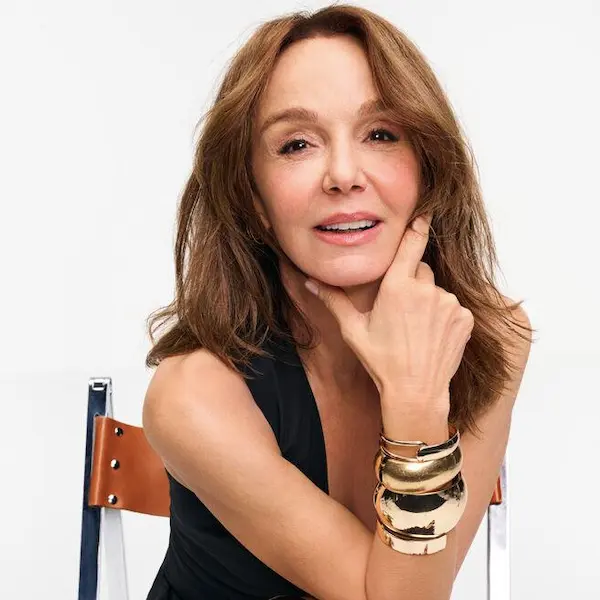
Award-Nominated French Actress | Global Star of Netflix's Emily in Paris (Sylvie Grateau) | Icon of Reinvention, Style & Ageless Confidence
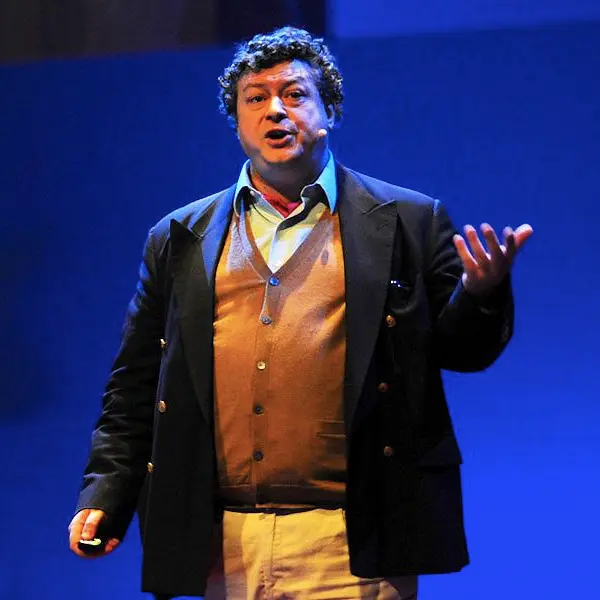
Vice Chairman, Ogilvy UK | Co-Founder, Ogilvy Behavioral Science Practice | Founder, Nudgestock | Bestselling Author, Alchemy | TED Speaker
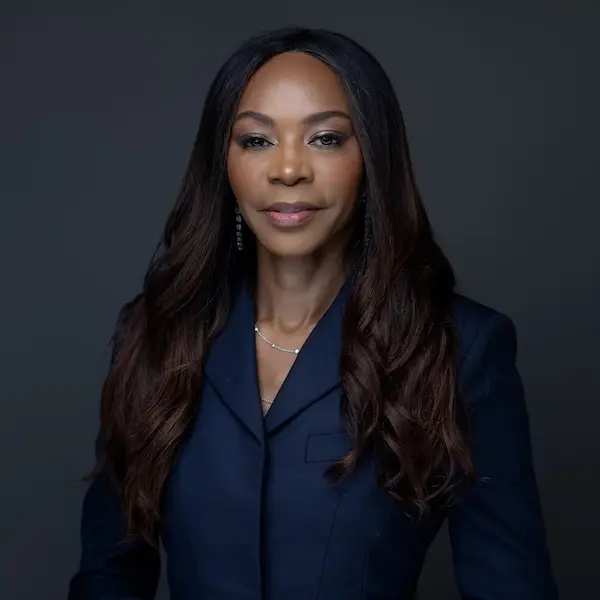
Chair, Economic Club of New York | Member of the UK House of Lords | Global Economist & Board Member at Chevron & Starbucks | Author of Five Bestselling Books | TIME 100


© 2026 Aurum Speakers Bureau. All Rights Reserved

| Basic Data Protection Information | |
|---|---|
| Data controller | AURUM SPEAKERS BUREAU S.L. |
| Address | Parc Audiovisual de Catalunya 1, Oficina S11, 08225 Terrassa, Spain |
| Purposes | We will use your data to respond to your requests and deliver our services to you. |
| Marketing | We will only send you marketing correspondence if you have given your prior consent, which you can do by ticking the box for that purpose. |
| Lawful basis | We will only process your data if you have given your prior consent, which you can do by ticking the box for that purpose. |
| Recipients | Generally, only our members of staff who have been duly authorised may access the data that you have provided. |
| Your Rights | You have the right to know what information we hold about you, to rectify it and to erase it, as explained in the additional information available on our website. |
| Additional Information | For more information, please see our "PRIVACY POLICY". |