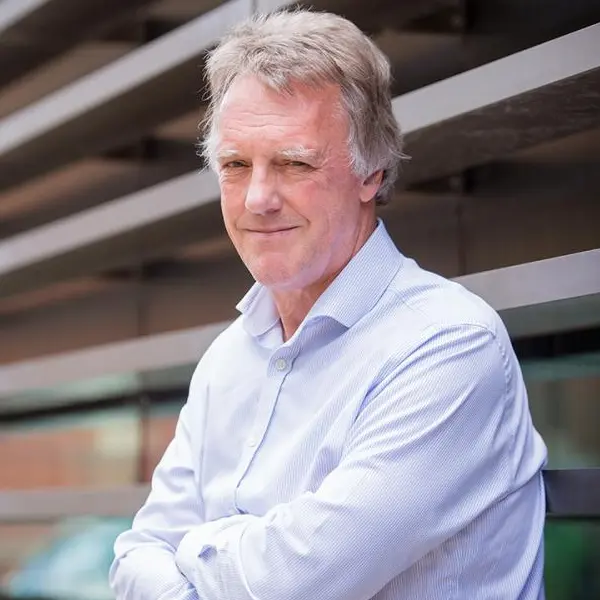
Sir Peter John Ratcliffe
2019 Nobel Laureate in Physiology or Medicine | Director of Clinical Research, Francis Crick Institute | Ludwig Institute, University of Oxford | Oxygen-Sensing Pioneer



Founder & President, Eurasia Group & GZERO Media | NY Times Bestselling Author | UN AI Advisory Body Rapporteur | Professor, Columbia SIPA
Ian Bremmer founded Eurasia Group with $25,000 and built it into the world's leading geopolitical risk firm, advising heads of state, central banks, and Fortune 500 boards across 90 countries. The inventor of the "G-Zero world" framework and a NY Times bestselling author, he now combines that analytical rigor with frontline AI governance experience from his role on the UN High-Level Advisory Body on Artificial Intelligence. No one translates geopolitical complexity into business strategy more precisely.
Want to book Ian Bremmer as a speaker for your event? Please provide the info below and we’ll get in touch within 24h:
Ian Bremmer is the world’s foremost authority on political risk and the geopolitics of the global economy. A political scientist by training, he earned his PhD from Stanford University and went on to become the youngest-ever national fellow at the Hoover Institution. In 1998, with $25,000 and a conviction that political risk was systematically underpriced by business and markets, he founded Eurasia Group, which has grown into the world’s leading geopolitical risk research and consulting firm, with offices in New York, Washington, London, São Paulo, Singapore, and Tokyo and a network of experts across 90 countries. He is also the founder of GZERO Media, a digital media company dedicated to making sense of international affairs for a global audience.
Global affairs speaker Ian Bremmer coined the term “G-Zero world” to describe the era we now inhabit: one in which no single country or coalition has the political will and capacity to set the international agenda or provide global public goods. That conceptual framework, introduced in his book Every Nation for Itself, has become the organizing lens through which policymakers, investors, and business leaders across the world understand the structural fragility of today’s geopolitical environment. He has since developed the related concept of “geopolitical recession” to describe the ongoing, generational unwinding of the US-led post-Cold War order and the vacuum of leadership it has left behind. His eleven books include two New York Times bestsellers: Us vs. Them: The Failure of Globalism and The Power of Crisis.
Bremmer’s work has expanded significantly into the intersection of technology and geopolitics. He served as rapporteur of the UN High-Level Advisory Body on Artificial Intelligence in 2023 and 2024, contributing to the first global initiative to address AI-related risks and governance at the international level. He is the foreign affairs columnist and editor-at-large for TIME magazine, hosts the weekly public television program GZERO World, and teaches applied geopolitics at Columbia University’s School of International and Public Affairs, where he delivered the commencement address in 2024. He is also a Senior Fellow at Harvard Kennedy School’s Belfer Center for Science and International Affairs.
As a global affairs speaker, Ian Bremmer delivers something no other figure can: an unbiased, independent reading of the geopolitical forces reshaping business conditions, investment environments, and strategic decisions in real time. His keynotes translate the complexity of US-China rivalry, the fracturing of the transatlantic order, the geopolitics of AI, and the structural volatility of global markets into actionable frameworks that senior executives, investors, and policymakers can use immediately. Audiences consistently describe him as the clearest, most useful voice available on the forces most likely to determine their organizations’ futures.
The post-Cold War order is over. No country or coalition has the will or capacity to replace it, and the result is a geopolitical environment defined by fragmentation, unpredictability, and the progressive breakdown of the institutions that once managed global risk. Drawing from his annual Top Risks report and his work advising the world's most consequential decision-makers, Bremmer maps the structural forces reshaping markets, supply chains, regulatory environments, and investment conditions, and gives senior audiences a practical framework for making better strategic decisions in a world where geopolitical risk is now a permanent operating condition rather than an occasional disruption.
The deterioration of the US-China relationship is the single most consequential geopolitical development of this era, and its implications extend far beyond diplomacy. Technology decoupling, trade fragmentation, competing infrastructure investments, and divergent regulatory environments are forcing every multinational organization to make strategic choices that will define their competitive position for decades. Bremmer provides the most rigorous and balanced available assessment of where this rivalry is headed, what it means for specific sectors and markets, and how business leaders can build strategies that are resilient across multiple scenarios rather than optimized for a single outcome.
Artificial intelligence is not just a technology story: it is a geopolitical one. The competition between the United States and China for AI supremacy, the governance vacuum at the international level, the concentration of AI power in a handful of private companies, and the questions of who benefits and who is left behind are reshaping the global balance of power in real time. Drawing from his experience as rapporteur of the UN High-Level Advisory Body on Artificial Intelligence, Bremmer offers the most informed perspective available on what the AI race means for governments, corporations, and societies, and what a more stable and equitable AI order would actually require.
Economies have recessions. Geopolitics has them too, and the current one is the longest and deepest since the Cold War ended. The post-Cold War order that underpinned three decades of globalization, open markets, and relative stability is unwinding, and the process will take years to resolve. Bremmer explains the mechanics of the geopolitical recession, why it is different from past periods of instability, and what it means for the leaders, institutions, and business models built for a world that no longer exists. A keynote that reframes the current environment not as a crisis to be managed but as a structural transition to be navigated strategically.
2019 Nobel Laureate in Physiology or Medicine | Director of Clinical Research, Francis Crick Institute | Ludwig Institute, University of Oxford | Oxygen-Sensing Pioneer

Former Director, NASA James Webb Space Telescope | TIME100 Most Influential People 2022 | Columbia University Faculty

4x European Champion Coach, FC Barcelona Handball | Bestselling Author | High-Performance & Leadership Expert
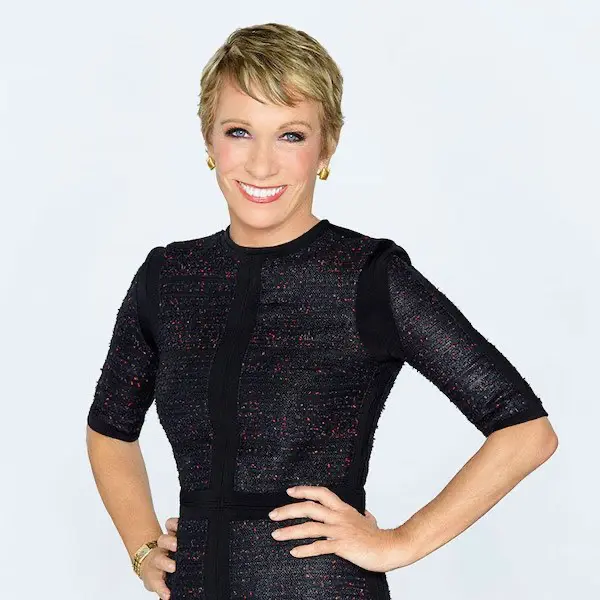
Founder, The Corcoran Group | Shark on ABC's Shark Tank | Bestselling Author & Podcast Host


© 2026 Aurum Speakers Bureau. All Rights Reserved

| Basic Data Protection Information | |
|---|---|
| Data controller | AURUM SPEAKERS BUREAU S.L. |
| Address | Parc Audiovisual de Catalunya 1, Oficina S11, 08225 Terrassa, Spain |
| Purposes | We will use your data to respond to your requests and deliver our services to you. |
| Marketing | We will only send you marketing correspondence if you have given your prior consent, which you can do by ticking the box for that purpose. |
| Lawful basis | We will only process your data if you have given your prior consent, which you can do by ticking the box for that purpose. |
| Recipients | Generally, only our members of staff who have been duly authorised may access the data that you have provided. |
| Your Rights | You have the right to know what information we hold about you, to rectify it and to erase it, as explained in the additional information available on our website. |
| Additional Information | For more information, please see our "PRIVACY POLICY". |