
Alan Sugar
Self-Made Billionaire & Entrepreneur | Founder of Amstrad | Host of BBC's The Apprentice | UK Government Enterprise Champion



Bestselling Author of The End of History | Olivier Nomellini Senior Fellow, Stanford FSI | Political Scientist on Democracy, Identity & Global Affairs
Few scholars have shaped the modern debate over democracy like Francis Fukuyama, whose The End of History and the Last Man became one of the most discussed books of its generation. A Stanford political scientist and bestselling author, he brings decades of experience in scholarship and statecraft to questions of governance, identity, and geopolitical change. Audiences gain a clear historical framework for understanding where global politics is heading.
Want to book Francis Fukuyama as a speaker for your event? Please provide the info below and we’ll get in touch within 24h:
Francis Fukuyama is one of the world’s most influential political thinkers, a scholar whose work on democracy, identity, and the long arc of political development has shaped how leaders and citizens understand the modern world. He is the Olivier Nomellini Senior Fellow at Stanford University’s Freeman Spogli Institute for International Studies and Director of the Ford Dorsey Master’s in International Policy.
Political speaker Francis Fukuyama is best known for The End of History and the Last Man, his landmark argument that liberal democracy and market capitalism might represent the endpoint of humanity’s ideological evolution. The thesis sparked decades of debate and remains a reference point for anyone analyzing the trajectory of nations. His later works, including Trust, The Origins of Political Order, Political Order and Political Decay, and Identity: The Demand for Dignity and the Politics of Resentment, extended his reach into the cultural and institutional foundations of prosperity, governance, and social cohesion.
His career bridges ideas and policy. He has served on the Policy Planning Staff of the U.S. State Department and as a researcher at the RAND Corporation, and today sits on the boards of the RAND Corporation, Freedom House, and the Volcker Alliance. He is also editor-in-chief of the journal American Purpose and a nonresident scholar at the Carnegie Endowment for International Peace. His work has earned him honorary degrees from universities across North America, Europe, and Asia.
In Liberalism and Its Discontents, Fukuyama offered a concise defense of classical liberal values against critics on both the left and the right. His intellectual memoir, In the Realm of the Last Man, traces five decades of political history through his own evolution, from his public break with neoconservatism over the Iraq War to his reflections on the crises now facing democracy and the liberal order.
As a speaker, Francis Fukuyama brings rare historical perspective to the questions senior audiences are grappling with: the resilience of democratic institutions, the geopolitical rise of China, the disruptive force of technology, and the future of the liberal world order. Audiences leave his keynotes with a sharper framework for understanding where global politics is heading and what it means for their organizations.
Drawing on a lifetime studying political order, Fukuyama examines why democratic institutions are under strain across both established and emerging democracies. He unpacks the forces driving polarization, populism, and declining trust, and offers a grounded view of what it takes to renew democratic governance rather than simply defend it. Leaders leave with a clearer sense of which institutional foundations matter most when the political ground is shifting.
Fukuyama assesses the changing balance of global power, with a focus on China's ambitions and the durability of the liberal international order. He explores how trade, technology, and competing models of governance are reshaping relationships between states, and what these shifts mean for organizations planning across borders. The session translates complex geopolitical currents into practical context for long-term decision-making.
Building on his influential work on identity, Fukuyama explores how the demand for recognition has become one of the defining forces in contemporary politics. He explains why questions of dignity, belonging, and status now drive movements across the political spectrum, and how leaders can understand these dynamics inside their own institutions and societies.
Tracing the deep history of how states, the rule of law, and accountable government emerge, Fukuyama explains what makes some societies resilient and others prone to decay. He connects these long-run patterns to present-day challenges of corruption, capacity, and reform, giving audiences a framework for thinking about institutional strength that reaches well beyond any single news cycle.
Self-Made Billionaire & Entrepreneur | Founder of Amstrad | Host of BBC's The Apprentice | UK Government Enterprise Champion
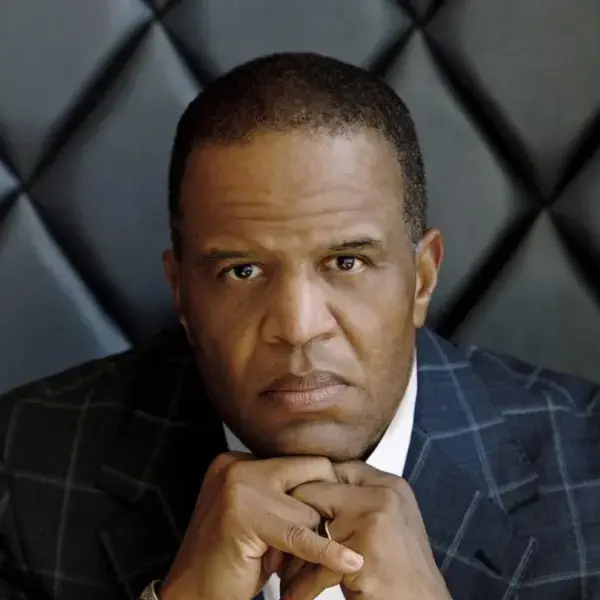
Founder, Chairman & CEO of Operation HOPE | "The Conscience of Capitalism" | Bestselling Author of Capitalism for All | Advisor to Three U.S. Presidents on Financial Inclusion

World-Renowned Mentalist & Hypnotist | America's Got Talent Breakout Star | DoD-Tested Expert in Influence & Persuasion | 1B+ Views

AI Futurist & Deep Tech Authority | Former CIO, Telefonica Alpha | Former Head of Innovation, Autodesk | 13M+ TED Talk Views | 12+ Patents


© 2026 Aurum Speakers Bureau. All Rights Reserved

| Basic Data Protection Information | |
|---|---|
| Data controller | AURUM SPEAKERS BUREAU S.L. |
| Address | Parc Audiovisual de Catalunya 1, Oficina S11, 08225 Terrassa, Spain |
| Purposes | We will use your data to respond to your requests and deliver our services to you. |
| Marketing | We will only send you marketing correspondence if you have given your prior consent, which you can do by ticking the box for that purpose. |
| Lawful basis | We will only process your data if you have given your prior consent, which you can do by ticking the box for that purpose. |
| Recipients | Generally, only our members of staff who have been duly authorised may access the data that you have provided. |
| Your Rights | You have the right to know what information we hold about you, to rectify it and to erase it, as explained in the additional information available on our website. |
| Additional Information | For more information, please see our "PRIVACY POLICY". |