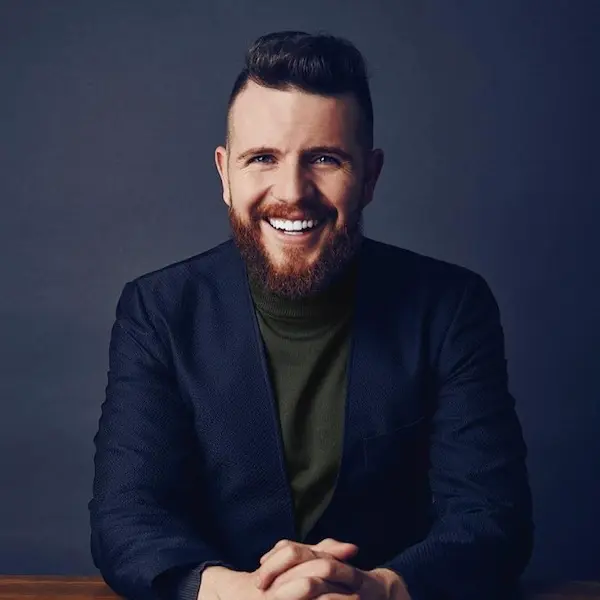
Daniel Habif
One of the World's Most Influential Spanish-Speaking Motivational Speakers | Bestselling Author of Inquebrantables, Las Trampas del Miedo & Ruge | Forbes Columnist


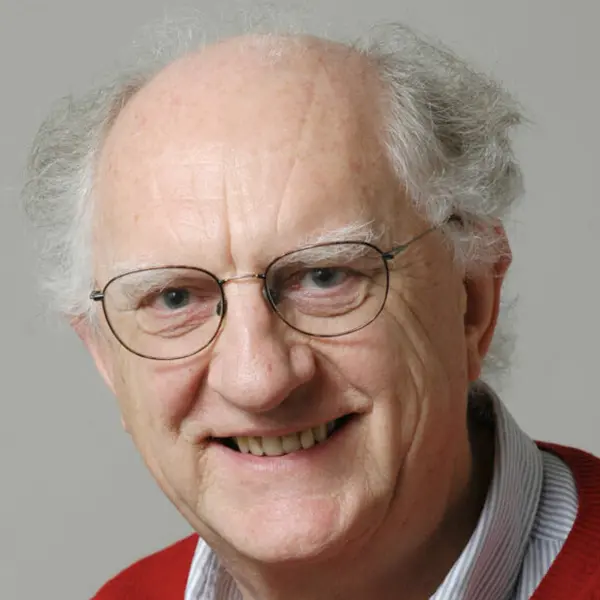
2025 Nobel Laureate in Physics | Professor Emeritus, UC Berkeley | Pioneer of Quantum Computing & Superconducting Electronics
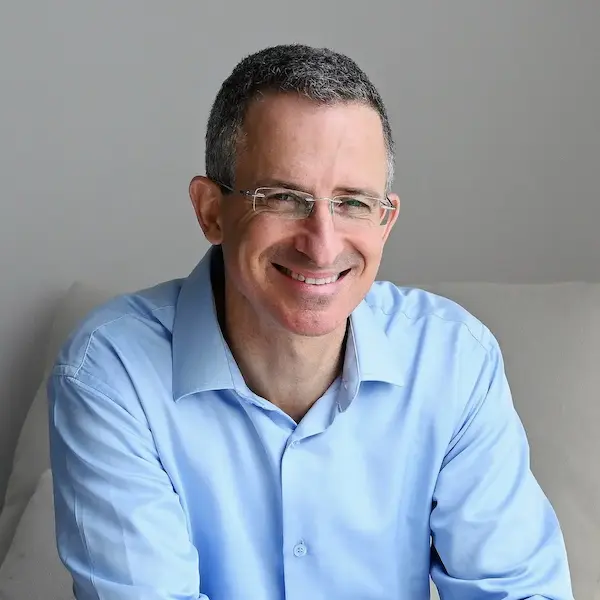
A 2025 Nobel Laureate in Physics, John Clarke led the Berkeley experiments that proved quantum behavior exists at macroscopic scale, laying the physical foundation for today's quantum computers. The "godfather of superconducting electronics," his work on SQUIDs and Josephson junctions now underpins everything from dark matter detection to qubit readout. Audiences gain rare first-hand insight into how transformative science actually happens.
Want to book John Clarke as a speaker for your event? Please provide the info below and we’ll get in touch within 24h:
John Clarke is a 2025 Nobel Laureate in Physics whose foundational experiments helped unlock the quantum world at a scale that engineers could actually build with. Professor Emeritus of Physics at the University of California, Berkeley, where he has been on faculty since 1969, Clarke is widely regarded as one of the most consequential experimental physicists of his generation. His former colleague Steven Girvin has called him “the godfather of superconducting electronics.”
Nobel Prize speaker John Clarke is best known for leading the Berkeley team that, in landmark experiments conducted in 1984 and 1985, demonstrated that quantum mechanical behavior, long thought to be exclusive to the atomic and subatomic realm, could be observed at a macroscopic scale in an electrical circuit. Working alongside Michel H. Devoret and John M. Martinis, Clarke designed a superconducting circuit incorporating a Josephson junction and proved that the system underwent both quantum tunneling and discrete energy quantization. This discovery became the experimental cornerstone of circuit quantum electrodynamics and laid the physical foundation for the superconducting qubits now powering many of the world’s leading quantum computers.
Clarke received his B.A. in Physics from Cambridge University in 1964 and completed his Ph.D. in 1968 at the Cavendish Laboratory, the same institution that produced a long lineage of Nobel laureates. He joined UC Berkeley the following year and built one of the world’s foremost laboratories for superconducting electronics. His honors include Fellowship in the Royal Society of London, the Fritz London Memorial Award for low-temperature physics, the National Academy of Sciences Comstock Prize in Physics, the Hughes Medal, and the UC Berkeley Distinguished Teaching Award.
Beyond the Nobel-winning experiments, Clarke is the architect of transformative work on Superconducting Quantum Interference Devices, or SQUIDs, ultrasensitive detectors of magnetic flux capable of measuring fields 100 billion times smaller than those produced by an ordinary refrigerator magnet. SQUIDs have found applications across geophysics, biomedical imaging, materials evaluation, and brain mapping. Clarke has also led collaboration with the Axion Dark Matter Experiment (ADMX), for which he developed low-noise quantum amplifiers now used both in dark matter searches and to read out qubits in quantum computers.
As a speaker, John Clarke brings one of science’s most extraordinary living stories directly to senior audiences: the unlikely chain from a Cambridge laboratory to the architecture of tomorrow’s most powerful computers. He speaks with the precision of a career experimentalist and the perspective of someone who worked on foundational discoveries decades before the world understood their full implications. Organizations working on deep technology, quantum strategy, innovation culture, or the future of computing gain rare first-hand insight into how paradigm-shifting science actually gets done, and what it means for the decisions they face today.
In this keynote, Clarke takes audiences inside the landmark 1984–1985 experiments that proved quantum behavior could be harnessed in an everyday electrical circuit. He explains, without requiring a physics background, why those findings were so unexpected, what the research team actually went through, and how a series of carefully designed laboratory tests became the physical blueprint for the quantum computers now being built by Google, IBM, and others. Equal parts science history and forward-looking strategy, this talk transforms abstract quantum concepts into concrete implications for technology leaders.
Drawing on over five decades at the frontier of experimental physics, Clarke makes the case for why fundamental scientific inquiry, often dismissed as impractical, consistently produces the most consequential technologies. Using his own career as a thread, he traces the unexpected path from superconducting circuits to quantum computing and dark matter detection, offering a compelling framework for how organizations should think about long-horizon research investment. A powerful talk for R&D leaders, policymakers, and innovators who need to articulate the value of science that won't pay off for decades.
Clarke explores the extraordinary sensitivity of superconducting quantum interference devices and the remarkable range of problems they help solve, from mapping the magnetic fields of the human brain to hunting for dark matter in the universe. This keynote bridges cutting-edge physics and real-world application, showing how the same quantum principles that underlie a quantum computer also enable medical breakthroughs and cosmological discovery. Ideal for science-forward audiences curious about where the boundaries of human knowledge currently stand.
One of the World's Most Influential Spanish-Speaking Motivational Speakers | Bestselling Author of Inquebrantables, Las Trampas del Miedo & Ruge | Forbes Columnist
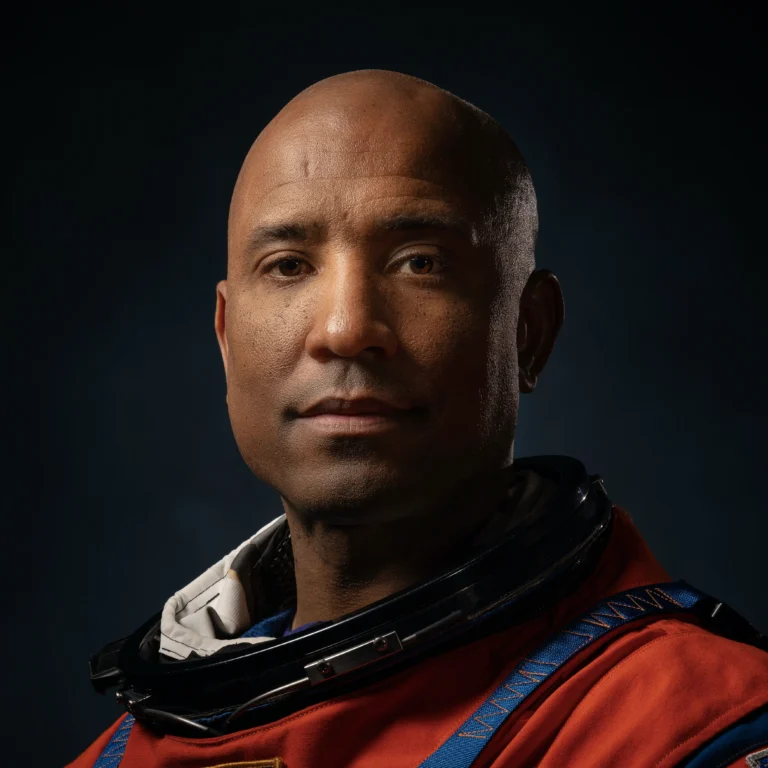
NASA Astronaut & Pilot of the Artemis II Moon Mission | U.S. Navy Captain & Test Pilot | SpaceX Crew-1 Pilot | First Person of Color to Travel to the Moon
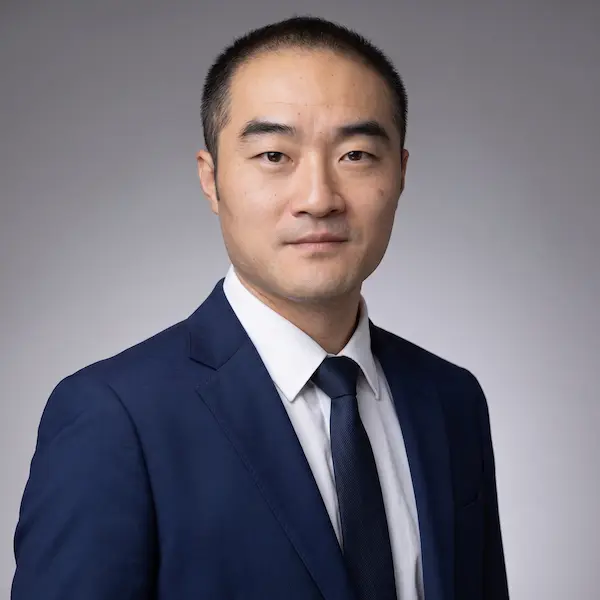
Co-Founder & Founding CEO of Crunchyroll | Co-Founder & CEO of Forge | Co-Founder of GGWP | Serial Entrepreneur in Content, Community & Gaming
Founder, Happiness Studies Academy | Creator, World's First MA in Happiness Studies | Former Harvard Lecturer | New York Times Bestselling Author | Positive Psychology Expert


© 2026 Aurum Speakers Bureau. All Rights Reserved

| Basic Data Protection Information | |
|---|---|
| Data controller | AURUM SPEAKERS BUREAU S.L. |
| Address | Parc Audiovisual de Catalunya 1, Oficina S11, 08225 Terrassa, Spain |
| Purposes | We will use your data to respond to your requests and deliver our services to you. |
| Marketing | We will only send you marketing correspondence if you have given your prior consent, which you can do by ticking the box for that purpose. |
| Lawful basis | We will only process your data if you have given your prior consent, which you can do by ticking the box for that purpose. |
| Recipients | Generally, only our members of staff who have been duly authorised may access the data that you have provided. |
| Your Rights | You have the right to know what information we hold about you, to rectify it and to erase it, as explained in the additional information available on our website. |
| Additional Information | For more information, please see our "PRIVACY POLICY". |