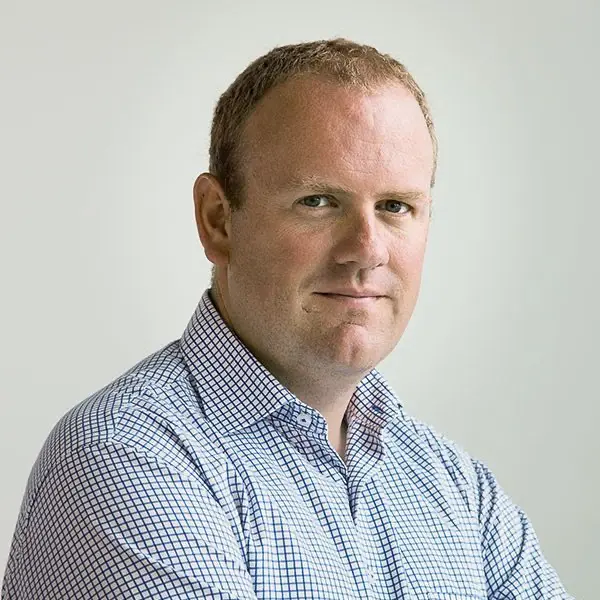
Steven Van Belleghem
Bestselling Author | Customer Experience & AI Expert | Professor, Vlerick Business School | Co-Founder, Nexxworks

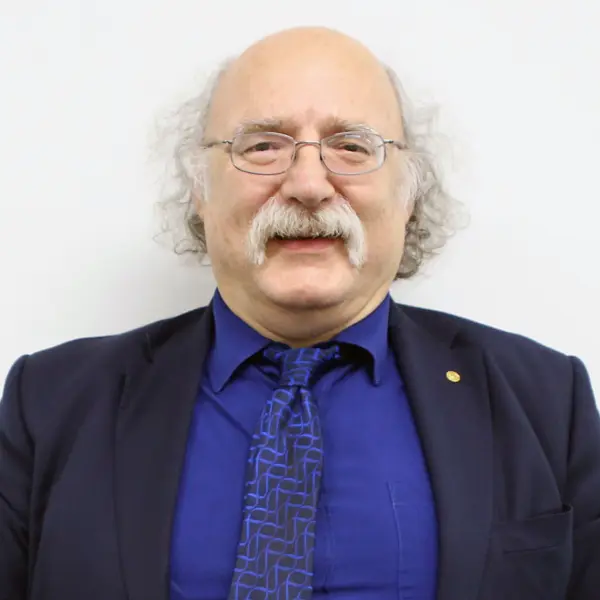
2016 Nobel Laureate in Physics | Sherman Fairchild University Professor of Physics, Princeton | Fellow of the Royal Society | Pioneer of Topological Quantum Matter
Duncan Haldane showed that topology, the mathematics of shape, governs the quantum behavior of matter, and won the Nobel Prize in Physics for it. Ideas he published against the consensus of the day now underpin the global effort to build stable quantum computers. On stage, he gives senior audiences a first-hand view of how breakthrough ideas are born, resisted, and vindicated, and what that means for anyone betting on long-term innovation.
Want to book Duncan Haldane as a speaker for your event? Please provide the info below and we’ll get in touch within 24h:
F. Duncan M. Haldane is a theoretical physicist whose once-rejected ideas became the foundation of an entire field. Nobel Prize speaker Duncan Haldane shared the 2016 Nobel Prize in Physics with David J. Thouless and J. Michael Kosterlitz “for theoretical discoveries of topological phase transitions and topological phases of matter.” He is the Sherman Fairchild University Professor of Physics at Princeton University, where his work continues to reshape how scientists understand quantum matter.
Haldane’s breakthrough was to apply topology, the mathematics of properties that survive stretching and bending, to the behavior of electrons and magnetic atoms. In the early 1980s he predicted that chains of magnetic atoms behave in fundamentally different ways depending on whether their quantum spin is integer or half-integer. The prediction defied the consensus of the day and met strong resistance before experiments confirmed it. Today the result, known as the Haldane phase, is recognized as the first example of topological quantum matter.
In 1988 he went further, showing with a graphene-like model that the quantum Hall effect could arise without any external magnetic field, driven purely by the topology of a material’s electronic bands. Long treated as a theoretical curiosity, the Haldane model became the blueprint for Chern insulators and topological insulators, materials that conduct along their edges while insulating in their interior. Their experimental realization set off a global wave of research and helped launch topological photonics.
Haldane was educated at St Paul’s School in London and Christ’s College, Cambridge, where he earned his PhD under Nobel laureate Philip W. Anderson. He held positions at the Institut Laue–Langevin in Grenoble, the University of Southern California, and the University of California San Diego before joining Princeton. His honors include the Oliver E. Buckley Condensed Matter Physics Prize, the ICTP Dirac Medal, Fellowship of the Royal Society, and membership in the U.S. National Academy of Sciences. His current research explores the quantum geometry of the fractional quantum Hall effect.
As a speaker, Duncan Haldane offers audiences a rare first-hand account of how transformative discoveries happen. He explains why major breakthroughs often begin as unwelcome predictions and why rigorous reasoning must sometimes override prevailing intuition. For leaders in science, technology, finance, and innovation, he brings clarity to the quantum technology race and a lesson in intellectual courage: follow the logic wherever it leads, even before anyone else believes it.
Haldane explains how topology, the mathematics of shapes that survive continuous deformation, turned out to be the hidden language behind some of matter's most unusual behaviors. He follows the path from abstract theory to a worldwide research field with direct consequences for quantum computing, next-generation electronics, and materials science. Clear and authoritative, the talk gives executive audiences a grounded sense of where the quantum technology revolution truly comes from and why its scientific foundations are stronger than the headlines suggest.
A personal account of publishing work the field considered mistaken, waiting years for experiments to catch up, and seeing those ideas recognized with a Nobel Prize more than three decades later. Haldane draws on resisted papers and predictions once dismissed as mathematical fantasy to show how paradigm shifts actually unfold. The session speaks to audiences interested in innovation culture, intellectual courage, and the patience that transformative ideas demand.
Why the physics of topological quantum states sits at the center of one of the most consequential technology races of our time. Haldane outlines how topologically protected systems offer a different route to fault-tolerant quantum computation, the scientific and engineering hurdles that remain, and why theory developed decades ago is now yielding results at an accelerating pace. Built for technology, investment, and policy audiences who want an authoritative, hype-free view of where quantum computing is headed.
In condensed matter physics, abstract predictions have repeatedly preceded experimental and commercial breakthroughs by decades. Haldane uses that history to offer leaders a framework for long-term innovation: how fundamental research feeds applied technology, which institutional conditions let unorthodox ideas survive long enough to matter, and why the most transformative advances are rarely recognized when they first appear. A strategic session for R&D leaders, investors, and executives building environments where the next major idea can take root.
Bestselling Author | Customer Experience & AI Expert | Professor, Vlerick Business School | Co-Founder, Nexxworks
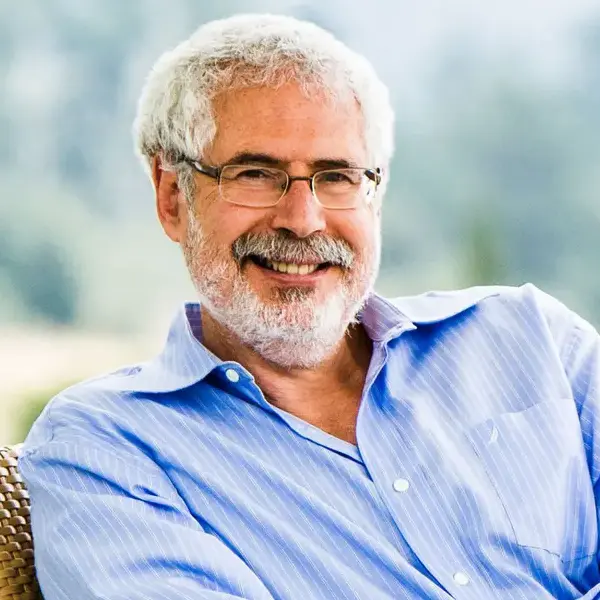
Father of the Lean Startup Movement | Adjunct Professor, Stanford | Senior Fellow, Gordian Knot Center for National Security Innovation | Thinkers50
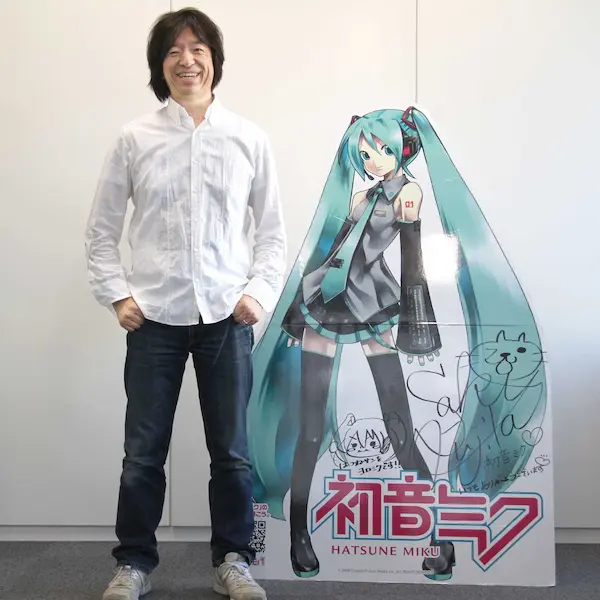
Creator of Hatsune Miku | Founder & CEO, Crypton Future Media | Professor, Kyoto College of Graduate Studies for Informatics | On Creativity, Virtual Artists & Co-Creation

Johnstone Professor of Psychology, Harvard | Author, Better Angels, Enlightenment Now & When Everyone Knows | BBVA Frontiers of Knowledge Award


© 2026 Aurum Speakers Bureau. All Rights Reserved

| Basic Data Protection Information | |
|---|---|
| Data controller | AURUM SPEAKERS BUREAU S.L. |
| Address | Parc Audiovisual de Catalunya 1, Oficina S11, 08225 Terrassa, Spain |
| Purposes | We will use your data to respond to your requests and deliver our services to you. |
| Marketing | We will only send you marketing correspondence if you have given your prior consent, which you can do by ticking the box for that purpose. |
| Lawful basis | We will only process your data if you have given your prior consent, which you can do by ticking the box for that purpose. |
| Recipients | Generally, only our members of staff who have been duly authorised may access the data that you have provided. |
| Your Rights | You have the right to know what information we hold about you, to rectify it and to erase it, as explained in the additional information available on our website. |
| Additional Information | For more information, please see our "PRIVACY POLICY". |