
Dame Wendy Hall
Pioneering Computer Scientist & Authority on AI Governance | UN AI Advisory Body & Co-Chair of the UK Government's AI Review | DBE, FRS & Regius Professor at Southampton



ACM Turing Award Laureate | Pioneer of RISC & RAID | Distinguished Engineer, Google DeepMind | Pardee Professor Emeritus, UC Berkeley
The architect of modern computing, David Patterson invented RISC — the design behind 99% of all chips made today — and co-invented RAID storage, earning the 2017 Turing Award (the Nobel Prize of Computing) and the 2022 Draper Prize. Now a Distinguished Engineer at Google DeepMind and Chairman of the Laude Institute, he speaks with unique authority on AI hardware, the next era of computing, and fifty years of lessons from the frontier.
Want to book David Patterson as a speaker for your event? Please provide the info below and we’ll get in touch within 24h:
David Patterson is one of the most decorated and consequential figures in the history of computing — a Turing Award laureate whose foundational inventions underpin virtually every processor, storage system, and AI accelerator in use today. As Pardee Professor of Computer Science, Emeritus at the University of California, Berkeley, and Distinguished Engineer at Google DeepMind, Patterson has spent five decades at the intersection of rigorous academic research and transformative industrial impact.
Technology speaker David Patterson is perhaps best known for coining the term RISC — Reduced Instruction Set Computing — and leading the Berkeley RISC project that proved a simplified instruction set could outperform the dominant complex-instruction architectures of the era. Today, 99% of all new chips ship with a RISC architecture, powering every smartphone, tablet, and IoT device on the planet. Alongside RISC, Patterson led the Berkeley research that defined RAID — Redundant Arrays of Inexpensive Disks — the storage architecture that became the backbone of modern data centers and web infrastructure worldwide.
His collaboration with Stanford’s John Hennessy produced Computer Architecture: A Quantitative Approach — now in its seventh edition (2026) — the definitive textbook of the field, studied by generations of engineers across every major technology company. That partnership earned both men the 2017 ACM A.M. Turing Award, often called the Nobel Prize of Computing, for their systematic, quantitative approach to computer architecture design. They subsequently shared the 2021 BBVA Foundation Frontiers of Knowledge Award and the 2022 NAE Charles Stark Draper Prize for Engineering — considered the Nobel Prize of Engineering — for contributions to the invention and implementation of RISC chips.
Patterson’s impact extends powerfully into the AI era. At Google, he co-led research on the Tensor Processing Unit (TPU), the domain-specific hardware accelerator that became the backbone of Google’s AI infrastructure — including the systems that power large language models at scale. His work on domain-specific architectures articulates the core argument of the next wave of computing: that general-purpose processors can no longer keep pace with AI workloads, and that purpose-built hardware represents the path to continued performance gains. In 2025, Patterson became Chairman of the Board at the Laude Institute, a $100M AI research organization founded to bridge the gap between frontier research and real-world impact, alongside Google DeepMind Chief Scientist Jeff Dean and former Meta AI Research head Joelle Pineau. He also remains an active voice on technology policy, publishing in Communications of the ACM and The Hill on the critical importance of government-funded academic computer science research.
As a speaker, David Patterson brings the authority of someone who has built the infrastructure of the modern world — and who understands where it is heading next. His keynotes on the new golden age of computer architecture, the AI hardware revolution, and the lessons of fifty years at the frontier of computing resonate deeply with technology executives, engineering leaders, and innovation-focused audiences. He translates decades of breakthrough research into clear, forward-looking frameworks for what comes next in AI, chips, and computing at scale.
For decades, Moore's Law drove predictable performance gains and allowed software to improve simply by waiting for the next chip generation. That era is over — but a new one is beginning. In this landmark talk, Patterson argues that domain-specific architectures, open instruction sets like RISC-V, and purpose-built AI accelerators are ushering in a new golden age of computing, one driven not by transistor density but by intelligent co-design of hardware and software. Drawing on fifty years at the frontier — from RISC-I to the TPU — he gives technology leaders a clear-eyed framework for where the next decade of computing performance will come from and what it means for AI, cloud, and enterprise infrastructure.
The explosive demands of modern AI workloads have exposed the fundamental limits of general-purpose processors. In this talk, Patterson explains why the future of AI performance lies in purpose-built hardware — tensor processing units, neural network accelerators, and memory-centric architectures — and what this shift means for organizations building or deploying AI at scale. He draws on his direct experience leading TPU research at Google to explain how hardware and AI model design must now co-evolve, and what executives and technology leaders need to understand about the infrastructure decisions that will define competitive advantage in the AI era.
For most of computing history, the instruction sets at the heart of processors have been proprietary — controlled by Intel, ARM, or a handful of other companies. RISC-V, the open-source instruction set architecture that Patterson helped pioneer, is changing that. In this talk, he explains what RISC-V is, why it matters, and how an open architecture enables a new wave of innovation in chips for AI, IoT, and edge computing. He connects the technical argument to a broader strategic one: in a world of geopolitical technology competition and supply chain fragility, open hardware infrastructure represents a fundamental shift in where computing power comes from and who controls it.
From RISC and RAID to the TPU and RISC-V, Patterson's career spans the entire arc of the modern computing industry. In this reflective and forward-looking keynote, he distills the principles that have made breakthrough research possible: the importance of asking the right questions, building interdisciplinary teams, insisting on quantitative evidence, and having the courage to challenge prevailing wisdom. This talk is as relevant for executives navigating AI transformation as it is for engineers and researchers — a master class in turning academic insight into technology that shapes the world.
Pioneering Computer Scientist & Authority on AI Governance | UN AI Advisory Body & Co-Chair of the UK Government's AI Review | DBE, FRS & Regius Professor at Southampton
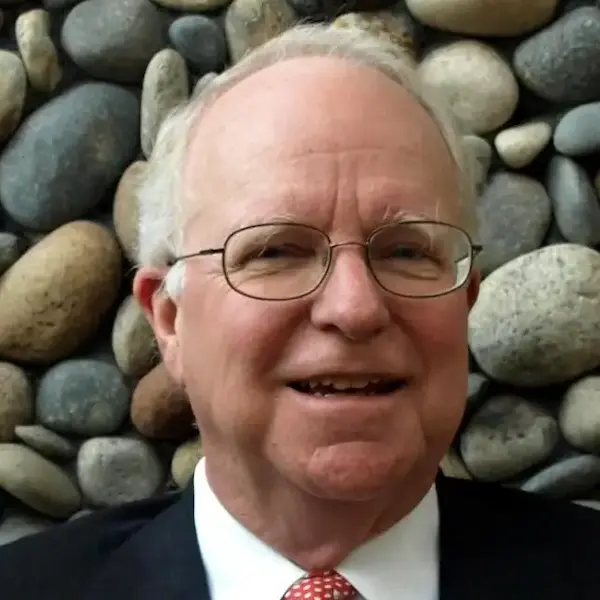
2026 Nobel Laureate in Economic Sciences | Professor of Economics, Stanford University & Senior Fellow, Hoover Institution | Pioneer of Modern Macroeconomics

Global AI Advisor, Author & Researcher | Co-Founder of Korza | Former Head of Go-To-Market at OpenAI

2019 Nobel Laureate in Economic Sciences | University Professor, University of Chicago | Director, Development Innovation Lab | Pioneer of the Randomized Controlled Trial Revolution


© 2026 Aurum Speakers Bureau. All Rights Reserved

| Basic Data Protection Information | |
|---|---|
| Data controller | AURUM SPEAKERS BUREAU S.L. |
| Address | Parc Audiovisual de Catalunya 1, Oficina S11, 08225 Terrassa, Spain |
| Purposes | We will use your data to respond to your requests and deliver our services to you. |
| Marketing | We will only send you marketing correspondence if you have given your prior consent, which you can do by ticking the box for that purpose. |
| Lawful basis | We will only process your data if you have given your prior consent, which you can do by ticking the box for that purpose. |
| Recipients | Generally, only our members of staff who have been duly authorised may access the data that you have provided. |
| Your Rights | You have the right to know what information we hold about you, to rectify it and to erase it, as explained in the additional information available on our website. |
| Additional Information | For more information, please see our "PRIVACY POLICY". |