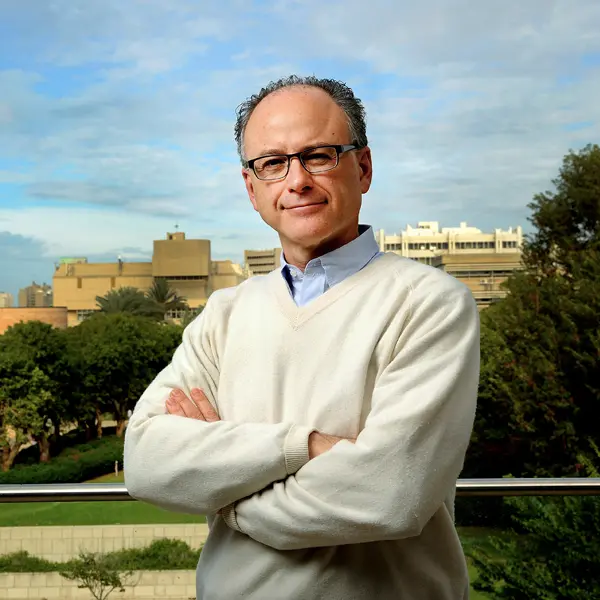
Sydney Finkelstein
Steven Roth Professor of Management, Tuck School of Business, Dartmouth | Bestselling Author of Superbosses & Why Smart Executives Fail | Authority on Leadership & Talent | Thinkers50-Ranked


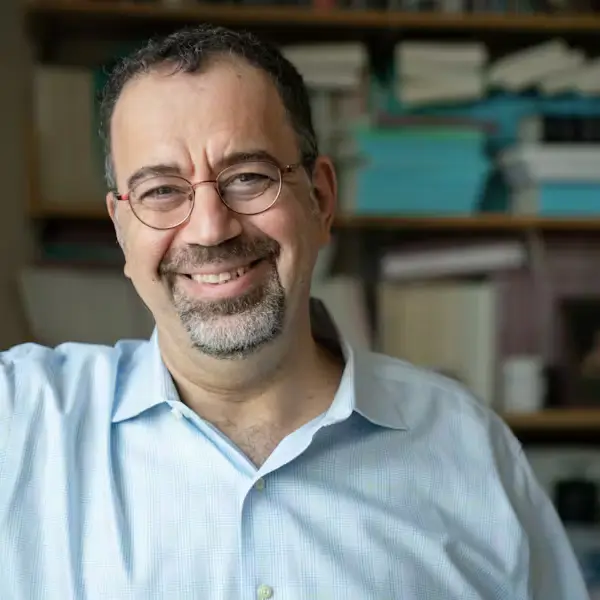
2024 Nobel Laureate in Economic Sciences | MIT Institute Professor | Institutions, Democracy & the Future of AI
The world's foremost authority on why nations succeed or fail, Daron Acemoglu won the 2024 Nobel Prize in Economics for proving that institutions, not geography or culture, determine prosperity. MIT's highest-ranked professor and author of the bestseller Why Nations Fail, he shows leaders how to govern AI, sustain growth, and protect democracy.
Want to book Daron Acemoglu as a speaker for your event? Please provide the info below and we’ll get in touch within 24h:
Daron Acemoglu is the 2024 Nobel Laureate in Economic Sciences and one of the most influential economists working today. As MIT Institute Professor, the university’s highest faculty distinction, and co-director of the Stone Center on Inequality and Shaping the Future of Work, he has spent three decades building research that reshapes how leaders, policymakers, and organizations understand prosperity, power, and the forces that separate thriving societies from failing ones.
Economics speaker Daron Acemoglu is best known for a landmark body of work, developed with James A. Robinson and Simon Johnson, demonstrating that the political and economic institutions a society builds determine whether it prospers or stagnates. By studying the divergent legacies of European colonialism, the trio established a causal link between inclusive institutions, which distribute power and opportunity broadly, and long-run growth. Extractive institutions, which concentrate both in the hands of a few, produce poverty and stagnation. The framework gave decision-makers a rigorous lens for evaluating governance, regulation, industrial policy, and democratic resilience.
His recognition extends well beyond the Nobel. Acemoglu holds the John Bates Clark Medal (awarded to the most impactful U.S. economist under 40), the BBVA Frontiers of Knowledge Award, the Global Economy Prize from the Kiel Institute, and fellowships in the National Academy of Sciences, the British Academy, and the American Academy of Arts and Sciences. He consistently ranks among the world’s most cited economists, and in 2024 the readers of Prospect Magazine named him the world’s top thinker.
Acemoglu’s research has evolved to address the defining tensions of the current era. His book Power and Progress: Our Thousand-Year Struggle Over Technology and Prosperity, co-authored with Simon Johnson, argues that technological advances, from the printing press to artificial intelligence, do not automatically benefit society. How those gains are distributed depends on the institutions and power structures that shape how a technology is deployed. His earlier New York Times bestseller Why Nations Fail, co-authored with Robinson, has sold millions of copies and ranks among the most important works of political economy in decades. The MIT Economics Department reflects the full range of his output, spanning political economy, development, labor markets, inequality, and the economics of AI and automation.
As a speaker, Daron Acemoglu brings a rare combination of Nobel-caliber authority and genuine urgency about the choices societies face right now. His keynotes address why strong institutions are the foundation of sustained prosperity, how AI can either widen or close inequality depending on how it is governed, and what history teaches about handling technological disruption without sacrificing democratic inclusion. Senior audiences, from boards and government ministers to C-suite leaders and global policy forums, value his ability to connect rigorous research to practical questions of strategy, governance, and organizational design. Booking Daron Acemoglu gives your audience the tools to think more clearly about the forces reshaping nations, industries, and the future of work.
Drawing on the research that earned him the Nobel Prize, Acemoglu explains why some societies build engines of long-run growth while others remain trapped in cycles of poverty and instability. He shows that the critical variable is not geography, culture, or natural resources but the quality of a nation's political and economic institutions. This keynote gives audiences a powerful analytical lens for evaluating governance, regulatory design, and the conditions under which markets and innovation truly flourish.
Acemoglu argues that artificial intelligence is not inevitably good or bad for society; the outcome depends on choices being made right now by companies, governments, and citizens. Drawing on Power and Progress, he examines how technology has historically concentrated wealth and power, and what it would take to steer AI toward broader prosperity. Essential for leaders in technology, finance, and policy who need a framework for responsible AI governance and long-term competitive strategy.
From the collapse of ancient republics to the erosion of modern democracies, Acemoglu traces the conditions under which free societies either sustain or undermine themselves. He examines the role of economic inequality, information asymmetry, and institutional weakness in enabling democratic backsliding, and what both leaders and organizations can do to strengthen the foundations of open societies. A high-stakes keynote for boards, government audiences, and global policy forums.
Based on The Narrow Corridor, Acemoglu explores why liberty and prosperity require a precise, fragile balance between a capable state and an active civil society. He maps where major economies sit in this corridor today, and what the historical record says about how to stay in it. A strategic keynote for leaders facing geopolitical uncertainty, regulatory change, and institutional design.
Steven Roth Professor of Management, Tuck School of Business, Dartmouth | Bestselling Author of Superbosses & Why Smart Executives Fail | Authority on Leadership & Talent | Thinkers50-Ranked

Founder, Global Innovation Index (WIPO) | Former Dean, Cornell SC Johnson & Oxford Saïd | President, Portulans Institute | Board Member, Dassault Systèmes

Futurist for Leaders | CEO of Tomorrow | Bestselling Author | AI, Innovation & Organizational Reinvention

Behavioral Researcher & Founder of Science of People | Bestselling Author of Captivate, Cues, and Conversation | Expert on Charisma, Communication & Human Behavior


© 2026 Aurum Speakers Bureau. All Rights Reserved

| Basic Data Protection Information | |
|---|---|
| Data controller | AURUM SPEAKERS BUREAU S.L. |
| Address | Parc Audiovisual de Catalunya 1, Oficina S11, 08225 Terrassa, Spain |
| Purposes | We will use your data to respond to your requests and deliver our services to you. |
| Marketing | We will only send you marketing correspondence if you have given your prior consent, which you can do by ticking the box for that purpose. |
| Lawful basis | We will only process your data if you have given your prior consent, which you can do by ticking the box for that purpose. |
| Recipients | Generally, only our members of staff who have been duly authorised may access the data that you have provided. |
| Your Rights | You have the right to know what information we hold about you, to rectify it and to erase it, as explained in the additional information available on our website. |
| Additional Information | For more information, please see our "PRIVACY POLICY". |