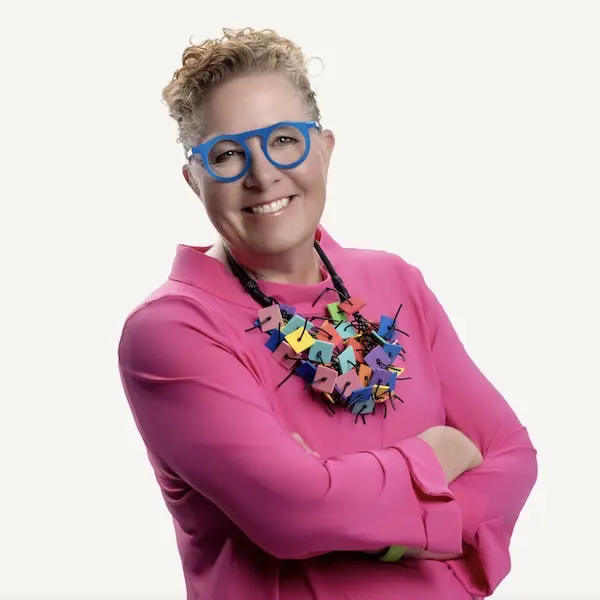
Heather McGowan
Future of Work Strategist | Forbes Top Futurist | Two-Time Bestselling Author | Honorary Doctorate, PA College of Art & Design


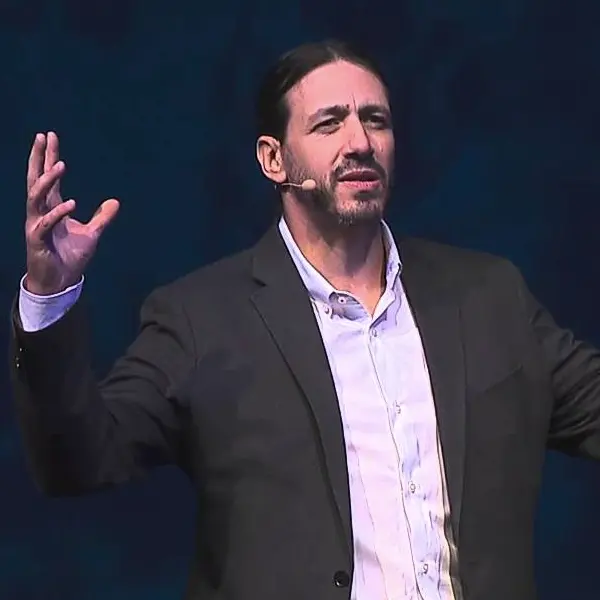
"Indiana Jones of Positive Psychology" | Author, The Upside of Your Dark Side & Happiness | Founder, Positive Acorn | Named by Thinkers50 Among 50 Most Influential Executive Coaches | Son of Ed Diener
Happiness research has traditionally focused on comfortable, Western populations. Robert Biswas-Diener went where others wouldn't—to Inuit hunters, Maasai tribespeople, and the slums—proving that wellbeing transcends circumstance and culture. As the "Indiana Jones of Positive Psychology" and author of the bestselling Upside of Your Dark Side, he challenges the field he helped build, revealing that negative emotions serve essential functions and relentless positivity limits potential.
Want to book Robert Biswas-Diener as a speaker for your event? Please provide the info below and we’ll get in touch within 24h:
Robert Biswas-Diener, Ph.D., is a pioneering positive psychologist, researcher, and international speaker known for studying happiness and wellbeing in the world’s most overlooked populations. Dubbed the “Indiana Jones of Positive Psychology,” his fieldwork has taken him from Inuit seal hunters in Greenland to Maasai tribespeople in Kenya, from sex workers in Kolkata to Amish farmers in the American Midwest, producing groundbreaking insights into what makes life meaningful across radically different cultural contexts.
Happiness speaker Robert Biswas-Diener is the son of Ed Diener, the legendary psychologist who pioneered the scientific study of happiness and became one of the most cited scientists in history. Growing up in a family of psychologists—both parents and twin sisters all in the field—Robert absorbed dinner table conversations about innovative research methods and human behavior. Rather than following the traditional academic path, he forged his own unique approach, leaving the laboratory to conduct research with communities typically invisible to mainstream psychology. His first study examined happiness among homeless people and sex workers in Kolkata, attracted to the counter-intuitive possibility that wellbeing could exist in the harshest circumstances. This early work established his reputation for challenging assumptions and revealing unexpected truths about human resilience.
Biswas-Diener has authored nine influential books that bridge rigorous science with practical application. He co-authored Happiness: Unlocking the Mysteries of Psychological Wealth with his father Ed Diener, which won the 2008 PROSE Award for Excellence in Psychology and introduced the concept of psychological wealth—extending beyond material riches to encompass attitudes, social support, meaning, and frequent positive emotions. The book became a landmark text, demonstrating that happiness is beneficial for health, relationships, work success, and longevity, while cautioning that “super-happiness” is neither realistic nor desirable.
His New York Times bestseller The Upside of Your Dark Side: Why Being Your Whole Self—Not Just Your Good Self—Drives Success and Fulfillment, co-authored with Todd Kashdan, challenges the positive psychology movement itself, arguing that negative emotions like anger, guilt, and anxiety serve crucial functions. Named an Audible Best Seller, Inc. Great Business Book, and one of New York Magazine’s Best Psychology Books, it reveals that anger fuels creativity, guilt sparks improvement, selfishness increases courage, and mindfulness can sometimes hinder performance. The book champions “emotional agility”—the capacity to access one’s full psychological toolkit rather than suppressing difficult emotions. His other books include Practicing Positive Psychology Coaching, The Courage Quotient, Positive Provocation, and Radical Listening.
Biswas-Diener has published more than 75 peer-reviewed academic articles with a citation count exceeding 28,000, including four “citation classics” cited over 1,000 times each. His research focuses on income and happiness, culture and happiness, character strengths, courage, and hospitality. He serves as co-founder of Positive Acorn, an ICF-accredited coaching program training professionals worldwide in evidence-based positive psychology. In 2024, Thinkers50 named him among the 50 most influential executive coaches in the world, recognizing his pioneering contributions to applying positive psychology to coaching practice.
As a speaker, Robert Biswas-Diener delivers presentations that blend anthropological storytelling with scientific rigor, humor with insight, and provocative questioning with actionable strategies. Audiences describe receiving “two presentations for the price of one—the main content and a masterclass on how to present.” He teaches organizations how to leverage the full spectrum of human emotion for peak performance, challenges simplistic notions of happiness that limit potential, and provides frameworks for building genuine resilience grounded in cultural intelligence and psychological sophistication. Leaders, coaches, and teams leave equipped with research-backed tools to navigate complexity, cultivate strengths appropriately to context, and embrace wholeness over relentless positivity.
Positive psychology has taught us to cultivate optimism, gratitude, and mindfulness—but what if the relentless pursuit of positivity actually limits our potential? Robert Biswas-Diener presents groundbreaking research revealing that anger, guilt, anxiety, and other "negative" emotions serve crucial functions that make us more creative, effective, and authentic. Anger helps us recognize and fight injustice, guilt strengthens relationships by prompting repair, anxiety keeps us vigilant and enhances performance on challenging tasks, and even selfishness can fuel the courage needed to take necessary risks. Drawing from his New York Times bestselling book, Biswas-Diener introduces the concept of "emotional agility"—the ability to access one's full psychological toolkit rather than suppressing uncomfortable feelings. Participants learn when negative emotions serve us, how to distinguish functional discomfort from dysfunction, and why being "whole" drives greater long-term success than trying to be perpetually happy. This presentation challenges toxic positivity and equips leaders with sophisticated frameworks for leveraging the complete spectrum of human emotion.
What can Inuit seal hunters, Maasai tribespeople, Amish farmers, and Kolkata sex workers teach us about happiness? Robert Biswas-Diener shares insights from his decades of fieldwork studying wellbeing in remote and challenging environments around the globe. This presentation reveals counter-intuitive findings that challenge Western assumptions about what makes life meaningful: that material wealth matters less than we think but more than positive psychologists claim, that social connection takes radically different forms across cultures, that people facing hardship often demonstrate remarkable resilience, and that simplistic "choose happiness" messaging ignores cultural and economic realities. Biswas-Diener introduces the concept of "psychological wealth"—the attitudes, relationships, meaning, and positive emotions that constitute true prosperity beyond money. Audiences discover how cultural intelligence reshapes leadership effectiveness, why one-size-fits-all wellbeing interventions fail, and how to apply universal psychological principles while honoring local context. Ideal for global organizations, multicultural teams, and leaders navigating complexity across diverse populations.
Most organizations stop at identifying employee strengths, missing the more important question: how do we use strengths effectively? Robert Biswas-Diener challenges the simplistic "just use your strengths more" advice that dominates corporate development programs. His research reveals that character strengths are potentials rather than fixed traits, they can be overused or underused, and inappropriate strength application creates social costs or personal harm. A leader who overuses assertiveness becomes domineering; excessive optimism prevents learning from failure; relentless honesty can damage relationships. Biswas-Diener presents a sophisticated framework for strengths development focused on appropriateness to context: recognizing when to dial strengths up or down, cultivating underused capacities, and correcting overuse patterns. Drawing from his work training professionals worldwide through Positive Acorn and his status as a Gallup Certified Strengths Coach, he provides practical tools for building genuine capacity rather than just celebrating what people already do well. Participants leave with strategies for coaching others on nuanced strength use, avoiding the common trap of strength rigidity, and creating cultures where flexibility and situational awareness drive performance.
Courage is not the absence of fear but the skill of acting despite it. Robert Biswas-Diener presents his research breaking courage into two separable, trainable components: managing the emotion of fear and boosting willingness to act. Most traditional approaches focus only on reducing anxiety, missing the more important work of increasing action readiness even when fear persists. Drawing from studies with special forces soldiers, whistleblowers, and everyday people facing difficult choices, Biswas-Diener reveals the specific techniques courageous individuals use: reappraising threats, mentally rehearsing action, seeking social support strategically, and building tolerance for discomfort through graduated exposure. He distinguishes between recklessness (acting without adequate fear) and true courage (acting with appropriate fear but greater commitment to values). This keynote is particularly valuable for organizations undergoing change, where leaders need teams willing to take intelligent risks, speak up about problems, and persist through uncertainty. Participants learn practical methods for cultivating their own courage and creating psychological safety that enables others to act bravely without being careless.
Future of Work Strategist | Forbes Top Futurist | Two-Time Bestselling Author | Honorary Doctorate, PA College of Art & Design

Four-Time Formula 1 World Champion | Environmental Advocate | Founder, F1FOREST & Race Without Trace | Youngest F1 World Champion in History

Founding Director, Bitcoin Foundation | Chief Economist, Cypherpunk Holdings | Former Chief Forex Dealer, VISA | Cryptocurrency & Digital Currency Expert

Health & Science Journalist | New York Times Bestselling Author of Genius Foods | Host of The Genius Life Podcast | Filmmaker, Little Empty Boxes


© 2026 Aurum Speakers Bureau. All Rights Reserved

| Basic Data Protection Information | |
|---|---|
| Data controller | AURUM SPEAKERS BUREAU S.L. |
| Address | Parc Audiovisual de Catalunya 1, Oficina S11, 08225 Terrassa, Spain |
| Purposes | We will use your data to respond to your requests and deliver our services to you. |
| Marketing | We will only send you marketing correspondence if you have given your prior consent, which you can do by ticking the box for that purpose. |
| Lawful basis | We will only process your data if you have given your prior consent, which you can do by ticking the box for that purpose. |
| Recipients | Generally, only our members of staff who have been duly authorised may access the data that you have provided. |
| Your Rights | You have the right to know what information we hold about you, to rectify it and to erase it, as explained in the additional information available on our website. |
| Additional Information | For more information, please see our "PRIVACY POLICY". |