
Duncan Wardle
Former Head of Innovation & Creativity, The Walt Disney Company | Innovation & Creativity Keynote Speaker | Author of The Imagination Emporium


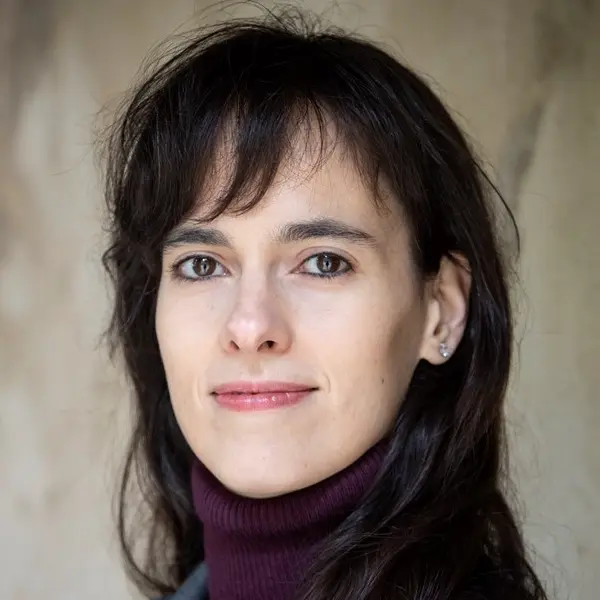
Associate Professor, Oxford Institute for Ethics in AI | Bestselling Author of Privacy Is Power & Prophecy | Herbert A. Simon Award Winner | Privacy & AI Ethics Philosopher
Privacy is not about having something to hide; it is about the power to shape your own life. Carissa Véliz, Associate Professor at Oxford's Institute for Ethics in AI and bestselling author of Privacy Is Power and Prophecy, shows why privacy is foundational to democracy. She challenges the surveillance economy that harvests personal data to manipulate decisions and concentrate power, naming the stakes: weakened democracy, eroded equality, lost autonomy.
Want to book Carissa Véliz as a speaker for your event? Please provide the info below and we’ll get in touch within 24h:
Keynote speaker Carissa Véliz is an Associate Professor at the University of Oxford’s Institute for Ethics in AI and a Tutorial Fellow at Hertford College, where she has become one of the world’s leading voices on privacy, surveillance, and the ethics of artificial intelligence. Her work examines how personal data has become a form of power, and why reclaiming privacy is essential to preserving democracy, equality, and individual freedom.
Privacy speaker Carissa Véliz earned international acclaim with her bestselling book Privacy Is Power: Why and How You Should Take Back Control of Your Data, named an Economist Book of the Year. The book argues that personal data should be treated as a toxic asset, akin to asbestos, and makes the case for ending the data economy entirely. Her analysis reveals how companies and governments harvest personal information to influence behavior, shape decisions, and undermine democratic processes, and it has been translated into more than two dozen languages.
In 2026, Véliz published Prophecy: Prediction, Power, and the Fight for the Future, from Ancient Oracles to AI, a sweeping account of how forecasting has always been less about knowing the future than about exercising power over others. She is also the author of The Ethics of Privacy and Surveillance and editor of the Oxford Handbook of Digital Ethics. Her honors include the Herbert A. Simon Award for Outstanding Research in Computing and Philosophy and the Committed Optimists Award, whose previous recipients include Nobel laureate Shirin Ebadi and Noam Chomsky.
Véliz’s influence extends well beyond academia. She served on the group of experts that drafted Spain’s Digital Rights Charter, has advised the U.S. Congress on technology policy, and sits on the board of the Proton Foundation, which advances privacy-protecting technologies. She is a member of UNESCO’s Women 4 Ethical AI and serves on the advisory board of the Electronic Privacy Information Center. Her work has been featured in more than 300 outlets, including The New York Times, The Guardian, Financial Times, Harvard Business Review, BBC, and Nature, and her TEDx talks on privacy and the power of analog life have reached audiences worldwide.
As a speaker, Carissa Véliz brings philosophical rigor and practical policy expertise to audiences navigating data governance, AI adoption, and digital transformation. She challenges the assumption that technology is neutral or its trajectory inevitable, offering leaders concrete frameworks for building ethical strategies that protect democratic values while enabling innovation. Organizations value her ability to translate complex ideas into actionable guidance for responsible AI, privacy by design, and competitive advantage that does not depend on exploiting personal data.
Véliz reveals how privacy underpins democratic society, functioning as the blindfold of justice that ensures equal treatment regardless of personal characteristics. Drawing on her bestseller Privacy Is Power, she shows how mass data collection erodes equality by enabling differential treatment, threatens autonomy through systems that manipulate rather than inform, and weakens democracy by splintering public discourse into personalized realities. Audiences learn why privacy is collective infrastructure rather than individual preference, and what regulatory frameworks can protect it while enabling beneficial innovation.
Véliz argues that personal data should be regulated like a toxic substance and that the trade in personal information should end. She traces how the data economy grew from personalized advertising, why the model produces negative externalities from democratic erosion to inequality, and how organizations can move toward privacy-respecting products and services. Leaders discover why companies that pioneer ethical approaches to data will gain advantage as regulation tightens and consumer awareness grows.
Véliz examines the ethical questions raised by AI development and deployment: how systems trained on improperly acquired data perpetuate injustice, why algorithmic decision-making can reinforce discrimination, and what obligations organizations carry around transparency and accountability. Audiences gain practical frameworks for responsible AI that respects human autonomy, strategies for spotting and mitigating ethical risk, and a clear read on emerging regulatory expectations.
Drawing on her book Prophecy, Véliz traces forecasting from ancient oracles to modern algorithms, arguing that predictions are rarely neutral descriptions of the future and instead become tools that shape it. She shows how predictive analytics can erode accountability, manufacture a false sense of security, and concentrate power, and she offers leaders a sharper way to think about where prediction genuinely helps and where it quietly removes human agency.
Former Head of Innovation & Creativity, The Walt Disney Company | Innovation & Creativity Keynote Speaker | Author of The Imagination Emporium

New York Times Bestselling Author | Geopolitical Strategist | Founder, Zeihan on Geopolitics | Deglobalization, Demographics & Energy

Future of Work Strategist | Forbes Top Futurist | Two-Time Bestselling Author | Honorary Doctorate, PA College of Art & Design

Business Strategy Expert & Futurist | CEO, Millennial Labs | "The Harvard Cowboy" | Gen Z & Future of Work Authority


© 2026 Aurum Speakers Bureau. All Rights Reserved

| Basic Data Protection Information | |
|---|---|
| Data controller | AURUM SPEAKERS BUREAU S.L. |
| Address | Parc Audiovisual de Catalunya 1, Oficina S11, 08225 Terrassa, Spain |
| Purposes | We will use your data to respond to your requests and deliver our services to you. |
| Marketing | We will only send you marketing correspondence if you have given your prior consent, which you can do by ticking the box for that purpose. |
| Lawful basis | We will only process your data if you have given your prior consent, which you can do by ticking the box for that purpose. |
| Recipients | Generally, only our members of staff who have been duly authorised may access the data that you have provided. |
| Your Rights | You have the right to know what information we hold about you, to rectify it and to erase it, as explained in the additional information available on our website. |
| Additional Information | For more information, please see our "PRIVACY POLICY". |