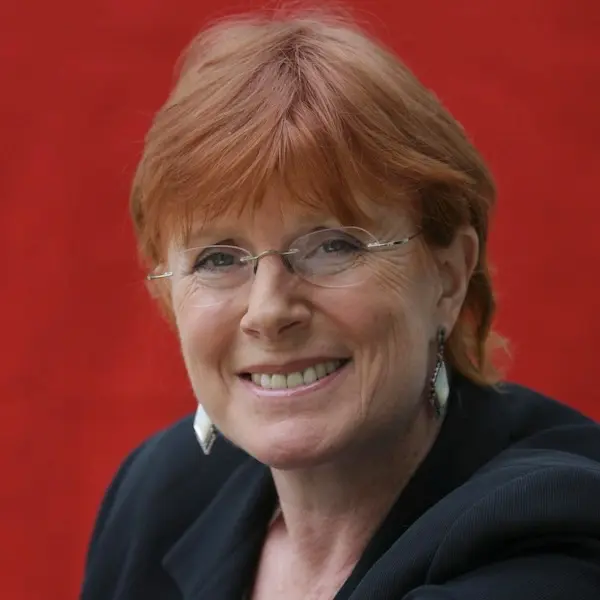
Celia Sandys
Granddaughter of Sir Winston Churchill | Author of Five Books on Churchill | Founder of Churchill Leadership | Historian & Broadcaster


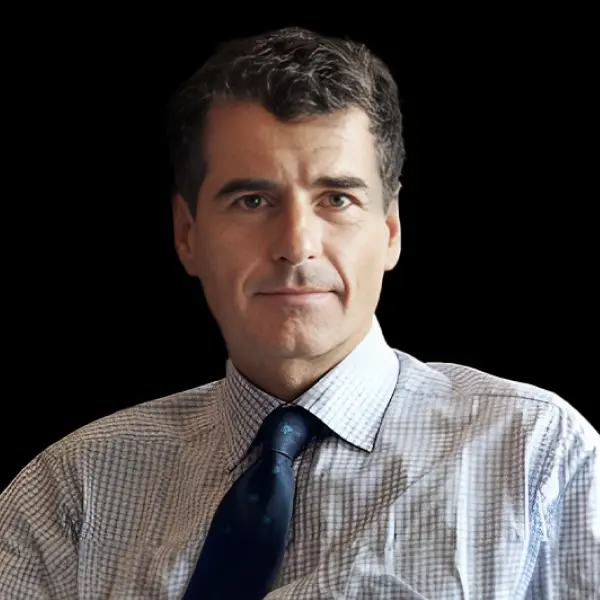
Dean, LSE School of Public Policy | Former Finance Minister of Chile | Member, Group of Thirty | Author, The London Consensus
Andrés Velasco is one of the rare economists who has both theorized fiscal policy and executed it under fire. As Chile's Finance Minister, he banked a copper windfall against fierce opposition, then deployed it through the 2008 global crisis — a playbook now studied worldwide. Dean of the LSE School of Public Policy and member of the Group of Thirty, he gives senior audiences the tools to read political economy and act decisively.
Want to book Andres Velasco as a speaker for your event? Please provide the info below and we’ll get in touch within 24h:
Andrés Velasco is one of the most distinguished economist-practitioners of his generation: a scholar who has held chairs at Harvard, Columbia, and the London School of Economics, and a policymaker who ran a G20 economy’s finances through a commodity supercycle and a global financial crisis. Born in Santiago and educated at Yale (BA in economics and philosophy, MA in international relations) and Columbia (PhD in economics), he conducted postdoctoral work in political economy at both Harvard and MIT before beginning a career that has moved fluidly between the academy, government, and international institutions.
Economics speaker Andrés Velasco served as Chile’s Minister of Finance from March 2006 to March 2010 under President Michelle Bachelet — a four-year tenure that produced what many economists now regard as a textbook case in counter-cyclical fiscal management. When copper revenues surged following a global commodities boom, Velasco resisted intense political pressure to spend and instead directed the windfall into two sovereign wealth funds: a Pension Reserve Fund and an Economic and Social Stabilization Fund. When the 2008 financial crisis hit and copper prices collapsed, those savings financed a stimulus package of subsidies and tax cuts that cushioned Chile’s economy and accelerated its recovery. The Financial Times, The Economist, the Wall Street Journal, and Bloomberg all covered the episode extensively. He was named Latin American Finance Minister of the Year by Emerging Markets magazine and Most Innovative Leader of the Year by Latin Trade. His approval ratings, initially among the lowest in the cabinet, ended among the highest in the country.
After his ministerial term, Velasco ran for the Chilean presidency in the 2013 primaries, finishing second to Michelle Bachelet. He has since built one of the most influential policy careers in international economics, holding the Sumitomo-FASID Professorship at Harvard Kennedy School, a professorship at Columbia’s School of International and Public Affairs, and since 2018, serving as the inaugural Dean of the LSE School of Public Policy. He is a member of the Group of Thirty — the selective forum of sitting and former central bank governors, finance ministers, and senior economists — and served on the G20 Eminent Persons Group on Global Financial Governance. His most recent book, The London Consensus: Economic Principles for the 21st Century (LSE Press, 2025), co-edited with Tim Besley and Irene Bucelli, proposes a principles-based alternative to the Washington Consensus, drawing contributions from economists including Dani Rodrik, Philippe Aghion, and Hélène Rey.
As a speaker, Andrés Velasco offers something with no real equivalent in the speaker market: the analytical precision of a leading academic economist combined with the firsthand institutional memory of someone who made the decisions. He does not describe fiscal crises from the outside — he navigated one from the finance ministry, with full exposure to the political constraints, institutional mechanics, and real-time uncertainty that textbook models omit. His keynotes give boards and senior leadership teams the tools to distinguish durable geopolitical and economic trends from short-term political noise, and to understand the structural forces that will shape growth, capital allocation, and policy risk in the years ahead.
In 2006, Andrés Velasco made one of the most politically costly decisions of his career: he refused to spend Chile's copper windfall and built a sovereign wealth fund instead. Two years later, that fund financed the stimulus that protected Chile through the worst global financial crisis in decades. This keynote draws on that firsthand experience to explore what sound fiscal policy looks like in practice — not in theory — and what leaders in the public and private sectors can learn from a government that chose institutional discipline over short-term political reward. The lessons extend well beyond Chile: to any organization that must make decisions today about risks that will materialize tomorrow.
The economic architecture that defined the post-Cold War era — open trade, stable multilateral institutions, low inflation, and deep capital markets — is under sustained pressure. Velasco draws on his current work at the LSE, his membership in the Group of Thirty, and his analysis for The London Consensus to give senior audiences a clear, rigorous map of where the international economic order is genuinely fracturing and where the alarm is overstated. This is not a geopolitical tour — it is a practitioner's guide to distinguishing durable structural shifts from short-term political noise, and building strategies that hold across multiple scenarios.
The Washington Consensus — the set of policy prescriptions that shaped development economics for a generation — was built for a world that no longer exists. In this keynote, Velasco presents the intellectual case for a new framework: one built on principles rather than prescriptions, and anchored in wellbeing, resilience, institutional legitimacy, and political context. Drawing on The London Consensus (LSE Press, 2025) and contributions from leading economists including Dani Rodrik and Philippe Aghion, this talk challenges policymakers and business leaders to think differently about what good economic governance looks like — and what decisions it demands.
Economic policy is rarely made the way textbooks describe. It is made by governments facing elections, ministries navigating institutional constraints, and reformers balancing technical optimality against political feasibility. Velasco — who has been all three simultaneously — gives executive audiences a framework for reading the political economy behind fiscal and monetary decisions: understanding why governments do what they do, where the real risks lie in regulatory and policy environments, and how organizations can build strategic resilience against the forces that textbook economic models consistently underestimate.
Granddaughter of Sir Winston Churchill | Author of Five Books on Churchill | Founder of Churchill Leadership | Historian & Broadcaster

Thinkers50 Hall of Fame | Professor, London Business School | Founder, HSM Advisory | Bestselling Author of 'The 100-Year Life' & 'Living the 100-Year Life'
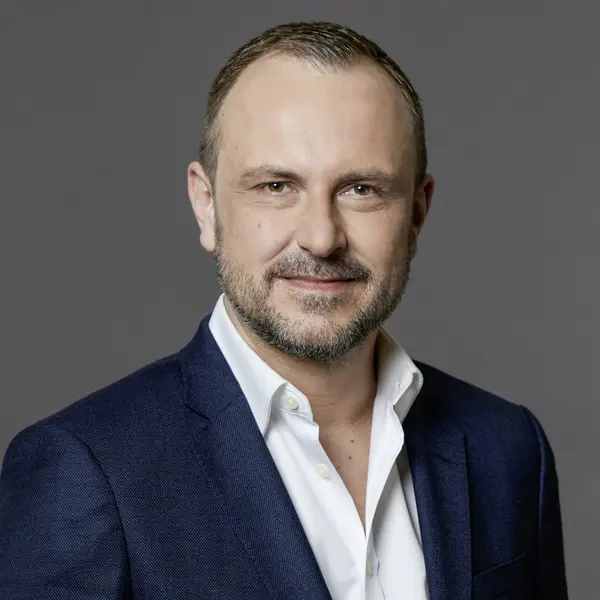
Professor of Security Studies, King's College London | Founding Director, ICSR | Expert on Terrorism, Radicalisation & the Far Right
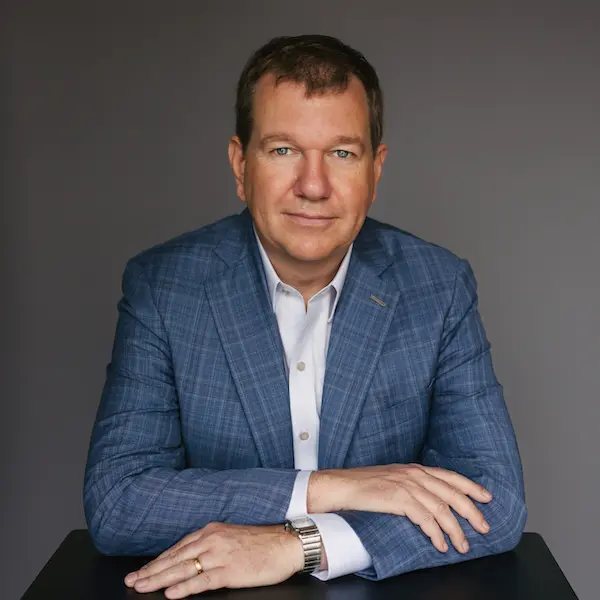
Leadership & HR Expert | Author of The Problem with Change | Co-Author of Nine Lies About Work | Former SVP at Cisco & Chief Learning Officer at Deloitte


© 2026 Aurum Speakers Bureau. All Rights Reserved

| Basic Data Protection Information | |
|---|---|
| Data controller | AURUM SPEAKERS BUREAU S.L. |
| Address | Parc Audiovisual de Catalunya 1, Oficina S11, 08225 Terrassa, Spain |
| Purposes | We will use your data to respond to your requests and deliver our services to you. |
| Marketing | We will only send you marketing correspondence if you have given your prior consent, which you can do by ticking the box for that purpose. |
| Lawful basis | We will only process your data if you have given your prior consent, which you can do by ticking the box for that purpose. |
| Recipients | Generally, only our members of staff who have been duly authorised may access the data that you have provided. |
| Your Rights | You have the right to know what information we hold about you, to rectify it and to erase it, as explained in the additional information available on our website. |
| Additional Information | For more information, please see our "PRIVACY POLICY". |