
Charlie Miller
Principal Autonomous Vehicle Security Architect, Cruise | Former NSA Hacker | 4x Pwn2Own Champion | Cybersecurity & IoT Expert

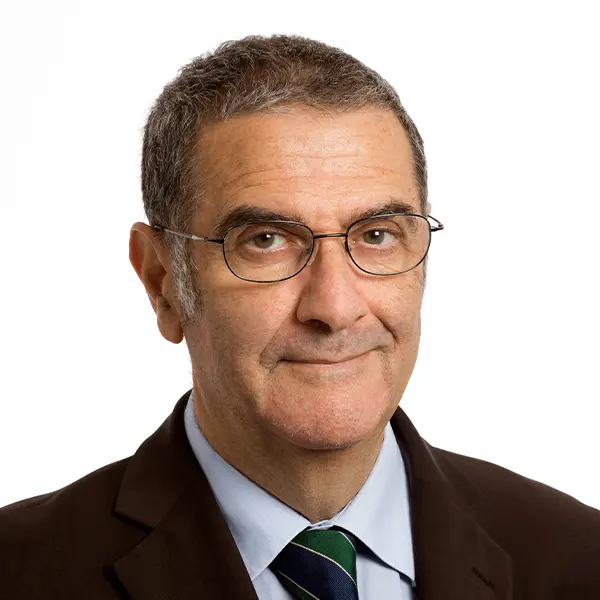
2012 Nobel Laureate in Physics | Pioneer of Cavity Quantum Electrodynamics | Chair of Quantum Physics, Collège de France | CNRS Gold Medal
Serge Haroche's Nobel Prize-winning experiments proved that single quantum systems can be measured and controlled without destroying them, the discoveries now underpinning the global race to build quantum computers. Chair of Quantum Physics at the Collège de France and holder of France's highest scientific honor, he turns the quantum revolution into strategic insight that senior technology and policy audiences can act on.
Want to book Serge Haroche as a speaker for your event? Please provide the info below and we’ll get in touch within 24h:
Serge Haroche is a 2012 Nobel Laureate in Physics and one of the world’s foremost authorities on quantum science, an experimentalist whose ingenuity opened an entirely new field of research and laid the groundwork for the quantum technologies now reshaping computing, communication, and sensing. Born in Casablanca in 1944, keynote speaker Serge Haroche trained at the École Normale Supérieure in Paris and earned his doctorate at the University of Paris VI under Claude Cohen-Tannoudji, himself a future Nobel laureate, before a postdoctoral fellowship at Stanford with Arthur Schawlow placed him at the frontier of quantum optics from the very start of his career.
Haroche is best known for his pioneering work in cavity quantum electrodynamics, the study of how single atoms interact with photons confined between highly reflective mirrors. His defining achievement was to show that quantum systems can be observed and manipulated without being destroyed: by trapping microwave photons between superconducting mirrors and sending individual Rydberg atoms through the cavity, his team at the Kastler Brossel Laboratory in Paris turned the founders’ thought experiments into real laboratory measurements, demonstrating superposition, entanglement, and decoherence under controlled conditions. That work sits at the conceptual root of today’s quantum computing and quantum information science, a story Nobel Prize speaker Haroche brings vividly to life for non-specialist audiences.
His discoveries earned the Nobel Prize in Physics, shared with David Wineland, alongside the CNRS Gold Medal, France’s highest scientific distinction, the Charles Hard Townes Award, the Grand Cross of the Brazilian Order of Scientific Merit, and honorary doctorates from institutions including the Weizmann Institute.
Since 2001, Haroche has held the Chair of Quantum Physics at the Collège de France, one of the most prestigious academic posts in the country, where he also served as Administrator, the institution’s president. He is a member of the French and European Academies of Sciences and a foreign member of the U.S. National Academy of Sciences and the American Academy of Arts and Sciences. His co-authored book Exploring the Quantum remains a foundational text in the field. In recent years he has become a leading public voice on the societal stakes of quantum science and the responsible development of artificial intelligence, appearing in Nobel Prize Dialogues alongside figures such as Geoffrey Hinton and joining international gatherings marking a century of quantum physics.
As a speaker, Serge Haroche makes the quantum world accessible without diluting its depth. He addresses the foundations and future of quantum technology, the path from basic research to real-world applications, the case for sustained public investment in curiosity-driven science, and the growing interplay between quantum computing and artificial intelligence. Senior audiences at technology, policy, and innovation events gain a rare pairing: the authority of a foundational scientist and the perspective of someone who has watched his own research grow into one of the defining technology races of the era.
Haroche traces the arc from the founding thought experiments of quantum mechanics, Schrödinger's cat and Einstein's photon boxes, to the real demonstrations his team achieved at the Kastler Brossel Laboratory. He explains how superposition, entanglement, and decoherence moved from theory to something scientists can measure and control, and why that matters now that quantum technology has left the physics lab for the boardrooms of the world's largest technology companies.
A rigorous yet accessible read on where quantum computing actually stands: what the science supports, what the engineering still has to solve, and which timelines are realistic. Drawing on foundational expertise and decades of perspective, Haroche gives senior audiences a grounded counterweight to the hype, helping leaders, investors, and policymakers judge which quantum claims deserve attention and which demand patience.
Haroche is one of the clearest living examples of how curiosity-driven research eventually yields transformative technology. He makes the institutional and economic case for sustained public investment in science with no immediate application, a message aimed at government and policy audiences, research university leaders, and executives designing long-horizon R&D strategy.
Drawing on recent dialogues with AI pioneers including Geoffrey Hinton, Haroche explores how the quantum and AI revolutions are beginning to intersect. He examines where quantum computing could accelerate machine learning, where the two fields compete for talent and resources, and what their combined trajectory means for science, society, and strategic planning.
Principal Autonomous Vehicle Security Architect, Cruise | Former NSA Hacker | 4x Pwn2Own Champion | Cybersecurity & IoT Expert
PhD Economist & Fund Manager | Chief Economist, Tressis | Professor, IE Business School | Bestselling Author, Escape from the Central Bank Trap
Associate Editor & Global Business Columnist, Financial Times | CNN Global Economic Analyst | Bestselling Author

Creator of LazyTown | Two-Time European Gymnastics Champion | Entrepreneur, Author & Global Health Advocate


© 2026 Aurum Speakers Bureau. All Rights Reserved

| Basic Data Protection Information | |
|---|---|
| Data controller | AURUM SPEAKERS BUREAU S.L. |
| Address | Parc Audiovisual de Catalunya 1, Oficina S11, 08225 Terrassa, Spain |
| Purposes | We will use your data to respond to your requests and deliver our services to you. |
| Marketing | We will only send you marketing correspondence if you have given your prior consent, which you can do by ticking the box for that purpose. |
| Lawful basis | We will only process your data if you have given your prior consent, which you can do by ticking the box for that purpose. |
| Recipients | Generally, only our members of staff who have been duly authorised may access the data that you have provided. |
| Your Rights | You have the right to know what information we hold about you, to rectify it and to erase it, as explained in the additional information available on our website. |
| Additional Information | For more information, please see our "PRIVACY POLICY". |